Showing posts sorted by relevance for query vpp. Sort by date Show all posts

Monday, February 2, 2026

The Turing Test of Energy: Proving Virtual Power Plants are Practical (and even better)

The Grid Gets a Personality Check

The US power grid is a grumpy, aging beast. It is the largest machine on Earth; it's also quite stubborn. For a century, we've relied on giant, smoke-belching towers to keep our lights on. These central plants were easy to see. They were easy to control. You simply threw more coal or gas into the furnace when people turned on their air conditioners. This system worked for a long time; however, the world is changing. We are moving toward a cleaner way of living. This shift requires a smarter approach to electricity. We need a system that's smart and flexible. This is where the Virtual Power Plants, or VPPs, enter the picture. A VPP is not a central, physical building; it's a digital symphony of hundreds or thousands of small, distributed devices. These include home batteries, smart thermostats, electric water heaters, and electric vehicle charging equipment. When the grid is stressed, the VPP tells these devices to help out. It's an on-call volunteer firefighter squad of electrons controlled by sophisticated software. It turns a neighborhood into a powerhouse. This technology is growing at a staggering rate. It is moving from a niche experiment to a mainstream solution.

Shared Energy, Grid Synergy

The growth of VPPs in the US is truly impressive. We are seeing a massive surge in connected devices. Every smart thermostat is a brick in the new power plant. Every EV is a rolling battery. VPP capacity is on a trend to triple by 2030. Utilities and datacenters need stable energy, and VPPs are the fastest way to get there. If a utility wants to build a new power plant or battery storage system, there are months (if not years) of permits, hearings, and big-ticket items that have to be approved. A VPP, on the other hand, takes advantage of the infrastructure already on the grid. All that's needed is the software to manage it, no permits, no public hearings, no massive infrastructure spending.  

This is a fundamental shift in how we build infrastructure. Utilities used to be skeptical. They liked their big, reliable gas plants. They did not trust a bunch of residential water heaters to save the day. That skepticism is finally melting away. New software platforms are making these distributed resources reliable. They are showing that a large swarm of bees can be as effective as a bear. A VPP can now respond to grid signals in seconds. This spin-up speed is actually faster than traditional plants. It is a beautiful bit of binary brilliance. We are seeing these systems pop up on the US West Coast, in Texas, and in New England. They are proving their worth during heatwaves. They are keeping the lights on without burning extra fuel and without additional distribution lines.

The Turing Test of Energy 

To understand how far we have come, we must look at the Huels Test. This concept is a direct nod to the famous Turing Test for artificial intelligence. Alan Turing wanted to know if a machine could mimic a human. He proposed the imitation game. If a human could not tell the difference between the responses from a computer and a person, the machine passed. Matt Huels and the team at EnergyHub applied this logic to the energy world. They realized that VPPs faced a similar hurdle. Utility operators are creatures of habit. They want their control screens to look a certain way. They want predictable, steady lines of data. For a VPP to truly succeed, it must pass the Huels Test. This means the grid operator should not be able to distinguish the behavior of a VPP from a traditional gas peaker plant. If the VPP provides the same reliability, it passes. If it follows the same scheduling rules, it wins. This is the ultimate goal for decentralization. We want the complexity of a thousand homes to look like the simplicity of a single switch. It is a high bar for software. It requires an understanding of all the devices in aggregate and timing. It requires massive amounts of data.

The Maturity Model Breakdown

Passing the Huels test is not an overnight achievement. It is a journey through different levels of technical skill. Most early programs were basic. They were simple emergency measures. Today, we are seeing the rise of sophisticated, automated systems. These systems do more than just turn things off. They manage the flow of power with surgical precision. They predict when a storm will hit. They charge batteries before the price of energy spikes. They are becoming proactive instead of reactive. The following table illustrates the different stages of VPP development as they move toward the Huels standard.

Maturity Level Name Primary Function Data Frequency
Level 1 Peak Shaver Simple emergency load sheading Hourly or daily
Level 2 Reliable Resource Predictive dispatch and basic telemetry Every 15 minutes
Level 3 Huels Standard Full parity with gas peaker plants Under 5 minutes
Level 4 Grid Orchestrator Autonomous, localized grid support Real time

Why Utility Snobs are Finally Impressed

The jump from Level 2 to Level 3 is difficult. It requires high-frequency telemetry. This is a fancy way of saying the VPP must report its status constantly. If a cloud passes over a solar array, the system must adjust instantly. The software must also handle something called the snapback effect. When a VPP turns off a thousand air conditioners, the house gets warm. When the event ends, all those units want to turn on at once. This creates a massive spike in demand. A VPP that passes the Huels test avoids this. It staggers the recovery. It creates a smooth ramp. This level of control is what makes utilities feel safe. It is what makes them willing to retire old, dirty peaker plants. As we learn how to more effectively manage VPPs, we are seeing a 20% to 30% increase in VPP efficiency every few years. The costs are also falling. It is much cheaper to pay people to use less power than it is to build a new $100,000,000 power station. This is basic math. It is also common sense. The US energy market is finally waking up to this reality. We are seeing a move away from centralized control. We are seeing a move toward a democratic grid.

Sparking a Smarter Tomorrow

The success of the Huels Test represents a turning point for our environment. It proves that we do not need to rely on the old ways. We can use our devices to save the grid. We can use our electric cars to power our homes. This is a quiet and growing revolution. It does not require giant construction projects. It only requires software and smart incentives. We are building a more resilient system. It is a system that can handle the unpredictability of wind and sun. The growth of these programs is a signal of hope. It shows that innovation can solve our most pressing problems. We are no longer just dreaming of a better way to manage energy. We are actually doing it. Every home that joins a VPP is one more member of an attack swarm that protects us from instability and high costs. It moves us toward a more elegant solution for our electricity needs. As we refine these systems, we move closer to a future free from fossil fuels.

Tuesday, June 22, 2021

Virtual Power Plant Performs Suboptimally During A Heatwave


UPDATE (6/27/2021): Title updated for accuracy. Details at the end.*

We had our first real virtual power plant (VPP) event and it didn't go as intended. 

The point of a pilot project is to "learn by doing" on a small scale. Lessons learned on a small scale can prevent problems in a bigger program later; so, from that perspective, this was a victory. 

Before getting too much further into this, I should explain what happened. 

On June 21st, one of the longest days of the year, we were having a heatwave here in the Northwest. In response, Portland General Electric decided to put its new VPP into action. Our batteries would be discharged to help offset the expected increase in air conditioner use. Perfect, this is why we signed up. If this helps the utility avoid using diesel generators and peaker plants, that's great.**


On the surface, this seems like a great plan. At 5PM PGE is going to take over the battery's operation. BUT two hours before, at 3PM, peak time starts. Our battery is configured to discharge during peak hours and remove our home's load from the grid. So at 3PM, the battery responds as expected and our home is off-grid (sometimes referred to as islanding). Actually, our home is better than off-grid. The battery is running our house and the solar panels are feeding the grid. 

Then at 5PM, PGE takes over operation of the battery. Up until this point, the battery had been discharging at a rate of about 7 to 10kW (adjusting up and down with our home's needs). When PGE took over, they had the battery discharging at a steady 2kW (see graph below).

Home Energy Flow: (grey is the grid, green is Powerwall, yellow is solar)

This was 5 to 8kW lower than it had been discharging. This increased the grid load, exactly the opposite of the intention of the program.

Looking at the graph, you can see that after ~9AM, when the battery was full, our home became a negative grid load. Our solar panels generated enough to run our home, air conditioning and all. In the times the AC cycled off, we were feeding the grid. Then starting at 3PM our battery took over and we continued to be a negative load. It was not until PGE took over at 5PM that we started to use energy from the grid and add to the demand. 

If our battery had been in standby/backup mode, just sitting at 100% charged up, waiting for an outage, then this VPP plan would have worked fine. However, that was not the case. 

The SmartBattery program needs to add another level of "smarts". For example, setting up the battery to discharge at least 2kW, that would have worked better. Alternatively, they could have requested that the battery discharge 2kW more than the home required, thereby guaranteeing some level of feed-in. Perhaps the simplest option would have been to have the battery discharge at a higher level, e.g., 8kW. This is well within the 15kW that our system can sustainably supply. 

It may be that such modes are not possible with the APIs available to VPP operators. Requesting 8kW works fine for our system, but if an owner only has a single Powerwall, 8kW is not an option. The VPP does not currently customize the request for each home. Tesla Powerwalls are not the only home battery system in the mix, so they may need to adhere to a lowest common denominator mode... 

It could be, that the net result was still positive, just sub-optimal. For example, say there are 500 homes in this pilot. 50 are in a state similar to mine. Each added an average of 4kW of load to the grid for a total of 200kW more load. The other 450 homes, however, added 900kW of relief to the grid. This means that the VPP added 700kW of net relief to the grid. Still a net gain, but not as good as adding 900kW or more grid relief.

It looks like it is going to be a hot one this summer, so you can expect that this will not be the last VPP call-to-arms. Perhaps they will make some improvements before the next event.

Ω

* UPDATE1: The initial title was "VPP Fails During A Heatwave". As I explained in the article, the VPP didn't perform as intended at my house, but that does not mean that the VPP as a whole failed. Some readers, rightfully so, called me out on this clickbait characterization and I've updated the title to be more accurate and less clickbaity. One other minor update: the original article referred to June 21st as solstice. June 21st is often the solstice, but this year, in N. America, the solstice occurred on June 20th.

** Sidebar1: Global warming is causing hotter summers, which increases energy demands, which (when energy is sourced from fossil fuels) increases emissions, which increases global warming... This feedback cycle can/must be broken. Summertime is when the sun shines and solar energy production scales well with AC usage. Combine this with just a few hours of energy storage and you can time-shift loads as needed to stabilize grid demand

Saturday, June 12, 2021

Portland Virtual Power Plant

Portland General Electric is starting a virtual power plant pilot program and we've signed up for it. 

 A Virtual Power Plant is like Energy in the Cloud ☺

What is a Virtual Power Plant (VPP)? 

A VPP allows your electric utility to utilize residential energy storage systems to balance the grid energy needs. You may also see this referred to as utilizing "behind the meter assets." 

If you have a Tesla Powerwall (or another home battery system), normally, that battery in your garage or on the side of your home is only going to respond to your home's demands. Unlike solar, home batteries are usually not allowed to feed energy into the grid. A VPP frees your battery from this restriction and allows it to respond to the grid's needs too. A VPP can be used to reduce or eliminate spinning reserves or peaker plants. 

VPP Example

Say it's a hot day in August at 6PM. People arrive home and turn on their air conditioners (AC), fans, and start cooking diner. This places a big demand on the grid. Let's say that you have solar and home batteries. For round numbers, let's say your solar is generating 4kW, your home is using 2kW, and your batteries are full. The extra 2kW that your solar is generating helps the grid by effectively carrying the load of one additional home in your neighborhood. This is good, but not great since the Powerwalls are not being used in this first example.

Now, let's say it is peak price time and you are on a time-of-use plan. In this situation, your home battery would be discharging to carry your home's load. This allows the full 4kW from the solar panels to feed into the grid. This would mean that your solar would be carrying the load of 2 of your neighbors. This is better than the first example, but we can do even better. 

A VPP allows the utility to dispatch your batteries for more than just your home's needs. So on this hot day, when the grid is burdened, rather than firing up a peaker plant, the utility sends a dispatch message to your batteries (and hundreds of others) to ask them to start discharging near their sustainable rate. Let's say you have 2 Powerwalls and they can continuously discharge at a rate of 10kW. Now along with the solar, you are sending 12kW of power into the grid. This is enough to run 6 homes on your block.

Scenario Solar Production Powerwall  Output Grid Feed-In Homes Supported
Solar Only 
(or Powerwall in Backup Only mode)
4kW 0 2kW 1
Powerwall with TOU 4kW 2kW 4kW 2
Powerwall with VPP 4kW 10kW 12kW 6

This example is for just one home. A virtual power plant could have hundreds or thousands of homes participating and if each of them can ease the grid of the burden of 4 to 10 other homes, then you start to see why the utilities are interested in this idea. 

How Much Of The Battery Capacity Can They Use?

You get to define the 'Power Outage Reserve.' This means you can keep whatever percentage of the battery you'd like for your own peace of mind. In the winter (when outages are more likely here), I keep the reserve at 60%. In the summer, I lower it down to 30%. Even if we have an outage during the summer, we have more energy coming from the solar panels, so I'm not worried about keeping the batteries too full. 


What's In It For Me?

Okay, this helps the grid, but it will cause extra cycling wear and tear on my battery and if there is a power outage, my battery might be lower than it would have otherwise been. Utilities don't expect you to do this out of kindness, there are incentives for participation.

VPP programs have various incentives and payments for the people that participate. Some give you several thousands of dollars of incentives to install home batteries, others even give you the batteries for free. Some pay you for every month that you are in the program, others pay you per event or per kWh.

The PGE program that I'm enrolling in will pay participants $20 per month if they have solar. Ironically, if you DON'T have solar, you get paid $40 per month. You are paid more because the utility can also charge your battery at their discretion when they have surplus power available. When you have solar, the rules are generally written such that you can only charge home energy batteries with solar. 

If you are participating in the Energy Trust of Oregon's Solar Within Reach program, you may be eligible for an instant $5,000 rebate in addition to the above monthly $20. 

If you are within one of PGE's 3 Smart Grid Test Bed areas and you are one of the first 200 to sign up, you may be eligible for an instant rebate of up to $3,000 in addition to the above monthly participation funds.


How Big Is The PGE VPP?

This is a 5-year pilot program with up to 525 homes and up to 4 megawatts of dispatchable power. That's an average of ~7.6kW from each home. Our 3 Powerwalls can provide about twice that much. I guess they expect the average participant to only have 1 or 2 Powerwalls or (more likely) they will not be using the system's full potential. 


Which Home Energy Storage Battery Brands Are Supported? 

The PGE VPP currently supports home battery systems from Generac, SolarEdge, Sonnen, Sunverge, and Tesla.

If you want Tesla Powerwalls and/or Solar, you can use my referral link.

If you want to sign up for PGE's VPP pilot, here's the link

Disclosure: 
I'm Long Tesla

Sunday, January 21, 2024

Talkin 'Bout My Generation


I don't blog much about solar here compared to the EV content. Usually, our solar panels sit on the roof, quietly and ardently generating energy from sunshine. However, in 2023 a lot happened: we replaced our roof (that was complicated with solar panels up there); the virtual power plant (VPP) that our utility, PGE, runs had a big rule change. The VPP rule change meant that we had to contact Tesla to enable a new feature on our Powerwall systems. All of this seemed worthy of a 2023 review.

New Roof

The roof replacement has to be the first thing covered since this means the panels were off the roof for a good portion of the summer. We're north of the 45th parallel so the summer months are by far our most productive. So this downtime ate into the heart of our generation time.

Our roof replacement was scheduled for June 12th through June 14th. Roughly speaking, day 1 was old roof removal, day 2 was new roof installation, and day 3 was skylight installation and final cleanup.

With the scheduled removal & reinstallation (RnR) of the solar panels. We wanted to have the panels off the roof for as short a time as possible. We have two solar systems on our roof. A 4kW system from a local installer (Sunpath Services) and an 8kW system from Tesla (SolarCity).

May 26th

Tesla Solar panels removed

June 5th

SunPath Systems panels removed

June 12-14th

New roof installed

July 5th

SunPath Systems solar panels reinstalled. Panels were off for 31 days.

August 12th

Tesla solar panels reinstalled. Panels were off for 79 days.


The Tesla RnR took almost 3 times as long compared to Sunpath. With the Tesla PV system as the larger of the two and offline for all of June, all of July, and half of August, we missed the bulk of the solar production for the year.

The good news is that we installed a 50-year roof, so that shouldn't be a problem ever again for these panels.

Side note, we were picking nails and other things out of our lawn and shrubs for days after this roof work, even after they magnet swept multiple times.

Virtual Power Plant

We signed up for our electric utility's VPP in 2021. To be eligible, you had to have home batteries, such as the Tesla Powerwall. When the program started, the utility paid you $20 every month. In return, your battery is available when they call on it to supply energy to the grid; you could opt out of the VPP events.

In June of 2023, the rules changed. Under the new rules, rather than just getting paid for enrollment, you now get paid for participation. The program pays $1.70 per kWh that you export to the grid during a VPP event and you can select the level of participation (up to 80% of your capacity).

With our 3 Powerwalls we have about 40 kWh of storage, so that's about 32 kWh that we could export. A full 80% participation would be $54 earned per event.

We had a total of 12 VPP dispatch events in 2023. As you might expect, most were in the summer (7 events in June - Sept). The other 5 were in January, February, and December. This surprised me. You expect the grid to be strained during the summer months with the AC units on high and dispatching the VPP seems like a smart way to avoid turning on the peaker plants. Maybe these events are in response to outages or maybe these events are testing new VPP controls.

VPP Incentive Payments

January - May we received the standard $20 per month credit. In June the new program started there was a quick 1kWh test. We received a $1.70 credit. In July, there were two small events and we received $32 in credit. August had a small event and we received $9. Our September bill had multiple events and received a credit of $157. This was a big credit and paid our next couple of electricity bills.

In total for 2023, we received a total of $325 in credits from our utility.

We Stopped Exporting

There were two dispatch events in December of 2023 and our system didn't participate. I emailed PGE and asked them if they knew why my system was not exporting. They said there have been multiple software changes to both their system and the Tesla systems. Now to participate, I had to enable Powerwall exporting in the Tesla app. They sent simple instructions to go into the Powerwall settings and enable export "Everything."


Going into the app, I didn't see any export setting. I double-checked the instructions. I was in the right place, but the setting was not there. Another email to PGE. They said Tesla had to enable this and then it would appear in the app. So I called Tesla Energy. Happily, I was not on hold for very long and the person who answered the phone (Justin) understood what I was asking for and was able to resolve it. He said to wait one hour and the setting should be there, if not reboot my phone and check again. Of course, I could not wait an entire hour before looking. The setting appeared in about 10 minutes and I enabled it.

Side Effects

Once this feature was enabled, the next morning when we hit peak time (6AM-10AM), our Powerwall exported all of its energy down to the Backup Reserve limit. That was not the behavior I expected. By going into the TOU settings and tweaking sell prices, I was able to leave this setting enabled (to participate in VPP events), but not have it completely drain the battery during every peak time.

Now we had Export Everything enabled and good daily battery behavior. We're ready for the next VPP event.

Outages

In 2023, there were several times our Powerwalls kept our house running when the grid failed. The longest outage was for 3 hours on August 7th.

Solar Year In Review

Above I explained how we had all of the panels off our home for most of the summer for a roof replacement. That put a big dent in our production. The older 4kW panels produced 3,246 kWh and the Tesla 8kW panels produced 5,113 kWh, for a total of 8,359 kWh. For comparison, in 2022 we generated over 20,000 kWh. So in 2023, we generated less than half of our typical production level just by missing 80 key days.

Exports

Throughout 2023, we sent 1,937 kWh of energy into the grid. A large refrigerator uses about 1,575 kWh annually. So we exported enough energy to run our neighbor's fridge for a year with enough left over to power their EV for about 1,000 miles.

Wrapping Up

2023 was an action-packed year for our home energy systems. For 2024, we should go back to our full production level. And 2024 will be our first full year under the new VPP rules. Earning another $300 or more in credit would be nice.

Sunday, August 25, 2024

Hot Summer 2024 and Virtual Power Plant Activity

We love Virtual Power Plants (VPPs) here at CwC. We've written about them several times

In short, a VPP is when the electric utility company can pull energy from hundreds or thousands of residential battery systems when the grid needs extra juice such as a hot summer evening when nearly every air conditioner in the region is running full out. 

Our local utility, Portland General Electric, has had 7 VPP events (and counting) this summer. Six VPP events showed up as credits on our most recent bill. We have 3 Powerwall 2s configured to allow the utility to extract up to 80% of the charge from our batteries. That means the utility can extract about 32 kWh for each event. At $1.70 per kWh that the utility pays during a VPP, we earn about $50 for participating in a VPP event.

You can see how much we earned for each event here: 


July and August are usually months that have big electricity bills because of all of the AC use. However, now with VPP events, we have a couple hundred dollars in credit on our account

If you want Powerwalls for your house to join a VPP in your region, you can use my referral code and we'll both get perks (https://ts.la/patrick7819)
.

Ω

Wednesday, August 27, 2025

Solar Power in 2025: Comparing Grid-Tied and Off-Grid Systems

Grid-Connected vs. Off-Grid Solar: Which Power is Greener & Cheaper in 2025?

If you're considering solar for your home, one big question is whether to stay tied to the grid or go fully independent. Today, we'll look at how these choices impact everything from your electric bill to the planet's health. We'll compare a net-zero grid-connected system (with true net-metering) against a robust off-grid setup. Both can include batteries, but the off-grid setup demands more capacity for those cloudy winter days and a beefier PV array to keep the lights on year-round. We'll dive into CO2 reductions, upfront costs, and ongoing expenses, all updated for current realities. Spoiler: One option often edges out the other for most folks, but let's break it down.

Understanding the Systems

A grid-connected net-zero system is designed to produce as much energy annually as your home consumes, typically with an 8-12 kW PV array. Annually is a keyword here. You may supply the grid with energy in the summer, then use those banked credits during the winter. Any day's excess power charges your battery, then flows back to the grid via net-metering, earning you credits. The utility uses bidirectional meters to track imports and exports. Add in time-of-use (TOU) rates, where you shift heavy usage to off-peak hours (like charging your EV overnight), and virtual power plant (VPP) participation, where your battery helps stabilize the grid during peaks for extra incentive payments. This means you can use the grid as your backup, and the grid can use your battery when it's needed most; win-win.

On the flip side, off-grid solar means total self-reliance. You'll need a larger 15-20 kW array to handle low-production seasons and 2-3 times the battery storage for multi-day autonomy. No grid means no selling excess energy, so summer surpluses might go to waste. But hey, if you're in a remote spot or crave independence, this is empowering - just pricier and more complex.

Which Reduces CO2 More?

When it comes to slashing carbon emissions, grid-connected systems pack a bigger punch. A net-zero setup not only powers your home with clean solar but also exports surplus solar to displace fossil fuels elsewhere on the grid. Studies show this can reduce 20-50% more CO2 than off-grid, as VPP events avoid firing up gas peaker plants (emitting around 400-500g CO2 per kWh). For a typical US home, that's 5-10 tons of CO2 avoided yearly, including grid-wide benefits.

Off-grid is zero-emission on-site. You know that all the energy you use will be solar, which is great. However, this doesn't help your neighbors reduce their use of gas peaker plants. Plus, the extra manufacturing for oversized panels and batteries adds manufacturing and transport emissions (about 30-50g CO2 per kWh over 25 years). In hydro-and-wind-heavy mix regions, grid-connected (with VPPs and TOU optimizing) amplifies decarbonization since most of the remaining CO2 production is related to peaker plant operations.

Cost Breakdown: Buying and Operating

Upfront, grid-connected wins hands-down. A 12 kW system with one or two Powerwalls averages $25,000-$40,000 after the 30% federal tax credit (ending soon). Batteries alone run $9,000-$19,000 installed. VPP programs sweeten the deal with rebates ranging from $250 to $5,000 annual payouts.

Off-grid? Brace for $45,000-$65,000, thanks to the beefed-up array and additional batteries. No grid means no net-metering credits, so you're paying a premium for autonomy, but you don't have a monthly utility bill, so you're not at the whims of their price increases.

Operationally, grid-connected shines brighter. With TOU, you could slash bills 50% by loading off-peak, and net-metering often leads to near-zero or credit-positive statements. VPP typically pays $100-$1,000 yearly. Maintenance? $100-$300 a year, with batteries lasting 10-15 years.

Off-grid operating costs hit $500-$2,000 annually, mostly from faster battery wear (replacements every 5-10 years at $10,000+). No incentives, higher upkeep - it's rugged but expensive.

AspectGrid-Connected (Net-Zero)Off-Grid
CO2 ReductionBetter (20-50% more via grid displacement, VPP)Lower (on-site only, higher construction emissions)
Initial Cost (After Incentives)$25,000-$40,000$45,000-$65,000
Annual Operating Cost$0-$700 (depending on grid-connect fees and VPP credits)$500-$2,000+
Best ForUrban homes, savings-focusedRemote spots, independence

Final Thoughts

In 2025, with rising utility rates (PGE's up 5.5%) and tech like VPPs maturing, grid-connected solar with batteries is the smart play for most US homeowners. It cuts more CO2 by greening the grid, costs less upfront, and operates cheaper thanks to net-metering, TOU, and VPP incentives. Off-grid has its niche for off-the-beaten-path living, but for everyday efficiency and environmental impact, staying connected wins. If you're pairing this with an EV, the synergies are huge (lower bills, cleaner drives, and a brighter future). Ready to plug in? Check your local utility and crunch the numbers; the sun's waiting.

Referrals

If you're within 50 miles of SunPath's office in Beaverton, Oregon, I recommend getting a quote from them for your solar project. Also (before or after you have the quote), tell them you were referred by Patrick from CarsWithCords.net, you'll get $500 off, and I'll receive a referral bonus.


If you're considering Tesla for your solar project, you can use my referral code (https://ts.la/patrick7819) for $500 off, and I'll receive referral points for Tesla merch.
Ω

Saturday, December 24, 2022

Solstice, Storms, & Solar - Tesla Powerwall: StormWatch vs VPP


The winter solstice is a milestone day in solar energy. It's the shortest day of the year, so nothing but longer days from here for the next 6 months.

Usually for the solstice, I note our solar production, sunrise, sunset... I'll cover that, but something unexpected happened on the solstice this year. 

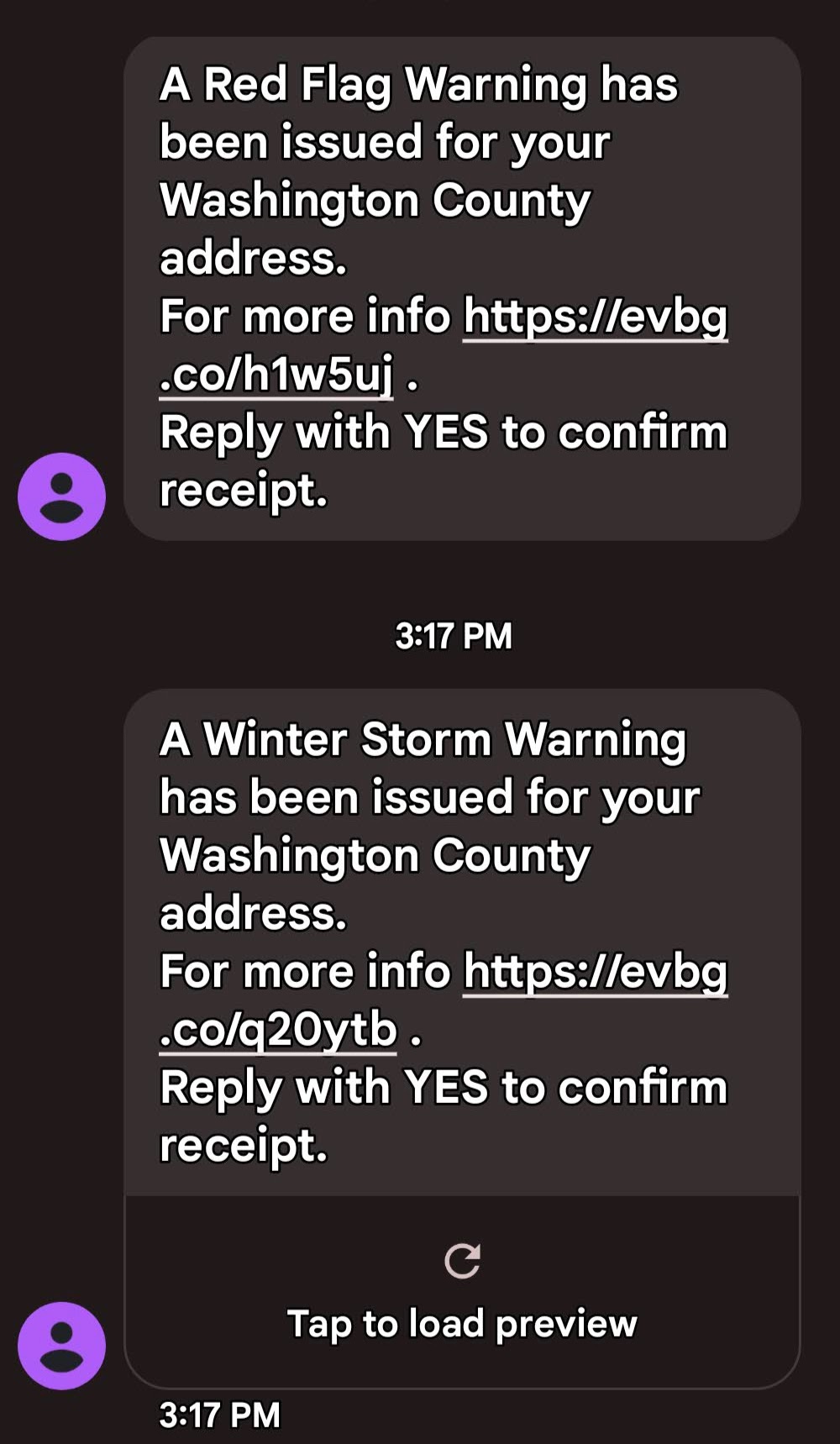
Winter Storm Event
Red Flag Warning

Unstoppable Meets Immovable

Like much of North America, our area is currently being hit by snow and ice storms during this yuletide. In response to the storm, on the solstice, two things happened. One, at 4PM our Tesla Powerwall went into Storm Watch mode. This charges it up to 100% and keeps it there so the battery pack has the energy needed to keep our home running if the grid power goes out. An outage is a real possibility during ice storms, so the precaution is smart. The second event in response to the storm is that our local utility scheduled a virtual power plant (VPP) event. The VPP event was scheduled to run from 5PM till 8PM. 

Portland General VPP event

So what happens when Storm Watch mode is trying to hold the pack at 100% charge and a VPP event is trying to discharge the battery to support the grid? The good news is we could to opt-out of either one or both of the events if we had a preference as to which one we wanted to win out. However, I was far more curious to see what happened if we did nothing and watched the result. 

Without further ado, the VPP won out. Our Powerwalls discharged for 3 hours at 3kW. This removed 9kWh from our ~40kWh pack.

Powerwall Discharging 
While in Storm Watch Mode

Solstice Energy Use and Production

Below is the graph of our energy use on the solstice. The colors tell you the source: grey is the grid, green is the Powerwall, and amber is solar direct from our roof.  


The sun didn't spend long in the sky on December 21st. Sunrise was at 7:47AM and sunset was at 4:29PM. That's just 8 hours and 42 minutes without the cold inky black winter sky overhead. Combine this with the sun low in the sky and storm clouds and the result is a yield of 12.7kWh of solar production for the day. 10.5kWh of that solar went directly into running our home with the remaining 2.2kWh going into the Powerwalls. 

For comparison, on the summer solstice, we generated 72.9kWh (almost 6 times more), along with feeding ~50kWh of that into the grid. Here's looking forward to sunnier days.
Ω

Other Solar Posts: 

Other Powerwall Posts:

Wednesday, July 28, 2021

Portland VPP Supporting The Grid During Heatwave

Portland is having *another* heatwave. And our local utility, Portland General, is dispatching our Virtual Power Plant (VPP) to help alleviate the grid strain that the additional air conditioner usage will cause. 


As I pointed out during the last time the VPP was dispatched, in our situation, this dispatch operation can actually increase our grid load. That's because we are load-shifting and reducing our electricity bill

The VPP control software will improve. Next summer, they'll likely be able to account for our use case. In the meantime, our minor increase in load will be more than made up for by others in the VPP. 

Alternatively, I might disable the VPP temporarily to stay "islanded" so that we don't increase our grid load. After all, I volunteered our batteries to help the grid, not increase the burden on it.

Sunday, July 19, 2026

Home Battery Subscription: Affordable Home Energy Storage and Backup Options

Have you ever wanted a home battery that could power your critical loads or even your entire home, but you didn't want to pay the thousands of dollars upfront to make that happen? If that's you, there's a new option to "subscribe" to a home battery.

Palmetto Solar has launched a residential battery lease plan. You can call it Battery-as-a-Service. This program brings a reliable battery to your garage for as low as $98 per month with no large upfront investment required. The program is now available across 25 states, including key markets such as Arizona, California, Texas, Pennsylvania, Illinois, and Oregon. It gives homeowners a practical way to modernize their home energy setup without the heavy capital outlay.

Reliable Backup and Everyday Savings

The primary benefit is peace of mind during outages. A home battery provides automatic whole-home resilience, keeping your lights on, appliances running, and family comfortable when the utility grid goes down.

Beyond backup, the battery supports basic energy arbitrage. You charge it from the grid during lower-cost off-peak hours and discharge it to meet your needs during expensive peak times. Even without solar panels, this approach can produce roughly $600 to $1,000 in annual savings based on seasonal rate changes. These savings help offset much of the subscription cost, making robust blackout protection far more affordable.

Amplifying Value with VPP Programs

Enrolling your battery in a utility Virtual Power Plant (VPP) program, where available, can further reduce your net costs. During high-demand periods, utilities pay you for discharging energy back to the grid. This provides additional earnings for you while briefly supporting broader grid stability.

Maximum Benefits: Pairing with Solar

The strongest financial returns come from combining the battery subscription with rooftop solar and smart time-shifting. This is especially advantageous in markets with Net Energy Metering (NEM) policies, such as California's NEM 3.0, where standard daytime exports offer limited compensation.

By storing daytime solar energy and using or exporting it during high-value periods (for example, the premium evening peak hours between 6 PM and 8 PM in August and September), homeowners can generate thousands of dollars in annual credits and savings. This optimized setup often delivers net positive returns that exceed the subscription cost.

Strategy and Savings Breakdown

Operating Strategy System Requirements Estimated Annual Savings / Revenue Net Benefit to Homeowner
Base Arbitrage Grid connection only $600 to $1,000 Subsidized blackout protection plus bill savings
VPP Integration Grid connection, VPP enrollment Variable based on events Lower net lease cost
Optimized Solar Export Solar array, VPP, time-shifting Thousands of dollars in credits Net annual profit

We face the real challenges of legacy energy infrastructure while believing firmly in superior decentralized solutions. For homeowners, a Palmetto battery subscription delivers immediate resilience, meaningful bill savings, and strong long-term value. Through smart software, home batteries, and supportive policies, families can take greater control of their energy needs and build a more reliable future.

Sunday, September 25, 2022

My Virtual Summer

Event Notification From Portland General Electric(PGE) Smart Battery Program

We joined our local utility's Virtual Power Plant (VPP). If you want to know more about what a VPP is, we've covered that here. In short, the utility can turn on (discharge) hundreds of home batteries like mine when needed to supply additional power to the grid. It's a dispatchable distributed (cloud) energy storage system. 

A VPP is like Energy from The Cloud

This is a list of all the times this year (so far), that PGE has tapped our battery to support the grid.

2022 PGE VPP Events To-Date
Date       Time            Rate        Energy    
Jan 275PM-8PM   2kW   6kWh  
Jan 285PM-8PM 2kW6kWh
March 18  5PM-6PM 2kW2kWh
April 138PM-9PM 2kW2kWh
April 258PM-9PM 2kW2kWh
July 115PM-8PM 3kW9kWh
July 265PM-8PM 3kW9kWh
July 285PM-8PM 3kW9kWh
Aug 84PM-7PM 3kW9kWh
Aug 174PM-7PM 3kW9kWh
Aug 184PM-7PM 3kW9kWh
Aug 304PM-7PM 3kW9kWh
Sept 64PM-7PM 3kW9kWh
Totals33 Hours90kWh

That's 13 events this year. The early events seemed to be testing out the system. These events were lower power and shorter events. The real use cases started in July. There were 8 of these hot summer day events, where our batteries worked in cooperation with all the other home batteries in VPP to provide energy and frequency stabilization.

I can't help but notice that the energy use total for this year is 90kWhs. Our Tesla Model X is a 90D, which means that the battery capacity is about 90kWhs. So these events used the same amount of energy as one fully charged Tesla Model S/X 90D.

Opt-out 

One final note, each of these event notifications comes with a simple opt-out link that you can click if you don't want your home battery to participate. I'm not sure why you'd opt-out if you're signed up for the program, but if you do have a reason to want your battery all to yourself, they make it easy to keep your stored energy for your own purposes.

Saturday, August 2, 2025

Benefits Solar Energy and VPPs for your Home and Neighborhood

Solar Data from Tesla App

Introduction

The above screenshot captures a day’s solar energy generation, storage, and use of 66.5 kWh in rainy Portland, Oregon. It also offers a glimpse into how one household harnesses solar power to meet its energy needs while contributing to the broader energy ecosystem. By participation in Portland General Electric’s (PGE) Smart Battery Pilot program, this setup shows the potential of distributed energy resources. The integration of solar energy systems with Tesla Powerwalls, represents a significant step toward sustainable living and grid resilience. We'll explore the implications of this, its financial and environmental benefits, and its impact on the neighborhood, particularly under a time-of-use electricity plan and virtual power plant (VPP) participation.

Quote Symbol
This screenshot showcases solar energy and its distribution across home use, EV charging, storage, and grid export, underscoring the potential of integrated home solar and battery systems.

Energy Distribution and Personal Benefits

The Tesla app screenshot illustrates a well-balanced energy distribution, with 57% (38.5 kWh) powering the home directly, 15% (10.0 kWh) charging an electric vehicle (EV), 18% (12.4 kWh) stored in the Powerwalls, and 10% (6.6 kWh) fed to the grid. This configuration highlights the system’s efficiency in meeting daily energy demands while leveraging storage for future use. Tesla's Charge-on-Solar feature allows surplus solar to charge the EV only when solar production outpaces the home's needs. With a total storage capacity of 40.5 kWh across three Powerwall 2s, the household can store excess solar energy generated during the day, as evidenced by the 12.4 kWh stored. This stored energy is used during peak rate times (5PM till 9PM) under the time-of-use (or time-of-day) plan. This strategy reduces reliance on grid electricity, which is costlier during peak hours, potentially saving hundreds of dollars annually depending on rate differentials.

Participation in PGE’s Smart Battery Pilot program further enhances financial benefits. The program compensates participants $1.70 per kWh for energy discharged during Peak Time Events, which occur approximately 10 times a year. If the household discharges 25 kWh per event, it could earn $42 per event, totaling ~$420 annually. This income, combined with the avoided peak costs and the net metering credits from the energy exported to the grid provides a robust financial incentive. Environmentally, the system displaces fossil fuel-based grid electricity with clean solar power, reducing the household’s and the grid's carbon footprint.

Quote Symbol
The integration of solar energy systems with battery storage represents a significant step toward sustainable living and grid resilience.

Neighborhood Impact and Grid Stability

The household’s energy setup has far-reaching implications for the neighborhood, particularly through its role in PGE’s VPP initiative. The 6.6 kWh exported to the grid, as depicted in the screenshot, contributes to a collective effort that stabilizes the grid during peak demand periods. When the sun is shining, the air conditioner units are running, and solar feed-in is helping power them. By aggregating energy from participating homes, a VPP event reduces the need for peaker plants, which are notorious for their high CO2 emissions. This collective action supports PGE’s goal of incorporating more renewable energy sources, enhancing grid reliability across the community.

Moreover, the local storage and generation of energy decreases transmission line demands. This reduces energy losses that occur over long distances and eases the strain on infrastructure, potentially delaying costly upgrades. If more neighbors adopt similar systems, the neighborhood could become a model of resilience, capable of withstanding outages more effectively. The Powerwalls’ backup capacity ensures the household remains powered during disruptions, a benefit that could extend to the community if adoption grows, mirroring successes seen in other regions during severe weather events.

Economically, widespread participation in VPP programs could lower electricity costs for the neighborhood by reducing the utility’s infrastructure investment needs. The compensation paid to participants, such as the $1.70 per kWh from PGE, also circulates money within the community, stimulating local economic activity. Environmentally, a neighborhood with high solar and battery adoption significantly cuts its collective carbon footprint, aligning with broader climate goals and reducing reliance on fossil fuels.

Quote Symbol
This system exemplifies how individual action can contribute to a sustainable and resilient energy future.

Conclusion

The Tesla app screenshot, showcasing one day's 66.5 kWh of solar energy generation and its distribution across home use, EV charging, Powerwall storage, and grid export, underscores the transformative potential of integrated solar and battery systems. For this Portland household with three Powerwall 2s, the setup offers substantial financial savings through time-of-use optimization and VPP earnings, alongside significant environmental benefits by reducing CO2 emissions. The neighborhood reaps rewards through enhanced grid stability, reduced transmission demands, and increased resilience, with the potential for economic and ecological improvements as adoption spreads. This system exemplifies how individual action can contribute to a sustainable and resilient energy future.

If you want solar and/or batteries for your home, here are some referrals: 

If you're within 50 miles of SunPath's office in Beaverton, Oregon, I recommend getting a quote from them for your solar project. Also (before or after you have the quote), tell them you were referred by Patrick from CarsWithCords.net, you'll get $500 off, and I'll receive a referral bonus.


If you're considering Tesla for your solar project, you can use my referral code (https://ts.la/patrick7819) for $500 off, and I'll receive referral points for Tesla merch.


Ω