Featured Post

The 4 Horsemen of the Auto & Oil Industry Apocalypse

Wednesday, August 30, 2023

Sometimes Y

Delivery Day at the Tesla Service Center

We just purchased a Tesla Model Y. After we've had some time with it, I'll post my thoughts on the vehicle and ownership experience; but for this post, I have two questions related to the battery: One, How big is the battery pack? Two, How far can I drive? Plus a little fun.

How Big Is The Battery Pack? 

I wanted to know "How big is the battery pack in a 2023 Tesla Model Y Long Range AWD?"

Seems like a straight forward question, but getting the answer was much more difficult than I thought. 

Without dragging this out, here's the answer I landed on: 

The battery pack capacity in a 2023 Tesla Model Y LR AWD is 84.6 kWh.

If you want to know how I got to that answer, read on. 

Since the Model 3 was launched, Tesla no longer badges their vehicles with the battery capacity, so it's not just written on the back of the car.

As one does, first I googled for the answer and I found results all over the place. The only problem is none of them agreed and they seemed more like guesses than authoritative answers.

  • InsideEVs said it is "around 81 kWh."
  • The Car Guide online said it's 75 kWh. 
  • EV Database says it's 78.1 kWh. (very specific, but no source info)
Okay, the web does not know or, at least, does not agree, so let's go to the Monroney sticker. This label doesn't list the battery capacity, but it does say the efficiency is 28 kWh per 100 miles and the range is 330 miles. So with just a little math, that's: (28kWh * 330 miles)/100 miles = 92.4kWh. This is significantly more than the numbers above, so I was skeptical and wanted to double check it. 

The Monroney sticker also says Model Y has an efficiency of 122 MPGe. The math was a little more complicated and resulted in a ~91 kWh capacity size. That's 5 estimates, and none of them agree and the variance is pretty large. But the Monroney sticker is from the EPA; it must be more reliable than some google search. Right? Right? 

I found out that the range and the efficiency are calculated with different tests. So you cannot use those two in the same calculation. That means that my two 90-some kWh calculations are invalid. 

Strike one, the web. Strike two, Monroney. Time for a third (better?) source.

To certify a vehicle for sale in the US, the manufacturer has to submit the EPA test results along with information about the vehicle. These documents are public records, so I looked at the Model Y docs. 

Here are the relevant bits from the document: 

From 2023 Tesla Model Y AWD EPA Test results

First, I find it funny that EV information is lumped under the "Hybrid" category. I also want to point out that this test was done in September of 2022. The cover page says it's for the 2023 model year vehicle, while the comment in the snippet above says "2022 MY" Model Y. Tesla does not really use model years, so take this as you'd like.    

The Tesla submitted EPA document says the battery pack voltage is 360V and that the Energy Capacity is 235. Capacity of 235, but 235 what? There are no units listed. A little digging and I found that this is Amp-hours. Given these to values and we can finally derive the size (360V * 235 Ah = 84.6 kWh). This certainly seems like a better answer than any of the previous. If you know of a better source for pack size info, please let me know in the comments.

You can see the complete document here. Looking at it in more detail, it has several recharge sessions listed where more than 91kWh are used during charging. That does not mean that the battery capacity is that big, there are always some loses during charging for things like heat, thermal management, power electronics, controls...

One important note, assuming the 84.6 kWh is the right size, that does not mean that all of the battery capacity is available to the driver. Automakers often hold back a portion of the battery to improve longevity. 
 
Special thanks to domenick on TeslaMotorsClub for helping me find these resources. 

Model Y AWD LR Range  

My next question: What is the range of a 2023 Tesla Model Y Long Range AWD?

The Monroney sticker says 330 miles, but there's a reason that we have the expression Your Mileage May Vary. I found a hypermiler who goes by the name madmanquadsix that was able to drive 356 miles on a single charge. I'm no hypermiler, EVs are sporty cars and driving 5 or 10 MPH under the speed limit (as hypermilers often do) is no fun (and can even be dangerous). So I have no expectation of meeting madman's results. 

As we saw in the capacity calculations above, the Monroney sticker led us to the incorrect conclusion that the vehicle had a battery pack of over 90kWh. So, let's assume it's wrong about the real-world range too. Using the pack size that we've determined (84.6kWh) and the 28 kWh per 100 miles yields a range of 302 miles. This seems a little more realistic and frankly is the range that should be posted on the Monroney label, IMHO. And note, if you were to drive that entire 100% to 0% drive, the car would be alerting and speed limiting during the final part of the drive, so that makes the usable portion more like 275 miles, unless you enjoy stress.

Even though I think the EPA stated range is too rosy (for all cars), it is still far better than the WLTP (Worldwide Harmonized Light Vehicle Test Procedure), and the NEDC (New European Driving Cycle). These two tests both have longer range estimates for the Model Y. The WLTP estimate is 350 miles and the NEDC range estimate is a whopping 398 miles; nearly, 400 miles! That is even more than the madman hypermiler was able to achieve. Having an estimated range that far off, one that is nearly impossible to achieve is just setting people up for disappointment and failure.

Range (regardless of fuel source) can be significantly impacted by elevation changes, wind, weather, road conditions, climate control use, speed, driving style, tire pressure, tread, and wear, towing, roof attachments... Given all of this, I wouldn't just assume you can jump in and drive 300 miles before charging up. A little planning helps and Tesla makes that easy.


Tesla In-vehicle Energy Graph

It's not about general range, it's about "Can I get to where I need to go?"

The route planner in Tesla vehicles is awesome. Pop-in a destination and it takes many factors into consideration, plans a route with charging stops (if needed), and shows you the expected battery pack discharge profile, consuming more energy as you ascend a hill and regenerating energy as you coast down the other side. It even shows you the round trip results, so you know at a glance if you can make it home without a charge stop.

I use the route planner and energy graph on most drives. I like to watch the accuracy of the prediction and I like to see if I can do just a little bit better than that. As Tesla often does, they have iterated this feature, considering more factors and looking at historical data... all resulting in better estimates. 

The image above is a great example. This was a ~25 mile drive, with freeway speeds and 1,118 ft of elevation gain. It was a hot day in August; the AC was on. The route planner expected to use ~31 miles worth of range. The drive was completed using only ~27 miles of worth of range.

Using the in-vehicle (and soon in-app) trip planner allows you to have the confidence to know you'll make it there with charge to spare. 

That answers my two questions:

  1. Q: How big is the battery pack in a 2023 Tesla Model Y LR AWD
    • A: 84.6 kWh
  2. Q: What is the range of a 2023 Tesla Model Y Long Range AWD?
    • A1: EPA Range is 330 miles
    • A2: real-world range is 275 miles* YMMV

Model Y Accessories 

This car was our new fun toy and we had to buy a few things to personalize it a little. 

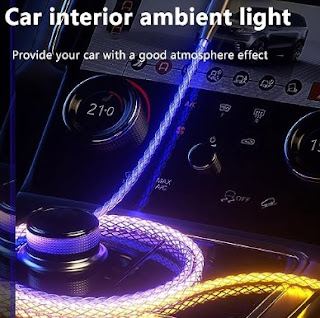
The USB ports in the Model Y (in all Teslas today) are USB-C. The majority of my cables are USB-A (at least on one end), so it was time to upgrade. There are two USB ports in the center console, so an illuminated USB cable is an easy and affordable way to have some cool ambient light and makes it easier to find stuff in the cubby. 

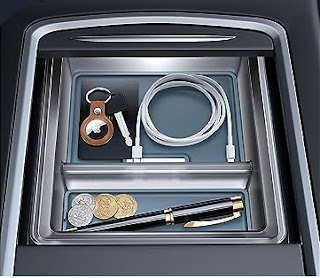
Next on the list was a center console organizer. There are two reasons I liked this one better than the others. One, it slides forward to give you easy access to the lower level. Two, is it transparent, so the ambient light that's plugged in below glows through. 


Next on the list, driving glasses holder. I like to keep shades in the car in a place where they won't get scratched or dirty. The easy-close strong magnet on this one closes with a satisfying snap. I picked the carbon fiber finish. There are many colors available (you do you).
 

No one likes trash on the floor of their new car. So where to put it? A bag, that's not a clean look either. The solution is a cyber-can. It fits in a cup holder. I put it in the kicker panel so the center cup holders are available for caffeination.    

Cyber Can 

This is one of my favorite upgrades: Puddle lights. I was intimidated the first time I swapped these in, but it was easier than I thought it would be. It's a nice touch that people see when getting in or out. 


This one is a nice subtle little touch that people are not likely to notice but it improves the experience. And they are super easy to install. You can get them with or without the Tesla logo. I think these go especially good with the midnight silver metallic paint.  


The final Model Y accessory that we've purchased so far is a car smart dog leash. This one is cool because it has a seatbelt clip. This makes it easy to keep your furry friend in the second row. You can even use it with the second row seats folded down. The seat belt clips are right under the 60/40 split. It has a short bungee section to take the jolt out when they tug, a clip for poop bags, and it's reflective at night. The perfect lead for our needs. 


There you have our list of Tesla Model Y accessories. I hope find something that brings you a little joy. 

Disclosures: 
This article contains affiliate links 
I am long Tesla 

Monday, August 21, 2023

NW Fires August 2023


via https://www.fireweatheravalanche.org/fire/state/oregon

The sky was orange yesterday. Not at sunset, as you might expect, but at noon. The sun veiled behind smoke and haze; you could look directly at it. Our region is ablaze. Northern California to British Columbia; devastation is all around. Now is the time to act. 


Sunday, August 13, 2023

Tesla FSD Transfer - I did it! How did it go?


In the Tesla Q2'23 quarterly call, retail investors (and Tesla customers) asked (for about the millionth time) if Tesla would allow Full Self-Driving (FSD) to be transferred to a new car. The answer has been 'no' every time this has been asked. So when I heard the question, I was thinking "What a waste of time"; however, shockingly, the answer was 'Yes' this time.

It was a qualified yes, but still a yes. Here are the conditions from Tesla: 

from Tesla's website

We've been considering a Model Y. It would be our road trip vehicle. I've been waiting for Tesla's new camera suite (HW4) to be deployed. These new cameras are significantly better than the HW3 cameras and may be required for FSD to ever leave the beta phase.

via AIDRIVR on Twitter/X 

 We checked our eligibility.

from Tesla's website

1) We'd be ordering the Model Y in late July, so it should
     be easy to take delivery by the end of September

2) Make sure you include FSD in the car we're ordering

3) We currently have a Model 3 with FSD

4) We order them on the same account

5) Agree to terms (more on this later) 
 
We met all of the requirements. We ordered a new Model Y on July 29th. 

Here's what happened next. We received a text from our sales advisor. We told them that we wanted to transfer FSD. They said that we'd have to wait until a VIN was assigned. 

Our VIN was assigned about a week later. We then received the terms and conditions document with both the donor VIN and the recipient VIN typed in a tiny font on a document that looked like a copy of a copy of a copy.

Here are the terms and conditions: 

We signed the terms and conditions and sent it in. Our delivery was scheduled for August 8th. 

I had to get the finances in place. The vehicle purchase agreement had the $15,000 FSD price on it. We know that's being removed from the price, but I can't just remove $15,000 from the final price and use that for the new final price since there are taxes and other things that would be adjusted too. So I texted Tesla and said I needed the purchase agreement updated to show the final price updated for the FSD transfer. They said, "It's coming." Finally, on the day before delivery, we received an updated purchase price.

The way they modified the price was by adding $15,000 to the referral credit. This had me worried. Referral credits could be considered a payment of sorts and could have tax consequences. After a little googling and I found this:
 
from https://referral-factory.com/learn/calculating-the-value-of-a-referral-reward/

My worries were assuaged when, on purchase day, we received an update and saw that this was only temporary. The referral credit was back to $500 (for using our referral code) and this final version of the purchase agreement removed FSD from the cost altogether. Luckily, the amounts were exactly the same or we'd be running back to the bank for an updated cashier's check. Later that day we received the transfer confirmation.


FSD was removed from our Model 3 on the day before we picked up our new Model Y. 

When we picked up our Model Y. It listed FSD on the vehicle. 

We completed our camera calibration driving, double-tapped the stalk, and Autopilot started. Just AP, not FSD. What happened? FSD was not yet functional on the HW4 platform. There's a note on the FSD screen in the car that says a new (yet unreleased) version of FSD is needed to enable HW4. 

FSD Beta for HW4 is coming soon and our crystal-clear cameras will be waiting for the over-the-air update to enable it.

If you are interested in transferring FSD, I would not wait until the end of the quarter. Things get hectic at that time and if your delivery is moved from Q3 to Q4, you might lose out. 

Disclosure: I am long Tesla

UPDATE: FSD Beta Arrived! On August 30th, we received our first SW update for the car and it came with FSD Beta v11.4.4. So we had the car for less than a month and it is already driving itself (with close supervision). After hearing Musk say that HW4 would be 6 months behind HW3, I thought I'd have to wait until 2024 sometime. 

Sunday, July 30, 2023

Summer Solstice


June 21st was the 2023 summer solstice in the northern hemisphere. In the NW Oregon region, sunrise was at 5:23 AM and sunset was at 9:04 PM. That's 15 hours, 41 minutes of daylight on this, the longest, day of the year. 

With all those hours of daylight, this day is a milestone for solar production. I usually like to report our solar production for this day. Sadly, our production for this year's solstice was zero kilowatt-hours.

Our production was zero because our panels are stacked up on our deck waiting to be reinstalled. They were removed to allow for the installation of a new roof. The new roof is complete and the solar panels will be back up there soon.

This was an interesting process and, even after having solar for 16 years, I learned a few things through the experience. But that's a story for another day, after the story is complete and the panels are back on the roof and producing, I'll post the entire saga. 


--------------------------------------------------------------------------------------------

Once upon a time, nestled in a small suburban neighborhood, there stood a quaint little house adorned with gleaming solar panels on the rooftop. The home belonged to the Smith family, who were firm supporters of sustainable living and the power of renewable energy.

For years, the solar panels had faithfully converted the sun's abundant rays into electricity, providing the Smiths with clean and cost-effective power. They reveled in the knowledge that they were reducing their carbon footprint and doing their part to protect the environment. However, as time went by, the roof beneath the solar panels began to show signs of wear and tear.

Understanding the importance of a sturdy roof, the Smiths reluctantly decided to have it replaced, knowing that this meant temporarily bidding farewell to their beloved solar panels. It was a difficult decision, for they knew that during the construction process, they would miss out on an extraordinary event—the summer solstice, the longest day of the year, when the sun's rays would be most abundant.

As the construction workers arrived, the Smith family watched their once sun-kissed solar system being carefully dismantled. The roof was stripped bare, exposing the house to the elements. Day by day, the roofers diligently worked, ensuring the new roof was strong, reliable, and capable of protecting their cherished home.

Meanwhile, inside the house, the Smiths experienced an unusual sense of emptiness. Without the soft hum of the inverter or the knowledge that the sun was powering their home, they felt a loss. The house seemed dimmer, hollower, as if a small part but important bit was missing.

The days passed, and the Smiths anxiously awaited the installation of their new roof, hoping that it would be completed before the summer solstice arrived. However, delays in the construction process made their dreams of harnessing the sun's energy on that special day grow dim.

Finally, just a day before the summer solstice, the roofers finished their work. The Smiths were relieved to have their home once again protected, but the missed opportunity weighed heavily on their hearts. They had missed out on a chance to maximize their solar production on the longest day of the year.

Yet, as the sun rose on that momentous day, its rays gently caressed the newly installed roof. Although the solar panels were absent, the Smiths knew that their commitment to renewable energy extended beyond a single day. Their actions were a testament to their dedication to a greener future.

The Smith family vowed to make the most of their solar panels once they were reinstalled. They eagerly awaited the return of their energy-generating companions, knowing that every day would be an opportunity to contribute to a sustainable world. They understood that the summer solstice was just one day, but their commitment to renewable energy was a lifelong journey.

And so, the Smiths' home stood proudly once more, with a new roof, waiting to embrace the return of its solar panels. The story of their temporary separation from the sun's power would be shared, serving as a reminder that even amidst setbacks and missed opportunities, the pursuit of a sustainable future remains steadfast.

Sunday, July 9, 2023

Tesla's 2 Million Year

In January, we predicted that 2023 would be the year that Tesla produced over 2 million vehicles in a year for the first time. Now that we're halfway through the year let's see how that's progressing. 

Tesla recently reported their Q2 2023 production and delivery results. They produced 479,700 vehicles in the quarter. That's a run rate of 1.9 million annual units, and it brings Tesla's production up to 880,000 for the first half of the year. That's less than halfway to the 2 million unit target, but (absent force majeure) you can expect them to increase the production rate in Q3 and again in Q4 as Giga Austin and Giga Berlin continue to find their footing and take longer strides. 

With that increase in the second half of the year, will they hit the 2 million mark?

Tesla's guidance is merely 1.8 million units for the year. Given the first-half results, let's plug in the numbers and see if 2 million is still a possibility. 

Here's a chart of recent production with simple growth trend estimates to complete the year.

Q1 Actuals: 439,701
Q2 Actuals: 479,700
Q3 Estimate: 545,000
Q4 Estimate: 610,000

If these estimates are correct, that's a total of ~2,074,000 for the year.

That's not a lot of margin for error, but 2 million is still a possibility, assuming Tesla can continue to scale production in the 2nd half of this year. Giga Berlin and Giga Austin are both ramping up and have hit significant milestones in the first half of this year. 

2 million units this year is no guarantee, but it is still a possibility for this year. With such a small margin of error, another Covid variant shutdown, supply-chain issues, or the like and we'll have to wait until 2024 to cross this big milestone. See you after Q3 to see how we're trending. 

It will be exciting to see how this plays out. 

disclaimer: I'm long TSLA.


Update: July 22nd, 2023
Tesla recently held their Q2'23 financial update and they reported that Q3 production will be down due to production line upgrades. The 2-million milestone had very little margin, so with this scheduled downtime, it seems unlikely that this will be the 2-million vehicle year. This will still be a historic year for Tesla with the first Cybertrucks rolling off the line.  

Saturday, June 24, 2023

Keep Summer Safe - Hot Summer Power Outages

Tesla Powerwall backup power events for Summer 2022

Summer is here and it's a hot one. Texas, Louisiana, Ireland, India, Mexico, Beijing, Siberia (yes, Siberia) and other areas are setting new record high temps during these heatwaves. When it's this hot, for most homes, air conditioning is a *must-have*. High indoor temps come with higher all-cause mortality, cardiovascular mortality, and more emergency hospitalizations. Children and the elderly are especially vulnerable to the negative impact of high temperatures on health. So just like I wrote in your high school yearbook:
Stay Cool This Summer!

When it's this hot, the electricity grid can feel a strain on its health too. Last summer, as you can see in the image above, we lost power 5 times of note in July for a total of 16 hours, with the most extended outage lasting 6 hours. If you're without power for 4 or more hours, that's long enough for freezers to defrost and for food to go bad. 

Above I said that we lost power 5 times; I should correct that: our grid went down 5 times, but our home didn't lose power at all because we have Tesla Powerwalls to provide backup power to our entire home. So even after 6 hours without the grid, our air conditioner continued to run and our refrigerator stayed cold; we didn't have to throw away our milk, cheese, and leftovers.

I hope our grid stays up all summer this year, but hope is not a strategy nor the pathway to energy independence. If you want to learn more about Powerwalls, check out All You Ever Wanted To Know About Powerwalls.


The Texas grid is currently stressed as people are trying to stay cool during this heatwave. I​t recently reached 118°F at Rio Grande Village in Big Bend National Park and it's still June.

During this heatwave, some Texan Powerwall owners are able to sell energy to the grid at rates as high as $5 per kilowatt hour. Many other regions have generous feed-in tariffs too (although not likely as high as Texas is currently seeing) or smart battery incentive programs. These incentives are in addition to the blackout protection and the savings that you'll get from avoiding grid usage during peak rates by utilizing the battery.

Powerwalls can be installed either stand-alone or coupled with solar (Tesla solar or other).

If you want to buy your own Powerwalls, you can use my referral link for any referral bonuses that Tesla may be offering. Disclosure: I'm long TSLA.

Sunday, June 4, 2023

20 Years of Tesla :: 2003 to 2023


Twenty years ago, on July 1st, 2003, Martin Eberhard and Marc Tarpenning incorporated Tesla Motors! Elon Musk, JB Straubel, and others joined and helped make it the incredible business it is today. The company's name is a tribute to inventor and electrical engineer Nikola Tesla, specifically for his polyphase electric induction motor design.

Tesla Inc. (previously Tesla Motors Inc.) turns 20 this year. The traditional 20th-anniversary gift is China dinnerware. Considering the significance of Tesla's presence in Shanghai, this seems apropos. We'll discuss how they got to where they are today and where Tesla could be 20 from now.

Today, Tesla is one of the most valuable car companies in the world, with a market capitalization of over $800 billion as of early 2023. In addition to electric vehicles, the company is also focused on renewable energy, energy storage, and AI-based autonomous driving technology.

In this post, we'll cover the founding, internal strife, product introductions, and finally conjecture about what the company may deliver over the next 20 years.

The Founding

In February of 2000, Eberhard and Tarpenning sold their e-reader company for $187 million. While developing and revising their e-reader, the Rocket ebook, they saw that lithium batteries were making great strides. Each iteration of these fancy new batteries made their e-reader lighter and allowed it to run longer.

With the windfall from the sale of their company, Eberhard and Tarpenning started wondering what they could do for their next endeavor. Eberhard, like many who strike it rich in Silicon Valley, wanted to buy a sports car, but he didn't want a polluting gasoline vehicle. California was in the shadow of the electric car's murder, so buying an electric car (sports car or otherwise) was not an option. While car shopping, Eberhard stumbled onto AC Propulsion, an electric motor and motor controller company. Eberhard made an investment in AC Propulsion and joined their board.

Given the battery advancements that Eberhard and Tarpenning had witnessed combined with the AC Propulsion technologies and they knew an electric car company was the answer to their 'what do we do next?' question. 

Ian Wright joined Tesla Motors late in 2003 as the company's third employee.

In parallel, JB Straubel and Elon Musk had driven the AC Propulsion T-Zero prototype roadster EV and they were impressed. Musk asked them to make one for him. They said they were not making cars, the prototype was only to demonstrate their motor and controller products. If they wanted a car, they should talk to the folks at Tesla.

Straubel and Musk looked into Tesla and saw that (at that point) they had not made much progress. Musk and Straubel discussed the idea of creating their own EV start-up to compete with Tesla. From his PayPal days, Musk saw firsthand that two competitors (Confiniti and X.com) could merge, rather than compete, and the resulting company could achieve their goals faster. So, rather than creating a competing start-up, Musk and Straubel would invest in and join the fledgling Tesla.

Musk invested $6.5 million in February of 2004 in the company's series-A investment round. This made Musk the largest Tesla shareholder and chair of the board of directors. Straubel joined Tesla in May 2004 as Chief Technology Officer.

Innovation is Tesla's Lifeblood 

The legacy automakers are being disrupted by 4 simultaneous megatrends (Electrification, Mobility as a Service, Self-driving Cars, and a Relentless Pace of Innovation). If the legacy automakers cannot navigate all four of these, they will not survive. 

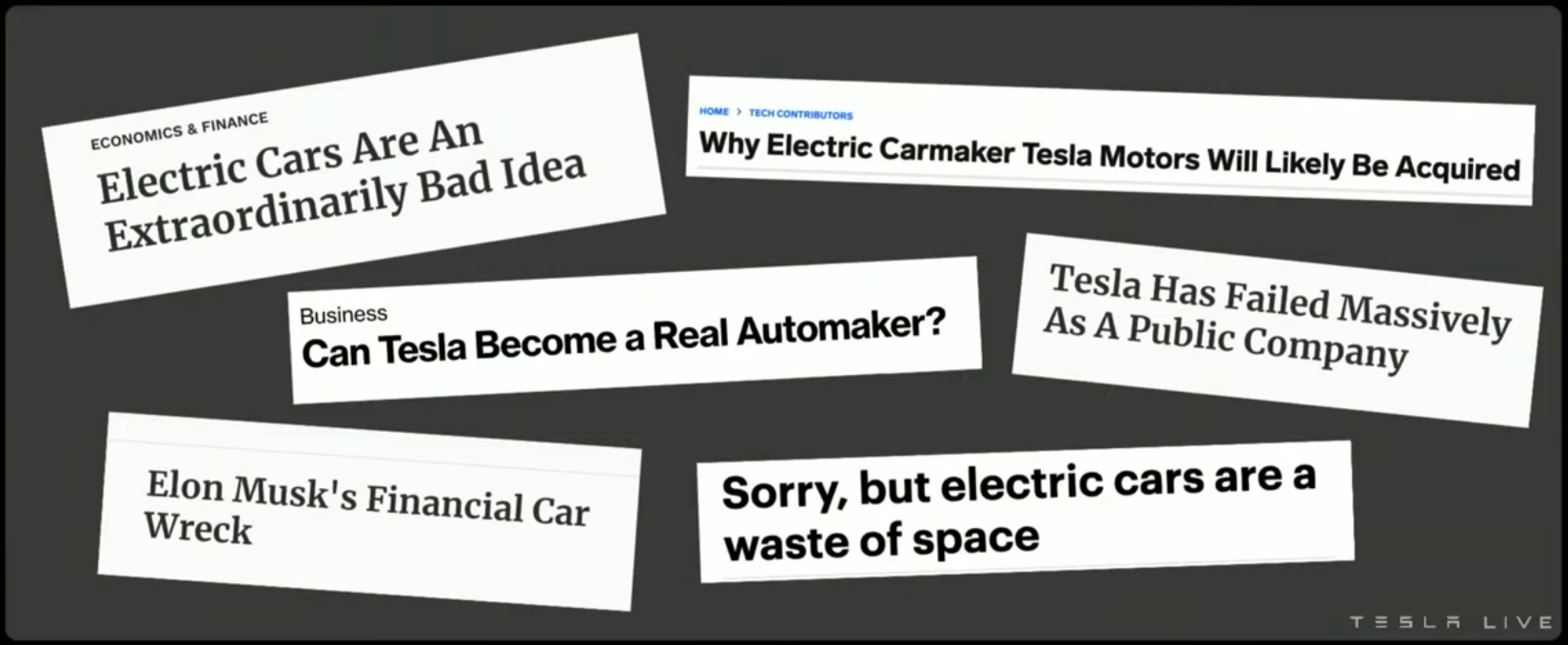
Whereas, Tesla is in a position to be propelled by each of these trends. Tesla has a culture of innovation. Their very first product was one that the auto industry said no one wanted. Then Tesla made their second vehicle, the Model S, and again the auto industry forecasted Tesla's demise. These waves of doubt have preceded each of Tesla's products (the Semi was called impossible by multiple "experts") and doubt still precedes planned product introductions like the Cybertruck and the Robotaxi.

Tesla has a series of moats, but they frequently actively work against their own selfish interests to move the entire industry forward such as opening the Supercharger network to EVs from other manufacturers and open-sourcing their patent portfolio.

More on how they perform these marvels of engineering later, let's get back to the founding storyline.


Internal Struggles 

Wright and Eberhard could not agree on the Roadster engineering direction. How much should they rely on external vendors like AC Propulsion and Lotus, and how much should they do themselves... The disagreements between Wright and Eberhard became heated to the point that the two men could not be in the same room without a firestorm erupting.

Wright approached the board attempting to oust Eberhard and name himself as Tesla's CEO. It was clear that one of them had to go. As chair of the board, the decision fell to Elon Musk. Musk chose Eberhard to stay and continue as the CEO. Wright was asked to leave the company. Wright left Tesla in 2004 to start his own EV company, Wrightspeed. 

This was not Eberhard's only struggle with Musk and Tesla's board. In August 2007, Eberhard was asked to step down as CEO. Eberhard did step down and ultimately left the company in January 2008. Co-founder Marc Tarpenning also left the company at the same time. 

When Eberhard stepped down as CEO, Michael Marks was brought in as interim CEO. Just 4 months later, Ze'ev Drori replaced Marks. Nine months later, in October 2008, Musk succeeded Drori, becoming the 4th person to hold the title of CEO at Tesla. 

Founder Lawsuit

Eberhard may have left Tesla in 2008, but his scrap with Musk was not over. In June 2009, Eberhard filed a lawsuit against Musk for allegedly forcing him out. Of all of the allegations thrown back and forth during the lawsuit, one of the more trivial and heated fights during the lawsuit was about who gets to refer to themselves as a founder of Tesla. Eberhard argued that there were only two people there when the company paperwork was filed, founding the company. Musk argued that the company was just two people with an idea on a napkin (more likely engineering paper) before he funded it. The net result of the lawsuit was that five people were named by the court as official co-founders of Tesla (Eberhard, Tarpenning, Wright, Musk, and Straubel). 


Roadster

Despite the fighting within the C-suite, the mission moved forward and on July 19th, 2006 in Santa Monica, California, Tesla unveiled the Roadster! 

Tesla began production of the Roadster in 2008.

Tesla faced many doubters

After the launch of the Roadster, it was not immediately obvious to the industry, media, or most of the public that EVs were the future and that Tesla would change the auto industry forever. Instead, they were met with skepticism and derision. 

This attitude also applied to many auto parts suppliers too. This meant that many suppliers would not return Tesla's calls, or if they did, Tesla did not receive top-shelf service. Why would a supplier put their best team on a niche, small-volume player that is likely to be out of business soon? They didn't. This made it painful for Tesla, but it also meant that they developed the muscles(skillsets) that they'd need to do that no one else was doing. Tesla makes their own circuit boards, writes their own software, and even makes their own seats. This in-house design, engineering, and vertical integration allows the company to have more control over the driver experience, adapt to supply-chain issues, and innovate more quickly. The lack of support from the industry forced Tesla to vertically integrate and now vertically integration is one of their greatest strengths.


Despite the auto media's mockery of the Roadsters and the EV market in general, Tesla persisted. Two thousand ten was a big year for the company, they purchased their first factory and the company became publicly traded. 

What Makes Tesla Different?

We'll cover more about the internal workings (and occasional dysfunction) of the company later. Now, we'll look at the north star of the company. Tesla is a mission-driven company; they are an innovation company. The products are the means, not the end. Here's a (far from exhaustive) list of ways that Tesla is unlike legacy automakers:   

  • Tech company first: Tesla comes to the automotive industry from a very different angle than every car company that preceded them. Tesla is a technology company first. A technology company that makes cars (and other things), rather than a car company that uses technology. One obvious example of this is the connected car. Every car that Tesla has made since 2012 has cellular wireless connectivity. Over-the-air updates are pushed to the car several times each year. This allows Tesla to add new features, improve performance, fix bugs and address recalls, all without bringing the car in for service. Even though this has been a standard feature from Tesla since 2012, it is still highly uncommon for legacy automakers.
  • Mission Driven: Tesla has a long-term plan to use their technical prowess to move planet Earth from fossil-fuel energy sources to renewable energy. This includes energy production, energy storage, and energy use. This is not a plan that requires you to drive a limited short-range vehicle, or huddle under a blanket for warmth while wearing multiple layers in the winter. Instead, this is a plan where humanity has more comfort and more conveniences. With renewable energy, when done right, energy will be more abundant. With renewable energy, every kilowatt-hour does not require mining, drilling, or some other extraction process. Humanity can move beyond "mine & burn."
  • Customer Experience: All automakers manufacture vehicles and parts, but usually sales and service are handled by dealerships, not the automaker themselves. Dealerships are independently owned and while they have contracts with the automakers, they are their own business and they may have a very different agenda than the automaker's banner that flies over their lot. Tesla, on the other hand, provides the sales and service directly via service centers that they own. 
  • Charging Network: When you fuel up an internal combustion vehicle, you are generally buying gasoline from an oil company, rather than the company that made your car (you don't go to a Toyota or Ford branded gas station). Tesla, on the other hand, has a vast network of Superchargers where owners can recharge (while paying Tesla directly).
  • Insurance: Similar to service and recharging, Tesla also offers insurance in some regions. Allowing another option for owners and another revenue stream for Tesla. This is yet another example of vertical integration by the company.

First Factory

In May 2010, Tesla purchased a factory in Fremont, California from Toyota that would become the Tesla Fremont Factory. Tesla paid $42 million in cash and stock for the plant and opened the facility in October 2010 to start production of the Model S.

IPO

On June 29, 2010, Tesla became a public company via an initial public offering (IPO) on NASDAQ with the ticker symbol TSLA. Tesla was the first American car company to IPO since the Ford Motor Company had gone to market more than five decades prior in 1956.

The IPO price was $17 per share. Today, the stock trades at around $200 per share; but that's only part of the story. The stock has split twice since its IPO. The first split was 5 for 1 and the next was 3 for 1. So rather than $200 per share today, the split-adjusted share price is around $3,000 per share. If you bought Tesla stock in the summer of 2010, you'd have 15 times more shares than you bought and the split-adjusted share purchase price would be only $1.13 per share and you'd be up 175 times or 17,500% on your investment. 

Vehicle Introductions

If Tesla had only made the Roadster, they could have been a niche high-end electric sports car maker, but they had much bigger plans. The Model S luxury sedan was introduced in 2012 (and won Car of The Year), the Model X SUV in 2015, the Model 3 sedan in 2017, the Model Y crossover in 2020, and the Tesla Semi-truck in 2022. They also plan to start production of the Cybertruck later this year (2023).

The Model 3 is currently the all-time bestselling EV car worldwide. In June 2021, Model 3 became the first electric car to sell 1 million units globally. Model Y sales have ramped even faster than the Model 3 and Model Y is on track to usurp the bestselling crown from its older sibling this year.

Tesla's 2022 full-year deliveries were 1.31 million vehicles, a 40% increase over the previous year. The company's cumulative sales from the first Roadster (2008) through Q1 2023 is 4,061,776 vehicles. That's over 4 million EVs in total. This year, 2023, will likely be Tesla's 2 million production year. If things go according to plan, Tesla will have produced about 4.5 million EVs when they slice the 20th birthday cake and about 5.5 million by the end of the year; each one with zero tailpipe emissions.


SolarCity

In November 2016, Tesla acquired SolarCity, in an all-stock $2.6 billion deal. This launched Tesla into the solar photovoltaics market. The solar installation business was merged with Tesla's existing battery energy storage products to form the Tesla Energy division of the company. 

This was a major step in Tesla's progress to become more than "just a car company." Soon after the acquisition, the company changed their name from Tesla Motors to just Tesla; indicating the broader scope of the company's ambitions. Some investors sued Tesla because of this merger. In my opinion, these investors never truly understood the company. The original 2006 Master Plan states that Tesla's goal is to "expedite the move from a mine-and-burn hydrocarbon economy towards a solar electric economy..." So it should not be a surprise to investors that understand the company, that they would move into solar energy production products. The vision of Tesla as a full-cycle energy company has only recently been laid bare, front and center in Master Plan 3.0

S&P 500

Tesla reported four consecutive profitable quarters in the second half of 2019 and the first half of 2020. This made them eligible for inclusion in the S&P 500. Tesla was added to the index on December 21, 2020. Tesla was the largest company ever added and the sixth-largest company in the index at the time its of inclusion.

What Makes Tesla Different - The Agile Manifesto 

We've covered Tesla's product development in some detail recently (here). Tesla fundamentally designs and develops vehicles differently than legacy automakers. Tesla uses technology development methods and deploys improvements as soon as they can. This means there are no model years for Tesla's products. 

To support this rapid pace of change, each vehicle has a suite of built-in self-tests. These tests know how the vehicle hardware and software are supposed to work. If a change is made and a self-test fails, you know that change didn't account for all of the interactions that it needed to.

These built-in automated self-tests allow for rapid feedback. Rapid feedback allows for experimentation. Experimentation enables innovation. This allows Tesla to do things that are impossible at legacy automakers. 


The pace of innovation allows problems to be solved, costs to be reduced, and the product to be improved. Having a rapid pace of change inherent in the system has other advantages too. When the supply chain problems hit in 2021, Tesla was able to adapt. Rapid innovation combined with their verticle integration, allowed them to change to new control chips when the ones they had been using were not available. They had to change their software, but when the built-in self-tests passed, they can have a high level of confidence in the new hardware and software components.

Tesla Energy Comes Into Its Own

Tesla's Energy Generation and Storage division brought in $1.3 billion in Q4 of 2022. This is more than 12% of the company's revenue for that quarter. To be clear, Tesla has a business, outside of electric vehicles, that brings in several billion dollars annually. Tesla's energy business is currently growing *faster* than Tesla's vehicle business (although starting at a lower level).

We've covered solar energy in the SolarCity section above. The bulk energy revenue primarily comes from selling energy storage products from industrial-scale to residential. Megapacks are their biggest industrial-scale battery systems. Powerpacks are the smaller (but still industrial-scale) units. These are well suited for critical operations buildings (such as a hospital). And last on Tesla's energy storage list is the Powerwall. This is for residential use. These provide blackout backup and solar energy storage (and they are a lot of fun!).  

Tesla is an electric utility in deregulated regions of Texas. This is yet another direct-to-customer relationship that legacy automakers would never even consider. 

Tesla Becomes the Most Valuable Automotive Brand In The World


In early 2023, Tesla surpassed Mercedes-Benz and Toyota to claim the top automotive spot in automotive brand recognition. This is level of recognition is estimated to be worth a valuation of $66.2 billion. Quite an achievement for a company that spends little on advertising.  

As recognizable as the stylized Tesla T has become, most people don't know that the logo comes from a cross-sectional view of an electric motor. The "T" is part of the rotor and the curved bar across the top is a portion of the motor's stator. The shield that used to surround the logo (shown at the top of this post) was dropped in one of the few updates that Tesla has made to their mark over the years.  

Making The Impossible Merely Late 


"There is…an enormous reservoir of relatively untapped genius–that is, the capacity for exceptional accomplishment–which existing systems of motivation have failed to reach.”
– Saul Gellerman, Management by Motivation

We've previously covered, how Musk and Co. focus on 
Class ½ Impossibilities. These are things are have been recently enabled by related breakthroughs, but the engineering work has not yet been done to put all the pieces together. The computer controls needed to land rockets, the battery advances for compelling EVs, the AI technology for full self-driving. The underlying technologies are available, this makes it possible (but that does not mean that it's easy).

Here's a list of some of the "impossible" tasks Tesla has achieved during their 20 years: 
  1. Roadster: Both creating it and, perhaps more impressive, finding a market for $100k electric sports cars from a startup.
  2. Model S: This moved Tesla into the luxury car market and gave Tesla sales around the world.
  3. Supercharging: EVs were considered slow. The Roadster disproved that. There's no place to charge an EV. The Supercharger network solved that. 
  4. Energy Storage: Vehicles are just part of Tesla's business. Tesla's Megapacks have 3.9MWh of capacity. This is enough to run the average home for over 130 days. This is now more than 10% of Tesla's revenue and growing fast. 
  5. Semi: Multiple "experts" deemed long-range class 8 semi-tracker trailers to be impossible for at least another decade. Tesla ignored them and just did it. 
"Those who work to solve problems are more highly valued than those who merely label them.” 
– Robert Mager and Peter Pipe in Analyzing Performance Problems

Tesla's Future 

Tesla has no shortage of audacious goals. If they achieve even a third of them, they'll be far (or should I say farther) ahead of competitors. 
 
Tesla has outlined several key goals and initiatives that it plans to pursue over the next several years:

Increase electric vehicle production: Tesla's primary goal is to accelerate the world's transition to sustainable energy by increasing the production and adoption of electric vehicles. The company plans to expand its production capacity to meet growing demand and introduce new models, such as the Cybertruck and the Semi. This year Tesla will produce about two million vehicles. They plan to 10X this number and eventually produce 20 million vehicles per year. 

Develop new battery technology: Tesla is investing heavily in battery technology research and development, with the goal of reducing the cost and increasing the performance of its batteries. The company is also exploring new materials, refining, and manufacturing processes to improve its battery technology and reduce costs.

Battery Recycling: Tesla is thirsty for battery raw materials. Recycling will become an ever-increasing source of these materials. Will Tesla develop this in-house, partner with Redwood Materials and others, or is there an acquisition in the future?

Expand into new markets: Tesla is expanding into new markets and plans to continue to grow its global presence. This includes new Gigafactories in more locations to allow deliveries to happen quickly without large shipping costs.

Develop renewable energy solutions: Tesla is also focused on developing renewable energy solutions, such as solar power and energy storage systems. The company's acquisition of SolarCity in 2016 was a key step in this direction, and Tesla is now offering integrated solar and energy storage solutions for homes and businesses. Master Plan 3.0 makes it clear that Tesla is looking into all the areas where fossil fuels are used as potential disruption opportunities. You can expect to see a Tesla heat pump sometime later this decade.  

Side Hustles: You can expect to see Tesla Insurance and Tesla Electric Utility expand into new markets. What other business could Tesla get into? 

Dojo-as-a-Service: AI systems are becoming more and more common. There are many problems that traditional programming cannot easily solve. Artificial intelligence, neural networks, machine learning, and the like all require significant compute power to train. Only after the training, can they deliver the desired results on simple devices. Many businesses will want to have AI products, but won't want to build a massive datacenter to train these systems. Instead, they might rent off-hour time on Tesla's Dojo system to do this work. 

Continue to innovate: Tesla is known for its innovative approach to technology and design, and the company is likely to continue to push the boundaries of what is possible with electric vehicles and sustainable energy solutions. This may include new features, such as fully autonomous driving, as well as new products and services that have yet to be announced.

General Purpose Artificial Intelligence: Tesla is putting the pieces in place to be a powerhouse of the next generation of tech. The vision system and neural net training system (Dojo) developed for Tesla's cars have spillover into the robotics space. 

Wrapping Up 

Tesla has had a storied first 20 years of life. They've done things that conventional thinking deemed impossible. There's no doubt that the auto market is forever changed because of Tesla.

The next 20 years will be exciting to watch as an owner or investor. Tesla spent the majority of these past two decades running uphill. During most of its history, most of the auto-industry considered them a joke and during most of these years, they lost money. Today, things. have. changed. 

Tesla is now in a position of strength. They have $22.4 billion in cash in the bank (as of Q1'22 reporting). EV sales are growing every year in all markets around the world and no other automakers have invested in EV technology to the same level or as long as Tesla. Tesla's vehicle sales will continue to grow with growing global EV adoption. By 2030 the majority of car sales will be EVs and Tesla is on track to be the largest automaker in the world.

Disclosure: I am long 
Tesla

Sunday, May 21, 2023

There's Not Enough Infrastructure For EVs


Electric Vehicle charging locations in the US from Energy.gov 

If you drive an EV, you've heard someone say, "I'd like to drive an EV, but there's no place to charge them up." This outdated mantra has been getting an extra layer of play around here recently since Oregon declared that the sales of gas-powered cars would stop in 2035. 

This tired 'no place to plug in' mantra is simply no longer true. From hairstyles to music, a lot can change in a decade and, in the last decade, one of the biggest changes was the quiet installation of EV charging stations. One highway mall, shopping center, and rest stop at a time; EV infrastructure has proliferated in North America.

The above map is from energy.gov.  

Other than the charging desert in north central Montana, you can drive just about anywhere in the US and find a place to plug in! So if you hear someone say there's no place to plug-in, you can tell them they need to gather new evidence and update their priors. And, know this, in the next decade, it will grow even faster (maybe even in Montana). 

Monday, May 1, 2023

What Makes Tesla Different - The Agile Manifesto


There are a lot of things that make Tesla different from legacy auto makers: direct sales, marketing methods, design minimalism... In this post we'll look at product development methods. 

Agile is a software development process that started in 2001. The method allows new software to be released every two to four weeks. This method was widely adopted by the software engineering community because it delivered results. Prior to Agile, most software was written in a Waterfall method.

With Waterfall, as the name implies, requirements come from the top down. The elaborate requirements and specifications were argued over and documented before software development even started. Then when the documentation was complete, software development began. Coding to the Byzantine documentation can take months. During this time the external world changes: new technologies emerge, new customers are courted, new competitors' products are released... this all means that new requirements emerge. This would effectively reset much of the Waterfall project. So the requirements would then have to be rewritten, or (more realistically) re-argued. Now, however, there are competing agendas. Should the development team address the new needs meaning the schedule will be delayed, or should they complete the original vision knowing that it would be lacking areas that are currently relevant to customers. This dilemma is why most Waterfall projects of any notable size are significantly late and over budget.

The Agile method turns Waterfall on its head. The team creates a minimum viable product and then performs short development cycles called sprints to add and improve features. In each sprint, the direction can change to keep up with the changing world and at the end of each sprint there's a viable product to release to customers.

Agile Scrum Process

Tesla took this software development method and applied it to all of their products. And then they customized and improved the Agile process for their own needs. They came up with a method called "mobbing" that allows the right size team to work on a project and allows the work on it to pass from shift to shift (hot passing) to allow 24-hour progress on tasks. 

The car model year system used by legacy automakers is a Waterfall process. In the upfront phase, designs are proposed, debated, documented, and tested. Requirements, tooling, fixtures, processes, parts, design, interfaces, and logistics are planned are all done before production starts. Experimentation, learnings, and improvements can only be done upfront. Once production starts, the design and production lines are frozen; changes are minimized. 

However, unlike a waterfall software project (that often overruns the planned schedule), car model years cannot be late. So to meet this schedule requirement, changes are kept to a minimum, even during this upfront phase. This limits the legacy automakers' ability to make significant changes to their vehicles.

The Agile process (or more correctly the Tesla-modified Agile process) does not wait for model years, so Tesla does not use model years. When something can be implemented that makes the car better, it is implemented, tested, and deployed. Rather than waiting for the next model year, improvements are slip-streamed into the vehicle line dynamically. A car built in the 10th week of the year can be radically different from one made in the first week of the year. Tracking each individual car (how it was built, the parts that went into it...) would be a daunting task for a 1950s legacy car company. However, this is an easy task for a technology company.

Given this radical pace of change, how can vehicle quality be maintained? Unit tests. Before any part or software changes are deployed, a test is written and incorporated into the car. This test knows how to determine the parts present in the car and then check their functionality. This means as a car is built, it can test itself. It can make sure all the needed components are present, acting as expected, and that the various components can talk to each other as expected.

Built-in self-tests allow for rapid feedback. Rapid feedback allows for experimentation. Experimentation enables innovation. This is the key to Tesla's rapid pace of innovation.


These built-in automated self-tests allow for rapid feedback. Rapid feedback allows for experimentation. Experimentation enables innovation. This is the key to Tesla's Agile Dev Ops method. 

The pace of innovation allows problems to be solved, costs to be reduced, and the product to be improved. Tesla has a motto that cost reductions cannot reduce the ownership experience. Changes need to both reduce cost and improve the experience. Focusing on both prevents either one from running away. It's easy to reduce costs if you don't consider the user experience. Similarly, it's easy to improve the user experience if you ignore cost.

Having a rapid pace of change inherent in the system has other advantages too. When the supply chain problems hit in 2021, Tesla was able to adapt. Rapid innovation combined with their vertical integration, allowed them to change to new control chips when the ones they had been using were not available. They had to change their software, but when the built-in self-tests passed, they then have a high level of confidence in the new hardware and software components.

Tesla is fundamentally different from other automakers.

Disclosure: I am long Tesla

Sunday, April 9, 2023

I Like Big Batteries - Battery Prices Will Drop (3/3)

Battery Prices Will Drop

In part 2, we looked at the spike in battery material prices in 2022. The good news is that was a temporary spike.


One of the biggest barriers to widespread EV adoption has been the high cost of batteries. The good news is these prices are dropping and over the next decade, we can expect this trend to continue, making EVs more affordable than ever.

The cost of lithium-ion batteries has already dropped by over 80% in the last decade. This is due to a combination of factors, including improvements in technology, increased production volumes, and economies of scale. As battery manufacturing becomes more efficient and the demand for EVs continues to grow, prices will continue to decline.

BloombergNEF tracks and forecasts lithium-ion battery prices. Battery prices were above $1,200 per kilowatt-hour in 2010. By 2021, they had fallen 89% in real terms to $132/kWh. The price could be as low as just $62 per kilowatt-hour by 2030. McKinsey estimates that battery prices could be as low as $50/kWh by 2030.

Wright's Law

Another concept that will play a role in the declining cost of EV batteries is Wright's Law. Wright's Law, also known as the learning curve effect, states that as production volume increases, the cost per unit decreases at a consistent rate.

This principle has was first observed in military aircraft production. It has since has been observed in many industries, including the auto industry, where the cost of unit production decreases as the number of cars produced increases. As more EVs are produced and demand for batteries grows, we'll see a similar effect on the cost of batteries.

The battery market was ~700 GWh in 2022 and it is expected to grow to nearly 5 TWh by 2030. That's a factor of 7 in growth, meaning there's a lot of opportunity for learning curve effects. 

According to a study by the National Renewable Energy Laboratory, the cost of battery packs could decline by up to 30% for every doubling of cumulative production. This means that as the production of EVs increases, we'll see a significant decrease in the cost of batteries.

Battery Recycling 

Another important factor to consider in the declining cost of EV batteries is battery recycling. As more EVs are produced and the demand for batteries increases, it's important to develop strategies for dealing with end-of-life batteries. This is where battery recycling comes into play.

Battery recycling involves recovering valuable materials (such as lithium, cobalt, and nickel) from used batteries and then using these materials to make new batteries. This not only reduces waste but also helps to reduce the overall cost of batteries by reducing the need for new materials.

Redwood Materials’ Battery Materials Campus 1 is still under construction in Northern Nevada, but in late 2022 it had already started producing recycled battery materials. The recycled products are sent to one of the largest battery plants in the world, Tesla's Gigafactory Nevada.

Recycling will help to reduce the cost of batteries (big and small). Furthermore, recycling also has significant environmental benefits. It reduces the amount of waste going into landfills, reduces the demand for new materials, and reduces the carbon emissions associated with mining and manufacturing new batteries.

J.B. Straubel, founder of Redwood Materials and former Tesla CTO, recently said, “Batteries are amazing because they are so recyclable. More than 90% of the critical materials in the battery can be reused many, many times without degradation. Today, the batteries that we buy and put into our products admittedly still have a pretty small recycled material content, but this is changing fast… We’re demonstrating and showing that you can make batteries that have very high percentage (of recycled materials) and still have extremely good performance and exceptional life.” 

Overall, battery recycling is an important part of the EV industry's efforts to make EVs more sustainable and affordable. By recovering valuable materials and reusing them to make new batteries, we can reduce waste, lower costs, and reduce the environmental impact of EVs.

Wrapping It Up

We have many problems that require big batteries to solve: personal transportation, freight transportation, residential energy storage, and industrial energy storage. 

Big batteries are being used to stabilize the grid and to put more renewable energy on the grid. This makes all the other batteries that the grid powers even cleaner. 

Even using today's grid, electrifying semi-trucks will allow goods to be delivered with far fewer emissions. Battery-powered semis will mean that particulate matter emission will be removed from population centers.

So, what does this mean for consumers? For starters, it could make EVs more affordable for a wider range of people. Currently, the cost of a new EV is out of reach of many buyers due primarily to the cost of the battery. However, as battery prices drop, the upfront cost of EVs will shrink.

Lower battery prices will also enable energy storage, long-haul trucking, and more to be battery-powered. 

Battery materials are being extracted today, but (unlike fossil fuels) they are not consumed. At the end of a battery's useful life, the materials will be recycled and used in the next generation of (even more efficient) batteries. This will eventually create a closed-loop system. We'll have moved past an extractive (mine and burn) economy. 

In conclusion, the decline in battery prices over the next decade is an exciting development for the EV industry. As prices drop, we may see more people adopting EVs, leading to a cleaner and more sustainable future.

Three Parts: