Featured Post

The 4 Horsemen of the Auto & Oil Industry Apocalypse

Saturday, December 23, 2023

Tesla Model Y Snow Tire Range

2023 Tesla Model Y with Winter Tires

Winter is here and we've put snow tires on our new Model Y.  I was curious how this would impact our range, so I collected the data, crunched some numbers, and we'll look at the results. 

We recently installed a roof rack on our Model Y and we did a similar exercise. You can see the roof rack results here

Our vehicle: 2023 Tesla Model Y Dual Motor AWD
Options: 5-seater, 19" wheels

2023 Model Y Dual Motor AWD LR 5 Seater with 19" Wheels
Stock Tires & Wheels Winter Tires & Wheels
Tires Continental ProContact RX 255/24 R19 Michelin X-Ice Snow 255 /45 R19 104H XL BSW
Wheels 19’’ Gemini Vision VIS Cross II 73.10
Efficiency (miles/kWh) 4.2 3.4 (19% lower)
Efficiency (Wh/km) 147.6 183.3 (19% worse)

If you stop reading here, you might assume all of the efficiency decrease is due to the new tires. However, the pre-snow tire drives were in Sept. and early Oct. with temperatures in the mid-70s F (around 24C). The snow tire drives, on the other hand, were in late Oct. and Nov. with temperatures in the 30-50F (0-10C) range.

The colder temps reduce EV range in several small ways: 

  • The air is thicker and it takes more energy to move it aside
  • With the cold weather we turned on the cabin heater, seat heaters, and defroster 
  • Much like humans, battery packs have a temperatures range where they run best. So, in cold weather, battery conditioning turns on and uses energy.

Range Impacts 

Our vehicle was EPA rated with 330 miles of range.  The colder weather and winter tires reduce this ideal range by 19% bringing it down to 266 miles. 

This is one of the reasons that we purchased a long range EV. The EPA rated ranges are in ideal conditions, real life is often far from ideal. I want to make sure we still have range enough to make traveling easy even if we're traveling over mountains, in winter, with luggage on the roof rack... 

Disclosure: 
Use my referral code for any perks Tesla may be offering https://ts.la/patrick7819
I am long Tesla

Sunday, December 10, 2023

2024 is kNACkered For EVs Not Named Tesla

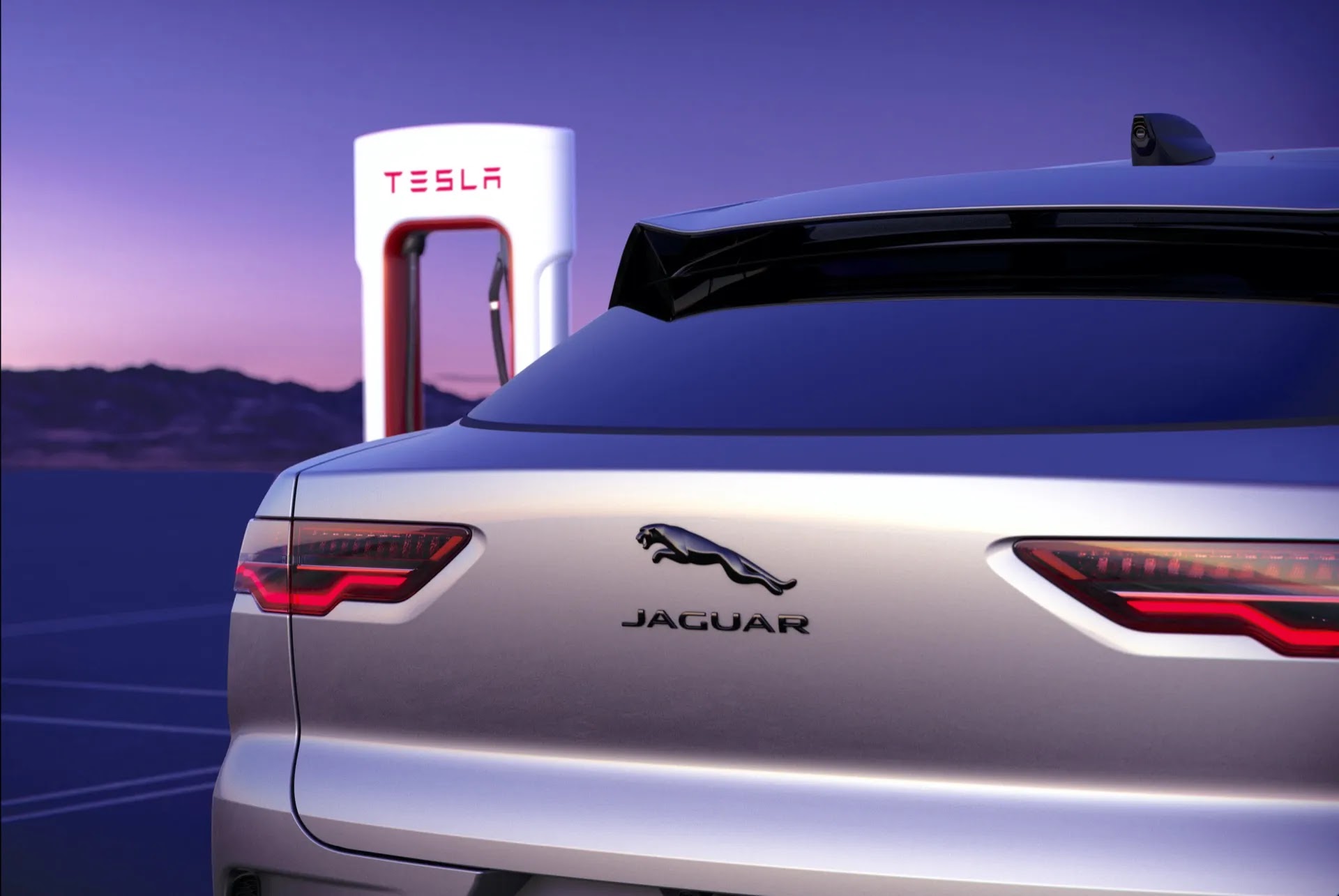
Jaguar (among others) will be using the
Tesla charging network in 2025

2024 is on course to be a lame-duck year for EV sales in North America for any automaker not named Tesla. Nearly every automaker (see list below) has pledged to support the Tesla-initiated charging standard now known as NACS or the North American Charging Standard for their EVs. The announcements from the automakers were largely made in late 2023; however, the charging port changeover doesn't happen until 2025 model-year vehicles. So in 2024, these automakers will offer-for-sale EVs with a charging port in its last year before being phased out. 

That charging port that is not long for this world is the CCS port. CSS has a patchwork of charging stations in various states of disrepair. JD Power has consistently ranked the CCS charging stations poorly.

Legacy automakers didn't have to build or support gas stations for their gas cars. They assumed the same would be true with EVs. However, the poor maintenance at CCS stations has hurt the EV ownership experience for their customers. EVs need a dependable charging network. This is a significant factor in owner satisfaction. If you have a car, you want to be able to drive it places. Occasionally, that means you might have to charge up someplace other than at home. This requires a robust "refueling" network. CCS was not that network.   

This drove automakers to leave CCS for greener pastures. More on this below in the 'Why CCS Failed' section. Reluctantly, automakers are embracing the solution from the upstart Tesla to gain access to the vast reliable charging network that Tesla has created.

Who is Joining NACS

Companies Joining NACS: 
• 2023.05.26 : Ford (Lincoln)
• 2023.06.09 : GM (Chevy, Cadillac, GMC)
• 2023.06.20 : Rivian
• 2023.06.22 : FLO (Charging Network)
• 2023.06.27 : Volvo
• 2023.06.27 : ChargePoint (Charging Network)
• 2023.06.28 : Blink (Charging Network)
• 2023.06.29 : Polestar
• 2023.06.29 : Electrify America (Charging Network)
• 2023.07.07 : Daimler (Smart, Mercedes-Benz) 
• 2023.07.10 : Lotus
• 2023.07.19 : Nissan (Infiniti)
• 2023.08.18 : Honda (Acura) 
• 2023.09.22 : JLR (Jaguar, Land Rover, a division of Tata Motors)  
• 2023.10.05 : Hyundai (Genesis, Kia)
• 2023.10.17 : BMW, Mini, Rolls-Royce
• 2023.10.20 : Toyota (Lexus)
• 2023.10.23 : BP Pulse (Charging Network)
• 2023.11.01 : Subaru
• 2023.11.06 : Lucid
 
Volkswagen, Stellantis, Suzuki, Mitsubishi, and Mazda still have not announced NACS support, but it's clear if you want to sell EVs in N. America after 2025, the NACS connector will be the standard. By the time you are reading this, many (all?) of these legacy holdouts may have already announced support.

Many EV buyers may be reluctant to buy the final year of a car with a charging port that will require them to use adapters for nearly every charging event (more on this coming up).

Why'd CCS Fail?

The largest CCS network in North America is the combination of Electrify America and Electrify Canada. These networks were created as part of the $2B+ Diesel-gate scandal settlement.

For a charging network, reliability is vital! When you pull up to a charging location, you expect to be able to, well, charge up. Sadly, far too often, at Electrify America stations this was not possible. Stations would be down for repair or blocked. This often meant that the few spots that were not blocked and operational had a long line of cars waiting to drink in the lepton juice. 

JD Power has repeatedly ranked Electrify America as poor for reliability. It's almost like forcing a business into existence via mandates and fines is not the best way to create a company filled with people passionate about their mission. A headline from The Verge says it well for the state of charging in the US in 2023, "EV charging in the US is still a no good, very bad time — and somehow it’s getting worse." If that was not enough, here's another, "Car Companies Are Beyond Fed Up With Electrify America: Report."

Surprisingly, customers occasionally want to drive their EV more than half a charge away from their home charging station. Drivers of CCS-equipped vehicles are fed up with the unreliable infrastructure and they are letting the automakers hear this loud and clear. 

Both Ford CEO Jim Farley and US Secretary of Energy Jennifer Granholm both attempted road trips in 2023 using CCS vehicles and found the infrastructure deficient.

Tesla owners charge about 3 times more often at Superchargers than owners of other EVs charge at CCS fast chargers. This is because Tesla drivers know that the Supercharger network is reliable. They will be able to charge up and continue the drive without major hassles.  

Vehicle makers that have joined the NACS coalition

Adapters & MagicDock

There will be adapters that allow CCS-equipped vehicles to charge up at NACS stations, so the CCS vehicles will not totally be left in the lurch. And there are the MagicDock Supercharger stations. MagicDock Superchargers have a built-in CCS adapter. If you just walk up and grab the handle, it will be the native NACS connector. However, if you login to the Tesla app (or an app that supports the Tesla app APIs), then you can request a CCS connector on a specific stall and the CCS adapter will lock onto the connector. Then when you pull the connector out, it will have CCS for your 2024 or prior year non-Tesla vehicle. 

While CCS cars will be able to charge, charging with an adapter or MagicDock is not as convenient as a native NACS experience. With NACS, you just grab the handle and plug it in. When the charge is complete, unplug and drive off. No app, no adapter, to membership card to deal with. Billing is handled automatically via Plug-n-charge. 

With CCS, you'll need an adapter. If you are using an adapter, the charging handle may not properly lock to the vehicle or the charging rate may be reduced. If you are using the MagicDock, then you'll have to use an app to tell the station that you want to charge with the CCS adapter. Then after the station is informed, only then will you be able to remove the charging cable with the CCS adapter locked on. Neither of these is as simple as the NACS experience. If you plan on keeping your car for years, that's years of dealing with apps and adapters for every on-the-road charging experience.    

Coopetition 

When companies compete, there's reason to innovate. A company that can make or do something better, faster, cheaper... has an advantage. There are times, however, when cooperation between companies is better for the customer and the companies. There are times when standardization increases the available market and allows companies to show their strengths in other ways. 

When this is the case, standards to the rescue. With all the automakers adopting NACS, they will all have the same robust charging network. This means that EV makers will have to compete in other ways, such as range, performance, price...

One Port To Rule Them All

There are no separate gas stations for Fords or Toyotas. If you drive a gas-powered car, you just go to the gas station (nearly any gas station) and fill up. The only consideration of concern is Diesel or gasoline. This is not that hard and with rare exceptions, people can successfully fill up every day.

Charging an EV is not that simple yet. With an EV, there are different networks. Some are AC, some are DC, some take credit cards, some require membership and have apps or membership cards; some have QR codes to scan. And there's another layer of complexity, the charging ports. You have to know if your car has just AC charging or if it also has DC fast charging and if so, which kind of port(s). In the US, there's J1772, CHAdeMO, CCS, and Tesla (now called NACS). You're out of luck if you pull up to the wrong type when you need to charge. Well, unless you have an adapter that allows you to convert the charging station connector to the type that your car needs. And when you use these adapters, you are often greatly restricted in the top charging rate.

For EV to go mainstream, this needs to be simple. Multiple network memberships, multiple connector types, adapters... this is all far too complicated. Most of the time an EV is just charging in its own garage, and this doesn't matter. However, when you go on a road trip, on-the-road EV charging is anything but simple (unless you have a Tesla, more on that later).

We need one continent-wide, universal connector, with payment simplicity and plug-in simplicity (without adapters). One plug, any place, AC or DC, that just works. For EVs to become ubiquitous, charging has to be easy. You should not have to know multiple standards, voltages, amperages... It has to be simple, plug in, charge up, drive off. When there are multiple competing standards like we have today, there's a layer of complexity that creates an obstacle to mass EV adoption. 

There are times when proprietary solutions are the right way to go. This can allow innovation and differentiation. There are other times when standardization benefits the manufacturers with commodity parts with higher volumes and lower prices. Standards make it more convenient for owners too. If there's one charging standard, then you won't have to know if you have a CHAdeMO, CCS, J1772, or NACS port on your car or which connectors are at the charging location that you plan on stopping at on your road trip.

This move by all automakers to adopt NACS removes a layer of complexity. Now, automakers will compete on other features like range, performance, price...

While I think this is the right direction, I wonder if automakers have Osborned themselves by announcing that they will have something cool in 2025, but then expecting people to buy their 2024 vehicles.

2024 Has Other Headwinds Too

Other Headwinds: Interest Rates

Most people buy cars with financing. They take out a car loan and make monthly payments. Other things being equal, the higher the interest rate, the higher the monthly payment. Car loan rates are about 8% for new cars and even higher for used vehicles. They have not been this high since the Great Recession in 2009.

Most people would rather spend their money buying a car that they like rather than paying interest. So some buyers are likely to sit on the sidelines, keep driving the car they currently have, and wait to see if 2025 has better rates.

Let's compare buying a $50,000 vehicle with a $10,000 down-payment (or trade-in) with $2,400 in title registration and other fees rolled into the loan at today's rates versus last year's. 

2022: 
1.2% Loan Interest Rate
Down-payment: $10,000
Loan Amount: $42,400
60 Month Loan
Monthly Payment: $728
Total Cost: $53,706

Today:
8.1% Loan Interest Rate
Down-payment: $10,000
Loan Amount: $42,400
72 Month Loan
Monthly Payment: $745
Total Cost: $63,675

There are a few things to unpack here. The first thing to note is that, if you're taking out a loan, overall you'll pay about $10,000 more in today's environment.  

The second thing to note is that the second loan is 72 months rather than 60 months. That's because most people are concerned with the monthly payment more than anything else. To make the payments similar for these two loans, the term of the second one had to be extended. 

Other Headwinds: Falling EV Prices

Falling EV prices seems like it would be a sales accelerator. In the long term, it will be; however, if the prices are dropping and they look like they might keep dropping, there's a temptation to wait and see how low they may go. 

Multiple battery factories are being built. Batteries are by far the single highest cost of EVs today. As these factories come online in 2024, battery prices will drop and EV prices will follow.

Falling prices of critical minerals will lead to a 40% drop in the cost of batteries for electric vehicles by 2025, with big implications for the pace of global EV adoption, says Goldman Sachs Research. So if you can wait, you'll likely get a better deal in 2025.


Wrapping Up

The current CCS charging network in North America is not good. The only network that is robust and reliable is the Tesla Supercharger (NACS) network. Automakers are giving up on CCS and moving to NACS as fast as possible, which is 2025 model-year vehicles.

This means that 2024 will be the final year of CCS cars. CCS is now officially the Betamax of charging standards and 2024 will be its final year of sales. CCS is a dead-end technology.

Will EV shoppers buy the final model year of a standard that's fading away? Or will they save their pennies for another year and see what 2025 brings? With high interest rates and falling prices in 2024, it is tempting for buyers to sit on the sidelines and hold out for 2025 where they may get a better vehicle at a lower price with better financing and a native NACS port.

You can call 2024 a transition year, a lame duck year, or an Osborne year. If buyers sit on the sidelines, non-Tesla EV sales in North America 2024 is kNACkered.

Counterpoints 

There are plenty of EV drivers that disagree with this assessment. They argue that the NACS changeover is not that big of a deal. Comparing CCS to Betamax is hyperbole since there will be adapters (unlike Betamax video tapes) and there's MagicDock meaning that more and more Tesla locations will be able to charge CCS vehicles after just a tap or two in an app. Plus the existing CCS network (as bad as it may be) is not going away and it will be better supported as more EVs hit the road and start using the network in 2024.

Similarly, the point about interest rate impacts is overplayed. Interest rates will hurt all auto sales, not just EVs. So the growth of EVs as a percentage of new auto sales will increase in 2024, even if the volume of sales is down or flat compared to 2023.

disclosure: I'm long TSLA and several other EV stocks

Saturday, November 25, 2023

EVs for EVeryone :: Making EVs Affordable


Electric vehicles are cheaper to maintain and cheaper to "fuel" than internal combustion vehicles. From an economic perspective, the initial vehicle price is the only thing holding many consumers back from purchasing an EV. The good news is that EV prices are decreasing; albeit slower than we'd like.

Charging At Home Is Convenient (and affordable)

EV ownership is much easier if you own a home and have a garage. You install a residential EV charging station in your garage and you charge overnight (when rates are often at their lowest). Then you start out each morning with a full charge.

Depending on where you live, the cost per mile driven can be about the same as gasoline priced at $1 per gallon.

Charging away from home is often more expensive; workplace and hotel guest charging, however, is often free.

Borrow Instead of Buy

If you are lucky enough to live in an area that has an EV car-share program like "CRuSE" (Clean Rural Shared EV), you can borrow an EV for just $2 per hour. 

Incentives

When you are buying, tax incentives certainly help ease that upfront cost. And now that this modern era of EVs is entering its teen years, there's a healthy and growing used EV market. 

Prices Are Dropping

However, the incentives will not be required for much longer. Battery technology keeps advancing, bringing longer ranges, faster recharge times, and (most importantly) lower prices. Later this decade, EVs will have a lower starting price than their gasoline-powered counterparts. Then with the additional lower running costs, it will be a no-brainer.

Multiple battery factories are being built today. Batteries are by far the single highest cost of EVs today. As these factories come online in 2024, battery prices will drop and EV prices will follow.

Falling prices of critical minerals will lead to a 40% drop in the cost of batteries for electric vehicles by 2025, with big implications for the pace of global EV adoption, says Goldman Sachs Research.

Consider A Used EV

If you're looking for an affordable EV today, a used one is your best bet. We recently purchased a 2016 Chevy Spark EV. It only has about 60 miles of range, but it is our runabout vehicle. The range is perfect for errands. It starts out every morning fully charged, ready for the day. 

Once You Get Here, It's Fun!

EVs are fun to drive, smooth, quiet, and peppy. When the performance, range, and size fit your needs, it's magical.

Ω

Sunday, November 5, 2023

Tesla Powerwalls and PGE VPP Rule Changes


PGE has announced a major change to their Virtual Power Plant (VPP) program called SmartBattery. 

With the old program, participating homeowners (with home batteries such as our Tesla Powerwalls) were paid $20 per month for signing up to the VPP, making our batteries available to the utility. Each time there was an event, you could opt out if you liked. If you didn't opt out, then during an event PGE would pull energy out at a max power rate of 3kW. The events were generally 3 or 4 hours and limited to a total of 9kWh of energy per participant. The events happened throughout the year with August generally the most active month.

This was a nice system because the payment rate was consistent, but that's not how the new program works. Rather than just paying for availability, the new method pays you for actual participation by the kWh. You can see the payment rate below is $1.70 per kWh.  


Electricity around here is generally rather cheap (around 11 cents per kWh), so getting paid $1.70 per kWh is quite a premium. 

The new program also has new controls that allow you to specify how much of your battery charge you allow to participate in the event. You can see below that there are options of 30%, 50%, or 80%. 


The more of your battery that's used, the more kWh you provide to the grid, the more you get paid. I think this is a better structure than paying $20 per month, even if you opt-out each time. 

Comparing Plans

How do these two compare? From a financial perspective, the first one is easy to calculate: $20 per month for 12 months is $240 per year. 

The new program is not as easy to calculate. In 2022 there were 15 events. We contributed 9kWh to each. Applying the new rules, that would be $229.50 ($1.70 * 9 kWh * 15 events). That's a little less than the $240 from the old program; however, in the new program, I have opted for the maximum participation tier. So now I could contribute up to 32kWh per event. Meaning it's possible that my batteries could earn $600 per year. 

If you're in the Portland General Electric service area and you have residential batteries, check out the SmartBattery program if you want to help keep the peaker plants turned off and you want to earn a few dollars.

If you'd like to read more, you can learn about Powerwalls here.

If you want to buy your own Powerwalls, you can use my referral link for any referral bonuses that Tesla may be offering. Disclosure: I'm long TSLA.

Sunday, October 29, 2023

Tesla Model Y Roof Rack Impact On Range


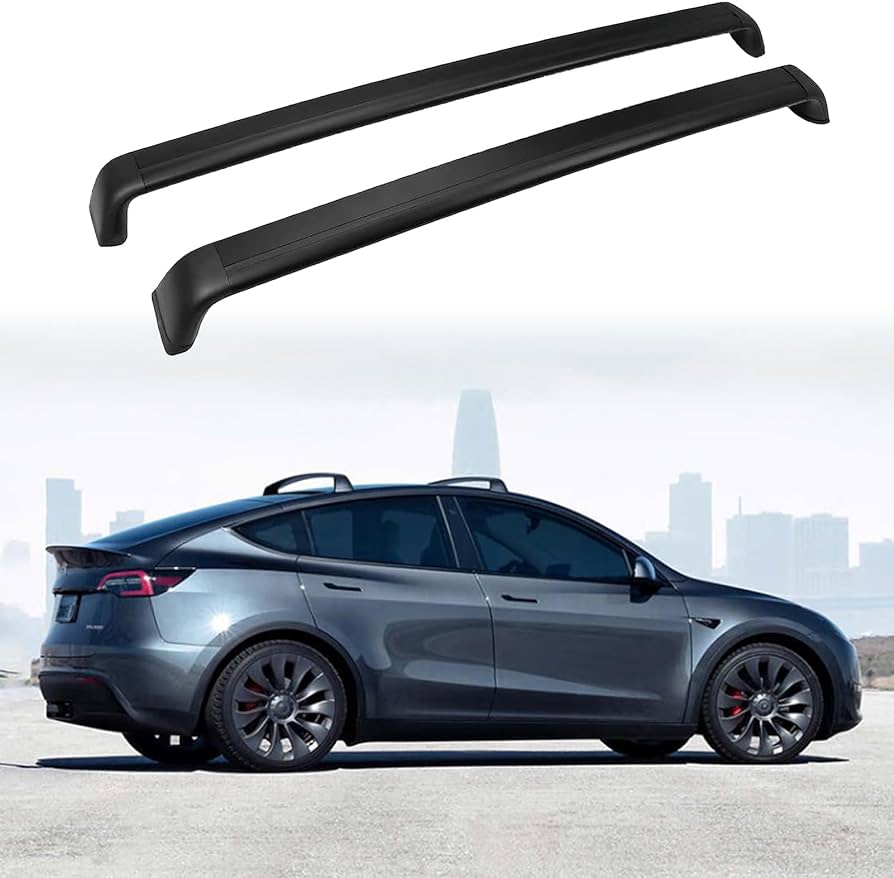
We've installed a roof rack on our Tesla Model Y. 

I wanted to know if this would have any impact on our range / driving efficiency. The good news is that we have a ~170 mile round trip drive that we made just before the rack was installed. Then after the rack was installed, we made the same round trip. I collected data for both drives so this made for a good chance to compare.

This drive is mostly freeway speed driving on Interstate-5. Of course, there are a lot of variables that impact range (e.g., tire pressure, speed, weather, elevation changes...). The nice thing about this comparison is that it's nearly the same route, similar weather days, same vehicle, same driver... So this is about as apples-to-apples as we can get.

Before the roof rack was installed: 

Distance: 167.90 Miles
Energy Used: 42.52 kWh
Drive Time: 3 hours, 4 minutes
Ave Speed: 54.75 MPH
Temp: 67°F there, 69°F back
Efficiency: 253.4 Wh/mile or 3.95 miles per kWh

After the roof rack was installed:

Distance: 170.18 Miles
Energy Used: 40.40 kWh
Drive Time: 3 hours, 12 minutes
Ave Speed: 53.18 MPH
Temp: 73°F there, 79°F back
Efficiency: 237.4 Wh/mile or 4.21 miles per kWh 

Well there you have it. Looking at these numbers, there's no significant range impact from the roof rack. In this comparison, the drive with the roof rack was actually more efficient. This was not because of the roof rack, it was likely the slightly lower speed or the warmer air temp reducing drag.

To be clear, this was with no cargo on the roof; just the installed roof rack.

Conclusion 

The roof rack had no notable impact to the driving efficiency or range. Other variables such as speed, temperature, elevation, tire pressure... have far more impact on range than the presents or absence of the aerodynamically shaped Tesla roof rack.

Sunday, October 22, 2023

The Decade That Changed Everything

A few years ago, I shared a scary Halloween story about how the entire economy is going to collapse over the course of this decade. This year, I thought I'd share the more positive side of that "collapse"; rebirth. 

Only when looking back, with a few years of perspective, can you really see the things that make a decade stand out. During the decade, when you are living it, it's hard to know the day-to-day things that will define it. Now, it's easy to see that things like water beds, big hair, M-TV, neon leg warmers, shoulder pads, and hammer pants define the decade of the 1980s. What will define the 2020s decade? 

We're less than halfway through this decade, and it's certain that things like the pandemic and the insurrection will cover pages in the future history books, but I'm interested in things that will influence the culture of that future society that's reading that history book. I think it's starting to become clear that the phase-out of fossil fuel usage, is truly underway. It will take a generation for it to come to fruition, but it is making more progress now than it ever has. 

This is the decade that will cross the chasm; this decade will be the tipping point.

EVs, solar, and wind power are not new, but steady efficiency improvements and advances in battery technology have taken these to a new level of performance and grid integration. 

Performance improvements have made them more desirable, increasing demand; allowing production levels to increase; allowing the price to be reduced; thereby further increasing demand. It's a positive feedback loop, a virtuous cycle, and it's gaining momentum.

Phasing out fossil fuels will be a big change. At one time, people smoked cigarettes in nearly every place. They smoked on airplanes, in restaurants, and in workplace offices. Today, looking back on that time, we wonder why that was ever allowed. It just seems dumb that this behavior was tolerated. It didn't matter if you were a non-smoker, a child, or infirmed, you were subjected to secondhand smoke in everyday life. It seems unthinkable that you couldn't sit down in a restaurant and have a meal without being engulfed in carcinogenic fumes. 

Similarly, a few decades from now, people will look back at today with similar incredulity at the days when we were sitting in traffic jams surrounded by tailpipes. They'll look back at parents in cars idling in queues for school drop-off and pick-up, all the while spewing out deadly emissions while little lungs are breathing nearby. They'll wonder why we used fossil fuels for more than a century; especially after the turn of the millennium when the downsides had become painfully obvious.

For fun, let's look at how an academic in 2035 might look back at today in an attempt to understand why our society was so slow to move to the inevitable renewable future.


Term paper, December 2035, The Societal Dissociative Disorder That Allowed Continued Fossil Fuel Usage In The Early 21st Century 

Abstract:

The paper investigates the phenomenon of "Societal Dissociative Disorder" (SDD) and its implications on the continuation of fossil fuel usage during the early 21st century. By the year 2035, the consequences of climate change have become apparent, necessitating a critical analysis of the societal and psychological factors that hindered a timely transition to renewable energy sources.

Drawing from extensive historical records and contemporary research, this study examines the psychosocial mechanisms that facilitated the perpetuation of fossil fuel dependency. We propose that SDD, a collective cognitive and emotional disconnection from the long-term consequences of continued fossil fuel use, played a significant role in prolonging the reliance on non-renewable energy sources.

This paper shows the global energy landscape during the early 21st century, highlighting the dominance of fossil fuels and their pervasive influence on various sectors of society. Subsequently, it explores the cognitive biases and socio-political dynamics that contributed to the denial and minimization of climate change impacts, thereby reinforcing the status quo.

Furthermore, our research identifies the powerful interests and industry lobbying that constructed barriers to comprehensive climate policy reform. By analyzing case studies of historical environmental movements, we demonstrate how entrenched economic interests and disinformation campaigns perpetuated SDD and effectively hindered meaningful climate action.

Moreover, this paper delves into the psychological underpinnings of SDD, examining the mechanisms of psychological distance and temporal discounting that blunted the urgency of transitioning to sustainable energy alternatives. We draw parallels to other societal issues where dissociation from long-term consequences has been observed, providing a broader framework for understanding SDD.

Finally, the paper explores successful initiatives and strategies that ultimately led to the transformative global shift away from fossil fuels. By learning from past mistakes, this study offers valuable insights into overcoming SDD and fostering a collective consciousness that prioritizes sustainability, clean air, clean water, and environmental stewardship.

In conclusion, this paper highlights the relevance of addressing SDD as a key aspect of driving societal change to sustainable energy practices. Only by acknowledging and confronting this psychological phenomenon, can generation alpha be better equipped to navigate complex global challenges and avoid the mistakes of the early 21st century.

Sunday, October 15, 2023

Tesla's 2 Million Vehicle Production Year Will Have to Wait

Looking at the production volumes from Tesla last year, it sure looked like this would be the year to hit 2 million vehicles produced in a single year. Fremont and Shanghai Gigafactories were going all out and Giga-Berlin and Giga-Austin were ramping.

The battery cell constraints that have held them back in previous years were resolved.

My hopes for 2023 were high. Tesla sent more reasonable guidance and said that they were expecting to produce 1.8 million vehicles. Tesla is not known for softball targets. They set aggressive targets. They may not always meet them 100%, but they still deliver incredible results. 

I hoped they'd blow past the 1.8 million guidance in November; allowing December's production to push them over the 2 million mark. 

It does not appear that 2 million will happen this year. Tesla announced early in Q3 that they'd be shutting down lines during the quarter for maintenance and upgrades and that's exactly what happened. Q3 of 2023 is one of the few quarters where Tesla didn't set a new production record. It still has impressive year-over-year growth, but it's about 50,000 fewer cars than Q2'23. 

Given all of this, here's the new 2023 estimate. 
Our production prediction for Q4'23 is 555,000 vehicles. If achieved, it would be a record quarter and the first time that they've produced more than half a million vehicles in a single quarter. That would bring the year's production to 1,906,000. This is well ahead of Tesla's guidance, but short of the 2 million I wanted to see. 

Regardless, 2023 already has over a million vehicles rolling off the line with the iconic T logo on the hood. That's millions of vehicles without tailpipes deployed. Far ahead of any other auto manufacturer. 

For Tesla to meet their guidance, they'd have to produce 450,000. They've done more than that in Q2 of this year, so it looks very likely that they'll meet their production target and maybe even a little upside surprise to end the year. 

Disclaimer: I'm long TSLA. Feel free to use my referral code http://ts.la/patrick7819.

Friday, October 13, 2023

The 4 Horsemen of the Auto & Oil Industry Apocalypse

This was originally posted on October 1st 2020. Since today is Friday the 13th of October, it seems fitting to republish it. Enjoy.


It's October, it seems appropriate to start the month off with an epic horror story.


The automotive and oil industries are, collectively, the largest industry on the planet. We fight wars for oil resources, their lobbyists hold sway over every aspect of our government. The value of assets under their control is worth trillions of dollars... 

Regardless of their massive size, things are about to change. There are four megatrends that will ride roughshod over this behemoth. During times of inflection, giants can fall: Kodak famously missed the digital revolution; Blockbuster missed the transition to streaming. During this transportation transition, which brands or companies that we know today, that seem indelible, will fall to Death's scythe and fade into the annals of history?

We still take photos, just not with Kodak film. We still watch movies, just not from Blockbuster. Soon, we might be saying; we still drive cars, just not powered with petrol. 

The 4 Horsemen that are upending the 100-year-old status quo are: 

  1. Electrification of Transportation 
  2. Declining Ownership & Mobility as a Service 
  3. Self-driving Cars
  4. Pace of Innovation 

These 4 will shake up the auto and oil industry more in the next decade than we've seen since Henry Ford reinvented the vehicle production line. New players will emerge, some old players will adapt, others will die as we start a new chapter in human history. As a species, we're now evolving beyond petro-sapien and the world will be reshaped. 

Let's look at each of the Doomriders.

Horseman #1 Electrification of Transportation

Our first and biggest harbinger of doom is the Electric Vehicle (EV).

California Governor, Gavin Newsom, issued an executive order on September 23rd, 2020 that requires all new cars and passenger trucks sold in the state by 2035 to be zero-emission. California is one of the largest car markets in the US and if the other gang of 13+ CARB states follow, this will seriously curtail gas car sales. A lot can change in 15 years, but the direction is clear. 

The legacy automakers are heavily invested in their internal combustion infrastructures. The factories and supply chains they've established are not simple to change from combustion vehicles to electrically powered ones. Converting them will be expensive and auto companies are not flush with cash. The assets and know-how that once enabled them to be profitable are now (or are soon to be) stranded assets and liabilities. Legacy automakers have been reducing their dividend payments as their stock prices decline and their debts grow. Declining combustion vehicle sales will reverse the economies of scale that these vehicles enjoy today; further pushing the downward spiral of the auto-pocalypse.

While the legacy automakers are tied to an anchor pulling them down, Wall street seems to be tripping over themselves to fund electric car start-ups. Tesla has had round after round of capital raises, most recently a $5B capital raise in 2020, and $2.7B before that in 2019. The market has rewarded Tesla with a higher stock price each time they raise money, viewing these as 'growth accelerators'. This applies to other EV upstarts as well; investors seem far more interested in small start-up companies in the growing EV market rather than large companies in the declining ICE market.

Tesla recently shared the below graph at their Battery Day event. 

This graph is for the 1st half of 2020 and you could argue that 2020 had been anomalous in many ways and not a valid sample for future predictions. However, times of crisis accelerate transitions so perhaps this is a better view of the future. Bloomberg estimated that at least 50% of global car sales in 2040 will be electric. If the trend in the above graph continues, many of the legacy automakers will not survive. 

Several trends are driving EV adoption: 
  • Battery technology has been continuing to improve by 5%-7% per year. This means that each EV generation is slightly more capable than the previous. Range, towing, recharging time... are all related to the battery, and all are improving each year and projected to continue to improve into the foreseeable future. 
  • Battery cost has similarly continued to decline (see graph below). This allows capable EVs to move into lower price-points. A recent Forbes article said that Tesla's upcoming $25,000 EV would be "game over for gas and oil". Additionally, this price reduction allows larger packs, with more range and more performance, to be used in high-end EVs. There are now multiple EVs with more than 500 miles of range announced for 2021. Five hundred miles! 
  • EVs are popular with buyers because they are smooth quiet rides that require less maintenance and are far more affordable to fuel. JD Power reports that EV buyers have very high satisfaction rates and most never want to own another gas-powered car after owning an EV.
  • Government incentives. Many municipalities are encouraging EV adoption to meet CO2 reduction targets. The incentives use a range of carrots and sticks. These could be tax incentives, sales tax waivers, parking privileges, carpool (HOV) lane access even with a single occupant, increased gasoline taxes (making EVs a better alternative)... 
All of these trends are pushing more of the market into electrified transportation, whether the legacy automakers are ready for it or not. The impact of this transition will not only be felt by the auto industry but also by gas and oil.

According to TradeArabia, EVs are expected to offset oil demand by 1.2 million barrels per day by 2025. ExxonMobile, once a stalwart of the Dow Jones Index, was recently removed from the index after serving 92 years as a member of the elite company list. The transition to electric 'fuel' is in its infancy, and the impacts are already causing giants to stumble.

Horseman #2 Declining Ownership

“The things you own end up owning you.” ― Chuck Palahniuk, Fight Club

Next on our list of creative destruction is a generational change in how cars are viewed. If you were born in the US before 1990, when you turned 16, you wanted a car. A car meant freedom. Freedom to go see your friends, to go on adventures, to go on dates and (if it went well) to steam up the backseat windows looking for paradise by the dashboard light.

Teens today live in a different world. Much of their social life is online. They don't need a car in order to hang out with their friends. Cars are no longer viewed as the iconic symbol of freedom. A car is just a method to get from A to B (and that's only if travel can't be avoided).

The mentality of a car as merely a tool opens up many opportunities for change. If you live in an area with a dense enough population, rideshare or scooters are options for most trips. If you want dinner, meal delivery is only a few taps away on a smartphone; similarly, grocery delivery is just another app. On the rare occasion that you need a car for something like a weekend getaway, you rent one (Getaround, Turo...). Collectively, these are called mobility as a service (MaaS). 

As the Fight Club quote goes, “The things you own end up owning you,” and this is especially true with cars. Owning a car is demanding both financially and timewise. Using MaaS means that you don't have to buy a car, pay for gas, buy car insurance, pay for maintenance, fluids, tires, parking... If all of your mobility needs can be met without owning a car, this is appealing to many.

MaaS is easiest in an urban or suburban environment and the percentage of the population in these sections of the country has been steadily increasing for decades. This means that MaaS adoption trends will likely continue to increase too. 

Another trend that is enabling the decline in car ownership is working from home. The pandemic has caused many employers to rethink their office policies. If you are not commuting daily, the need to own a car is significantly reduced. 


Horseman #3 Self Driving Cars

Our third disruptive horseman (or should that be horseless carriage man person) is autonomous cars. This technology is not yet here in any significant manner, but it. is. coming...  And when it arrives, many fleet managers and vehicle shoppers will not consider buying a car without it. 

This technology puts automakers in competition with big tech companies like Google (Waymo), Amazon (Zoox), and Tesla; as well as a swath of start-ups. This is not a fight that legacy automakers are equipped to win. They will have to find technology partners and hope the partnership is fruitful. Again this is a gauntlet that some legacy automakers may not survive.

This threat is enabled by the first two horsemen. When vehicles are fueled by electricity, they are cheaper to operate. When the driver can be removed, they can run 24/7 further amortizing the cost thereby making them yet again cheaper to operate. The first company to make a seven-nines reliable autonomous driver AI system will be in high demand.


Horseman #4 Fast-Paced Innovation

Our ultimate horseman sits atop the fastest thoroughbred of this apocalyptic harras, Innovation.

Transportation is likely to change more in the next 10 years than it has in the last 100 years. These extraordinary technological advances are causing an epic shift to multiple trillion-dollar industries. Before the emergence of this wave of EVs, starting with the Volt and the Leaf in 2010, the industry had stagnated. California tried to use mandates to force automakers to bring EVs to high-volume production in the 1990s, but the automakers sued the state and the mandates were overturned (See Who Killed The Electric Car?). Fighting innovation with legislation can (at best) delay it, but it's not a winning long-term strategy.

Cars of the future will be connected, voice-activated, frequently updated, self-driving, have real-time traffic, streaming content, productivity apps, entertainment, and things that are yet to be invented. The software-driven high-technology in-car experience will mean that new software will be needed on a regular interval. The days of releasing a model year and then only touching it again if there's a recall are soon to be over. 

Can automakers attract the talent needed to provide all of this in-car software or will they cede this part of the market to the likes of Car Play and Android Auto?

Expecting a group of laggards and Luddites to change gears and become technology leaders is a big ask. The cultures ingrained in many of these companies will not allow this to happen. Hybrids have been the only significant drive-train breakthrough in decades and even that technology has never crossed the chasm to become mainstream. An industry that's accustom to a new transmission or valve timing method every 10 years or so, is not prepared to deliver "computers on wheels" that act more like smartphones than cars. 


Conclusion

The giants of the past are getting hit with a perfect storm of change. The role that cars play in our lives is changing, the expectations of personal transportation are changing, the fuel source is changing, the ownership model is changing. Perhaps these giants of the past could have navigated any one of these changes, but the near-simultaneous confluence of all 4 Horsemen will mean that they must adapt quickly or die. Some will acquire or partner with innovative start-ups in hopes of catching up. The culture clash will be enormous and this is unlikely to make it a fruitful alliance. We'll see which companies can reinvent themselves and which will fade into history along with the buggy-whip manufacturers of yore that they once displaced.

It is not too often that a change this big comes along. We certainly live in interesting times. 

----------------------------------

Creative destruction (German: schöpferische Zerstörung) is a concept in economics that describes the "process of industrial mutation that continuously revolutionizes the economic structure from within, incessantly destroying the old one, incessantly creating a new one".

Disclosure: I'm long Tesla

Sunday, October 8, 2023

1000 Miles in a Tesla Model Y


We just crossed the 1000-mile mark in our Model Y. We ordered it in late July, took delivery in early August, and hit 1k miles in Early October. Can you call it a 'kilomile'?  

1000 miles is enough to drive from Portland to Los Angeles or Portland to Grand Junction, Colorado. Our trips, however, were daily driving, not a road trip (not yet). From our home in the west Portland suburbs, we've taken a couple round trips to the PDX airport. Our longest trip was to Corvallis. The space in the Y allowed us to load two bookshelves and an office chair in the back for delivery in Corvallis. This has been a fun vehicle to own.

Long Range FTW

The nice thing about the Corvallis run is that we were able to leave our home with a 90% charge, make the 175-mile round trip and arrive home with more than a 15% charge remaining. This included freeway driving speeds and all the elevation changes for the Cascade range. There were multiple opportunities to Supercharge if we needed to, but with the long range, there was no need to extend the travel time; we could comfortably make it home and recharge while we slept using our cheap overnight electricity rate.

FSD Evolution

We've been using FSD Beta for these drives. For me, it removes a lot of the fatigue out of driving. I remain attentive while using FSD, because it is beta and it does make mistakes. The attentiveness that FSD beta requires is different than the attentiveness of driving. Using FSD beta, I'm able to have more situational awareness. It has been nice to watch the FSD progress since V9 we had in our Model 3 to V11 that we have now in our Model Y. Version 12 is coming soon and could be the first version to not bear the beta tag. However, don't confuse this with a final release. V12 will likely be an RC version and will still require a human minder behind the wheel for some time.

Battery Degradation?

Long-time readers of the blog will know that I track the degradation of the batteries in our EVs. In 2011, we purchased a Nissan Leaf and the battery degraded faster than I wanted. After that experience, I keep an eye on the battery health of all of our EVs.

I'll be collecting data on the Model Y for the many years that we plan to own it. The good news is that Tesla batteries don't degrade nearly as fast as the Leaf packs did. 

In our first 1000 miles, there's no degradation to report. 

You can see the line in the graph above wiggle a bit. This variation in capacity is normal. The measurement always has some level of noise based on many factors (e.g., temperature, SoC...). The graph above is zoomed in on the top 30 miles. If we pulled back and looked at all 330 miles, the waves would wash out.

I'm tracking the battery health with TeslaFi. This is different from previous vehicles where I used LeafSpy or TMSpy. The TeslaFi website makes it easy. You don't have to charge to full to see the expected range. The header bar for your vehicle information includes a rated range, a personalized range, and an estimated rated range at full charge. 

If you want to try out TeslaFi, you can use my code (patrick7819) to double your free trial period from 2 weeks to 4 weeks. 

Over-the-Air Updates

During the 60 days that we've had our Model Y, we've received two software updates already. The August 30th update delivered FSD Beta v11.4.4. The second update occurred on Sept 20th and brought improved Autopilot visualizations, improved camera views, Hebrew language support, and a few other minor improvements. I'm excited to hit the install button every time one of these arrives. 

Wrapping Up

The first 1000 miles have been fun. We just installed the roof rack to add even more utility to the vehicle. I'll be posting annual updates to log our Tesla-fueled adventures as well as keeping an eye on the battery health. 

If you'd like to buy a Model Y (or any other Tesla product), you can use my referral code: https://ts.la/patrick7819

Sunday, October 1, 2023

Selling The Dream - Parting Ways With A Tesla


Did you sell or trade-in a Tesla? If so, regardless, if it was a Model 3, Model Y, S or X, there are a few things you should know. 

We recently sold our Tesla Model X via a Kelly Blue Book Instant Cash Offer. These are the lessons that we learned and they apply when parting ways with any Tesla vehicle.

If you've sold, traded in, ended a lease, or even totaled your Tesla, here are a few things you need to know. Below, I'll be referring to selling your Tesla, but most of this applies anytime you will no longer be the owner of the vehicle for any reason.

Selling a Tesla is a little different than selling other cars. You still have to certify the odometer and transfer the registration like other cars, but there are a few additional things that you have to do on the Tesla side of the house too. Since I just went through this, I thought it would be worth mentioning here.

There are three important, Tesla-specific things that you must do.

1) Do a Factory Reset
You don't want the new owner to hit Navigate, Home and end up in your drive way and you don't want them scrolling through your recent destinations or favorite locations list. You need to clear all of that out. 

You'll find the Factory Reset option in the menu under Controls \ Service
This will remove ALL of your custom settings. All of your streaming radio stations, gone. All of your favorites destinations, gone. Seat settings, garage door, charging schedule, gone gone gone... you get it. You should only do this if you have sold the vehicle. You'll have to enter your Tesla account password to initiate this process.

2) Remove (or reformat) Your Dash Cam Drive

Sentry Mode uses the vehicle's cameras and sensors to record suspicious activity around the vehicle when it's locked and in Park. Most Teslas now come with a 128 GB USB drive in the glove box for Sentry Mode video storage. Many owners upgrade this drive for more hours of logging. If you upgraded your drive to a bigger SSD or the like, remove your upgraded storage and install the (freshly formatted) drive that came with the vehicle (if any). If you're still using the drive that came with the car, you should delete the content. The easiest way to do this is to reformat the drive. You don't want to give the new owner the footage of the last 100 times you got into your car.  

3) Remove the vehicle from your Account
Warning: I would not do this step until the payment for your vehicle has cleared. The app lets you know where the vehicle is located and allows you to restrict its top speed. If there's a payment dispute, these features might be helpful features to allow you to get that resolved. 

When the deal is done and you're finally ready to say your last goodbye, open the Tesla app and then: 

  • Tap the profile icon in the top-right corner.
  • Tap Add/Remove Products
  • Under 'Remove' tap the vehicle that you no longer own
Again there will be confirmations and warnings. 

Hopefully, the new owner loves the vehicle as much or more than you did.

Disclaimer: I'm long TSLA. Feel free to use my referral code http://ts.la/patrick7819.