Friday, May 20, 2022

Saving Money with Solar


A friend said he was considering solar and batteries for his home, but the economics just didn't pencil out. The payback time would be more than a decade and that didn't seem worth it. He is looking at getting a 14 kW system. He then asked how much we saved with our 12 kW system (with 40kWh of batteries).

As you can see in the chart above, we generated $2193 worth of electricity in 2021.

The dollar amount is important, but it is far from the complete story. Before I jump into the complexity, here are some more easily digestible graphs from our solar app:  


We were 51% solar-powered in 2021. 


This included sending some electricity (about 5.2 MWh) to the grid for net metering, leaving us only 31% directly self-powered. Our solar app allows you to optimize for self-powering or lower cost. We have opted for lower cost.


We're on a Time-of-Use (TOU) electricity schedule. This means that we pay more during peak hours and less during off-peak. TOU is optional from our utility. We're on this program because it saves us money. The solar panels and batteries reduce our peak and partial-peak usage; while charging our EVs overnight shifts a major load to off-peak. As you can see above, our Powerwall home battery packs handle a majority of our home load during peak hours. The batteries allow us to time-shift our solar (primarily generated during partial-peak) to peak hours. So now the sun can power our home when it's best for us, rather than when the sun happens to be shining. 


The partial peak usage is higher than I'd like it to be, but this is just the "normal" rate (as if we were not on TOU), so the solar is primarily charging up the batteries during this time, rather than powering our home, so the batteries can then discharge during the peak hours. That's why we're primarily grid powered (58%) during this time. 


And finally off-peak. This is generally overnight, so we are not going to have any solar during these hours. The exception to this is Sunday (and some holidays). The Tesla solar app currently does not handle this very well. They only have a "weekend rate" and it does not allow Saturday and Sunday to be on different billing schedules. So this is not accurate since there should be 52 Sundays and 6 holidays worth of off-peak solar generation. They have made several TOU improvements in the solar portion of the Tesla recently; I hope this is improved soon too.   


And the last item before we jump into the exciting math of electricity bills: backup power. You can see in the list above that we had several minor outages and one big one in 2021. Having solar and batteries allowed us to keep the lights and the heat on during a cold night in February when our neighborhood lost power. 

Electricity Bills 

Call it your power bill, light bill (Eastern/Southern US), or hydro bill (parts of Canada); a lot of modern living is electrically powered. This is an essential utility that most of us pay (too much) for. Let's deep-dive into an electricity bill and see how much we really save with solar. 

It would be nice if electricity bills were easy to understand. A simple charge per kWh and perhaps a monthly connection fee, but the reality is far more complicated. As you can see, my monthly bill below has 23 line items


Let's make this bill understandable. First, we'll split things into fixed charges (items that will be there every month regardless of our use) and variable charges (items that change with use). And, just because nothing can ever be simple, a couple of the fees are a percentage, so they are variable, but not per kWh, applying to both fixed and variable fees.

Fixed charges: 

Charge Amount
Basic Charge $11.00
First Block Adjustment -$7.22
Smart Battery Reward -$20.00
Low-Income Assistance $1.04
Oregon Commercial Activities Tax Recovery
(portion applied to fixed charges)
$0.015
Public Purpose Charge
(portion applied to fixed charges)
$0.055
Fixed Cost Subtotal -$15.11
(credit)

You can see that we're starting out each month with a negative $15 electricity bill. This is generally driven by the $20 credit that we're receiving for being in PGE's virtual power plant program. 

For the variable charges, we're going to collapse a few things. If a given kWh has a base rate, a transmission cost, a distribution cost, a regulation adjustment, ... and some are fees and some are credits, the waters get muddy quickly. To avoid this, we're going to bottom-line it; all of these will be rolled together for one per kWh rate for each TOU rate. Here are the fully adjusted rates: 

Off-peak  Partial-peak  Peak
Basic Rate 4.128¢ 7.051¢ 12.38¢
Fully Adjusted Rate   5.336¢   16.536¢  21.966¢

Looking at the table above, you can see that the off-peak price does not change much when adding in all of the adjustments. For partial-peak and peak, it's another story; each is about 10¢ more (per kWh) than their unadjusted starting rate. For Partial-peak that more than doubles the price. 

Now let's apply these prices and compare the "with solar and batteries" to the "without solar and batteries" versions of our house for all of last year's electricity usage. 

Is It Worth It? 

In 2021, we used a total of 25,400 kWh. If we didn't have solar, we'd have had to pay $3377 for this energy. As you can see in the first graph (repeated below), our solar panels generated $2193 worth of energy in 2021.


Additionally, because we have home storage batteries, we were able to join the PGE virtual power plant program. PGE pays the participants in this program. This further reduced our annual electricity cost by another $240 in 2021. So, rather than paying $3377 in 2021, we only had to pay $944. We also had some discounts for allowing the utility to control our smart thermostat, but that's not relevant to this discussion. 

If you pay twenty thousand dollars for a solar-plus-battery system and only earn $2000 in payback each year, it is going to be a decade before you break even (longer if you include opportunity cost or interest on a loan). 

You might end up selling your home before you recoup the out-of-pocket costs. However, the panels on your home also increase the resell value. So, I can see why my friend said this does not pencil-out as a no-brainer, but that does not necessarily mean it's not worth it. 

There are many more factors to consider (listed below), but before we go there, I want to finish the economic portion of this. I know that the price for energy from these panels will be fixed at zero going forward (assuming no out-of-warrantee failures). Yes, you pay upfront, but 5 years from now, when the electricity prices have gone up and up again, you'll be (somewhat) isolated from these price swings. My friend that started this discussion recently retired. Having a predictable expense is valuable, especially on a fixed income. You don't want to be deciding on buying groceries or paying for utilities that have significantly inflated in price while your retirement income has not kept pace.

More Than Just Money

For us, solar with batteries provides a level of independence. It means if the grid goes down during a heatwave, our AC can keep running. It means if the grid goes down during a winter storm, we can keep our furnace running. It means that we have little-to-no grid usage during peak hours when they're most likely to be using peaker plants (some of the dirtiest sources). Participating in our utility's virtual power plant program means that they can call on us to power our neighbors, rather than turning on a peaker plant. Having solar means that our (local monopoly) utility is not our only source of energy. 

If you want solar on your home (with or without batteries), you can use my referral code to get $300 off a system from Tesla.

Sunday, May 15, 2022

5 Years of Battery Degradation Compared (Nissan LEAF vs Tesla Model X)

In this post, we'll compare the battery degradation of a 2011 Nissan LEAF LE and a 2016 Tesla Model X 90D. Why these two vehicles? Not because they are comparable in any significant way, but simply because these were my last 2 EVs and I have collected years-worth of data on each of them.

Here's the chart:

First, I want to point out that the graph is not zero-based on the left side. The bottom of the graph is 75%. This is to zoom in and see the degradation in detail, not the make it look worse than it is. 

Looking at the Leaf (blue line), you can see that it had less than 80% of the original range at the 5-year mark. The Tesla (red line), on the other hand, has more than 90% capacity when hitting the 5-year mark. The Tesla has less degradation; additionally, the rate of degradation slowed significantly after year 3. Unlike the Tesla, the Leaf's degradation showed no sign of slowing. 

At 5-years old, the Tesla had about 42,000 miles. The Leaf had a similar 44,000 miles. Working from home the last couple of years has meant fewer miles driven for the Tesla; otherwise, the Tesla would likely have about 60k miles by now.

This result is not surprising. As the Leaf aged, I wrote several posts about my disappointment with the Leaf's degradation. I'm happy to see that our Tesla has aged much more gracefully.

Disclaimer: I am long TSLA

Saturday, May 7, 2022

Tesla Model S Turns 10: A Decade Of Evolution

2012 Tesla Model S

The Model S turns 10 years old this year. This is the perfect time to take a look at the evolution of this vehicle as it celebrates its Aluminum anniversary. 

The 2012 Model S was an award-winning car when it came out. A long-range, high-performance EV with a large touchscreen, self-presenting door handles, and over-the-air updates. There had never been a car like this.

Even from this high starting point, today's Model S is head-and-shoulders above its 2012 antecedent. For a now-and-then look, we'll compare the long-range version of the original vehicle to the one offered today. To keep this as apples-to-apples as we can, this is not the Founder's edition or the Insane or Ludicrous variants; just the extended-range version of each.


2022 Tesla Model S

Let's jump into it: 
Model S 2012
85 RWD
2022 Long Range
Dual Motor
Price (Long Range) $115,050 $99,990*
Price (inflation adj.) $144,069 $99,990
Range (miles) 265 375
0-60 MPH 4.3 sec 3.1 sec
Autopilot/FSD None - no cameras
(AP was intro-ed
in 2014)
AP standard,
FSD Upgrade
$12,000
Charging Rate (kW) 150
(7.8 miles/minute max)
250
(11 miles/minute max)
Gaming Chess, Backgammon,
Some 80s arcade
games
Equivalent to modern
game console. Steam
client support planned.

As you can see in the table above, the Model S has improved significantly over the 10 years of its life. The current cost (esp. inflation-adjusted) is significantly less, yet you get a quicker car, faster charging, more range, better ADAS, and better infotainment technology. If you prefer to see it quantified: 40% more range, 28% quicker, 30% cheaper, 66% faster max charge rate; plus other improvements including far better battery thermal management, a tilting screen, and a yoke steering wheel.

Tesla was the first mover and they have a relentless pace of innovation. They are not going to be easy to catch. 

Disclosure: I am long Tesla
* price as of 5/1/2022

Sunday, April 24, 2022

Tailpipes Are The New Smoking

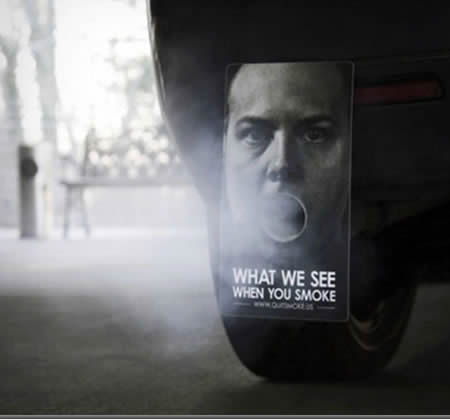
Image via KngEVrythINg

If you want to know the future of the vehicle tailpipe, a look at the history of smoking might provide a glimpse of what may come to be. The history of public smoking can give you a clue to the evolution of public sentiment and how the industry might resist. 

Smoking Heyday

When I was a kid in the 1970s, smoking was common nearly everywhere. When you went to a restaurant, most seats were in the smoking section. In most restaurants, there was a small non-smoking section, but the smoky air didn't obey the signs and billowed into these token areas as well as every other corner of the room. People smoked as they walked the grocery store aisles, they smoked while standing in line at the bank... it was ubiquitous.


Secondhand Sentiment

In the 80s this started changing. Driven by secondhand smoke concerns, the Smokefree Workplace Law passed in 1981. Many smokers were outraged. They were relegated to designated smoking areas instead of having free run of the place. Bars, casinos, and similar areas were excluded from this initial law, but the smoke-free zones continued to expand. 

Lighting A Fire Under The Tobacco Industry 

If the smokers were upset, the tobacco industry was livid. They had a cash cow and it was being threatened. They had made billions selling "coffin nails" and they were going to spend some of these funds to ensure they could make even more profits.

The tobacco industry used multiple tactics to delay and fight these laws. They hired PR firms, lobbyists, lawyers, and more. They attacked and attempted to undermine policies to protect people from secondhand smoke. They talked about smokers' rights ignoring the fact that the smoke was violating other people's right to clean air and, oh, not dying!

They used misinformation campaigns*. For nearly three decades, the tobacco industry had evidence that secondhand smoke was a health hazard, but they publicly denied it.

The strategy was to use a campaign of fear, uncertainty, and doubt (FUD). 

Or is that what we see when you drive?

Fear - Putting the F in FUD

The fear aspects included telling people that their freedom of choice was being taken away. This was just the first step to the government telling you how to live every aspect of your life. The propaganda continued claiming that these laws would turn smokers into criminals. 

Another one of the fear tactics was jobs. That's right, if these laws passed, they said, people would lose their jobs. This propaganda was primarily aimed at the hospitality associations, such as restaurant, bar, and hotel associations. If one of these establishments became non-smoking, then smokers would go someplace else; the establishment would lose money and have to lay people off. In cases where such associations didn't exist, the tobacco industry created them “to serve as the tobacco industry’s surrogate in fighting against smoke-free environments.”* 

Uncertainty & Doubt 

The uncertainty campaign was multipronged. It included astroturf groups that the tobacco industry founded, influenced, and/or funded*. They had programs with lovely names such as “Living in Harmony,” “Working It Out Together,” “Respecting Choices,”  and “Preserve our Traditions.” These were designed to delay legislation, maintain the status quo, and allow the 'free market' to correct things. 

The tobacco industry promoted ventilation and air filtration technologies in hospitality venues even after these systems were proven ineffective against secondhand smoke's health impacts. 

The tobacco industry hired a cadre of consultants to discredit scientific evidence about the hazards. They lobbied against smoke-free policies and gave testimony before legislative bodies while purporting to provide a neutral voice. They undermined the credibility of health agencies and key public health reports. They prepared and submitted affidavits and offers of proof in legal actions involving secondhand smoke claims. 

The tobacco industry gave all-expenses-paid trips to journalists to “discuss” tobacco issues. They promoted research they'd funded to sympathetic journalists. They financially backed journalism schools to help ensure future journalists were sympathetic to the tobacco industry. They conducted press briefings, gave interviews, and wrote editorials and letters-to-the-editor to multiple newspapers. They published specious research in academic journals and other publications.

Legal Maneuvers

The tobacco industry mounted legal challenges based on many arguments including the following:

  • Smoking is a fundamental right
  • Local governments do not have the legal authority to pass smoke-free laws
  • Smokers and business owners were not getting “equal protection”
  • The public was not notified of smoke-free hearings
  • A business owner is entitled to compensation because a regulation renders their business unviable
  • In private clubs, the rights of members are violated by smoking regulations 
  • Smoke-free laws are difficult to enforce

The tobacco industry also sought to utilize their lobbyists and political clout to weaken legislation. The tobacco industry attempted to influence proposed smoke-free legislation by suggesting amendments to weaken the law. In some cases, these could be minor impacts such as changing a 'shall' to a 'may' that could go unnoticed, yet would greatly weaken the enforceability of the legislation. In some countries, the tobacco industry has even proposed to draft legislation itself for the government.

Smoke & Mirrors: A Tobacco Image Makeover (Greenwashing)

The latest tactic is an image makeover. Now, the tobacco industry is trying to present itself as an environmental leader (after all, the product does start by growing plants). They are also claiming to be leaders in social issues and corporate governance issues.


Tailpipes Are The New Smoking 
Image via KngEVrythINg


The Tobacco Results

Cigarettes have not been eliminated, but over the decades, their sales have been greatly reduced even as the population has increased.  

Year US Cigarette Sales
1980  628 Billion
1990  524 Billion
2000  414 Billion
2010  283 Billion
2019  203 Billion

Source

As you can see, cigarette unit sales have been cut to less than one-third of 1980's volume. Of course, vaping and other alternatives have taken the place of some of this volume, but the trend is going down. Sadly, as cigarette sales fell year by year, the prices rose more than enough to maintain profit margins. They do sell an additive product after all.

Smoking in public places is no longer considered socially acceptable. The public mindset has shifted. There's still tolerance for people to smoke in designated areas, but there's a recognition that people that do not want to be exposed to secondhand smoke should not have to tolerate it while in public spaces.

* Tobacco Industry Misinformation campaigns


Tailpipes

Now that we've looked at the tobacco industry in disgusting detail, let's see how this might relate to the exhaust of the auto industry. 

A Moment Of Clarity


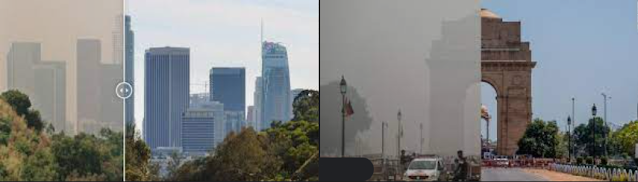
Los Angeles and New Delhi before and after Covid lockdown 

The global pandemic of 2020 gave us the chance to see what the world looked like with our emissions drastically reduced. Skies cleared, mountain vistas (usually obscured by smog) became visible. Literally and figuratively, it was a breath of fresh air.

This moment of clarity has acted as the spark to ignite action away from tailpipe emissions similar to the way secondhand smoke was the catalyst for smoking reform. We have the right to breathe clean air. We have the right to inhale air while not taking in carcinogens. We have the right to breathe without taking years off our lives. 

The second kickstart to this movement was the high gasoline prices that resulted from the Russia-Ukraine war. If you want people to start thinking about buying an EV, raise the price at the pump.

The Snowball Begins

Change like this does not happen all at once, it starts slowly, builds, and then hits a tipping point when public sentiment shifts and serious change can occur. The groundwork is being laid for this change. Many schools have enacted idle-free zones in student pick-up and drop-off areas. This is an acknowledgment that the line of parents' cars and trucks belching out deadly fumes right where the children are is not a good thing. The first electric school buses are starting to be deployed. Electric car sales are continuing to climb. All of these are slowly changing the public consciousness. 

The Industry Response - Catch A Tiger By The Tail(pipe)

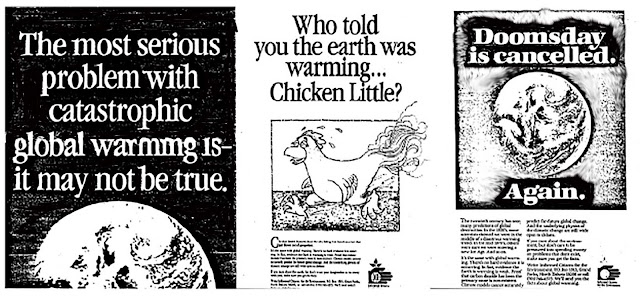
Just as the tobacco industry was not going to roll over and allow billions in profits to go up in smoke, neither is the oil industry. They are using tactics surprisingly similar to the tobacco industry. A little research explains why. The oil industry is using many of the same PR consulting firms that the tobacco industry used. 

The playbook is FUD, legal actions, greenwashing, and delay, delay, delay. Every day that things remain the same results in millions of dollars of profits, big executive bonuses; long term results to the public health and the environment be damned.

FUD


The FUD takes several angles. Deny and blameshift are a couple well-worn tactics. We've already seen claims of 'clean diesel' and 'cleaner-burning fuels.' This is like filtered cigarettes. They are polluting. These tactics allow someone to feel like they are taking steps to reduce emissions while ensuring that they continue to buy fossil fuels.

Use Legislation

As we've seen in the tobacco wars, no legislation or legal battle is too small to fight.

One advantage of driving an electric car is that it's cheaper to operate and fuel. Well, taxes can be used to take that advantage away. Here's one recent example: 

Electric vehicle owners say new Hawaii tax singles them out - KTVZ 

Greenwashing - All Talk, No Action

Oil companies have long been "talking the talk" of green energy, while not "walking the walk." A recent study compared the climate rhetoric to the climate actions of the world’s four largest oil companies – ExxonMobil, Chevron, Shell, and BP – from 2009 to 2020. Researchers concluded that, despite their platitudes, the companies are not, in fact, transitioning their business models to clean energy. 

They have even gone so far as to make statements like, “producing more oil and gas while reducing emissions.” These are obviously statements intended to allow the profitable status quo to continue while managing the public so no real actions are required. 

Greenwashing - eFuels

Synthetic fuels and biofuels will be hyped as the future of combustion engines. This promise will be used to assure consumers that they can buy a vehicle with a tailpipe and not be abandoned when emission standards are increased. These fuels are incredibly inefficient to generate and transport. They are not a scalable solution; they can only offset about 5% of current oil use. This will not stop them from being dangled like a carrot on a stick to keep consumers on the current path.

Greenwash - Hyprogen (Hyping Hydrogen) 

Hydrogen is often touted as the fuel of the future. Claims such as, "The only emission is water from the tailpipe," and "Hydrogen is the most abundant element in the universe," are often touted. These claims are specious. Yes, hydrogen is abundant, but it's chemically sticky. It takes a lot of energy to pry it from these chemical bonds. It's true that the only emissions from an H2 vehicle is water vapor, but hydrogen generation is another story. The vast majority (99%) of hydrogen produced today is brown or gray hydrogen. This means that H2 production creates a significant amount of emissions.

From a costs perspective, today fueling with H2 is equivalent to paying about $8 per gallon for gasoline. This price ensures that oil will continue to be pumped from the ground for a long time if you expect H2 to be the fuel of the future. This explains why oil companies might want to promote hydrogen as the future of transportation. 

Wrapping Up - Chasing Your Own Tail(pipe)

We've seen all these moves before. The oil industry is using an old playbook. It's a multipronged approach. If a single strategy were used, it would be easy to take apart that one strategy. However, the multipronged approach is more difficult to tackle. Consumers need to understand who is backing various legislation, who is donating to legislators, the physics of various alternative fuels, as well as be willing to overcome status quo bias... none of these are easy; doing all of them is nearly impossible. 

The simpler, more straightforward, approach is to electrify transportation; use electric delivery vans and semi-trucks, use electric buses and school buses, and use electric vehicles for personal transportation. Any legislation that opposes this in any form should be scrutinized. This is the decade that EVs will cross-the-chasm and become the majority of new car sales in many markets.

This transition will spark a major change in how the public perceives tailpipe emissions. Once someone is driving a car without a tailpipe, they no longer have to suppress their guilt of being part of the problem and can help move toward a future free from fossil fuels. This will spark changes in how society will respond to emissions legislation, idling restrictions, no emission zones, and many other aspects. 

Maybe this will encourage the auto industry to tuck their tail(pipe) between their legs.


Disclaimer Disclaimer Disclaimer 

This blog is intended for entertainment purposes and everything presented here is opinion only. I've tried to present factually accurate information, but not all sources are reliable, accurate, or may not be correctly interpreted. My analysis could be wrong, make up your own mind. I strive to be less wrong; if you see something that is not correct or a significant omission, let me know in the comments below.

Sunday, April 3, 2022

Tesla Home Products Coming Soon


Tesla already sells several products for homeowners. These include charging connectors, solar panels, solar roof, and Powerwalls. 

I think it's a fair bet that they won't stop there. At the time of this writing, Musk's secret master plan part 3 hasn't been released yet but we've had hints that part of that plan will be to move humanity off fossils fuels. Looking around a home, what fossil-fueled appliances do you see? Furnace, water heater, stove... 

I expect to see Tesla offer all-electric, highly efficient, connected alternatives to these and other products. Tesla offerings could include heat pumps and air filters, leveraging the expertise that Tesla developed for their vehicles. 

Another possible Tesla home product includes a smart circuit breaker box similar to the one from Span. This would integrate very well with a Powerwall allowing precise control over which circuits are active depending on the charge state of the battery and solar activity.

This post is conjecture, so let's push it. Since these will all be smart connected devices what if they had crypto mining capability built-in. Imagine a heat pump or water heater that could capture the heat from a crypto mining rig as it warms your home or water. Tesla could sell "My Home is Heated with Doge" t-shirts and mugs 😀 With all of this integrated into the same Tesla app/ecosystem, you could configure the mining rig to only run when you have surplus solar generation. This removes one of the big objections to cryptocurrencies.

Oh, and we can't forget, eventually, Tesla's most important home product, a domestic robot.

Wednesday, March 23, 2022

Musk's Secret Master Plan 33 1/3: The Final Insult

Elon Musk has said that he is working on Tesla's secret master plan 3. All of the Tesla-verse is abuzz with what it may entail. Well, I'll join the peanut gallery and throw in my 2 cents. 

Rather than discussing the first two plans and my rationale... I'll just jump to my guess for SMP3. Here it is:

  • Move the world's economy to sustainable energy (production, consumption, and storage)
  • Rid the world of traffic congestion
  • Create safe, general-purpose AI to expand the economy 
  • Start permanent, sustainable base on Mars 

These are wildly audacious goals, but we have hints from Musk himself that lead me to these guesses. 

  1. The next rev of the secret master plan will include SpaceX and The Boring Company
  2. Main Tesla subjects will be AI and scaling to extreme size, which is needed to shift humanity away from fossil fuels
The guesses we have above include all of these aspects and it would require massive scaling. 

The final bullet on my SMP3 list is a base on Mars. This would utilize all of Musk's companies. Getting there obviously utilizes SpaceX. The base would be underground (dug with TBC boring machines). The base would be powered with solar panels. And finally, much of the work on Mars will (eventually) be done with Tesla Bots. 

As posted here in 2017, Musk's real secret master plan is: 

Develop technologies to establish a sustainable population on Mars

While doing the above, deploy these technologies to make life better on Earth 

Each of the previous plans has been incremental steps towards the Mars plan.  

Sunday, March 6, 2022

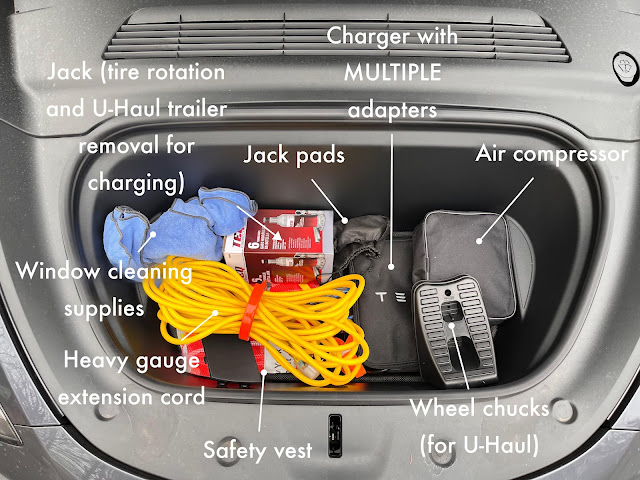
What's In Your Frunk? Tesla's Front Truck Preparedness Items

Tesla frunk image via reddit

Frunk or front trunk. Some cars, like Tesla's, have a trunk in the front of the vehicle aka frunk. In the UK this could be referred to as the front boot or "froot." Regardless of what you call it, this is a good place to keep charging accessories and other things that you might need easy access to while traveling. 

What do you carry in your frunk?

You never know what you might run into on the open road and it's best to be prepared. Here are eight things that you should have in your frunk.

The above image has a pretty good list of items. I'd add a few things. During the winter, it's important to have traction control devices; I like Autosocks for this purpose. I'd add a few other items too. 

Here's a list of items that you might want to consider for your preparedness kit: 


1) A Door Mat

The first thing on the list is a simple outdoor rubber mat


Much like having a towel when you travel, this will be helpful in many ways. Anytime you need to get on the ground to change a tire, put on chains, or the like; this is handy. If you run an extension cord to charge up, you can also use this mat to cover the cord in a trip hazard area. Finally, the mat can act as a cover for all the other things in your frunk.

2) Ice Scraper / Snow Brush


Item 2 on our list is a snow brush and ice scraper. If you're parked in a snowy area, this is a must-have. I like the long handle type, they make it much easier to reach the center of those large Tesla windshields.

3) Traction Devices


Continuing with our cold weather theme, next on the list is Autosocks. There are a lot of traction device options. Tesla even sells chains specifically made for their vehicles, but my favorite is Autosocks. They are light, compact, easy to put on, and work really well. A modern traction system to go with your modern car and you don't get your wheel-well scrapped up. 


4) Tire Pump


One nice thing about Tesla's (and many other modern vehicles) is that they have built-in tire pressure monitoring systems. They will tell you when a tire's pressure is low and even which tire it is. In an EV, tire pressure can significantly impact your range. So a top-up whenever you see the orange warning light is a good idea. I've had a pump like this one for just over a year and one thing that I really like about it is the auto-shut-off feature. You just set the pressure you want (where ever you like up to 100 PSI) and it will stop when it gets there. Oh, and when you use it, don't forget to through your mat down to keep your knees and the pump out of the mud. If you get this model, you can even get the trim color to match your Tesla's paint (if you have a red or blue Tesla). 


5) Extention Cord

Next on the list is a heavy-duty outdoor extension cord. A plain old US household outlet is not going to get you a lot of range, but if you're staying someplace overnight, you'll have more miles than you did before you went to bed. Depending on the overnight temps, if you don't plug in you could lose 15 to 20 miles of range overnight as the batteries condition themselves. Plugging in avoids this range loss and adds a mile or two per hour. As they say, a plugged-in Tesla is a happy Tesla.

When you are shopping for an extension cable, most are only 8 or 10 amp. To use these you'll have the turn the current level down on the Tesla screen or app to prevent the cable from overheating. Instead, I recommend spending a little more and getting a 15-amp-rated cable. They can better handle the current draw that an EV needs. Make sure you get a 50'+ outdoor cable since you never know where you'll be parked relative to the outlet.

If you want to use more than just a simple household outlet connection, check out our guide to charging on the road for all the various outlets you might encounter and all the adapters you'll need to use them. 

If you get an extension cord, you'll want to get something to contain it or it'll sprawl through the space and tangle. A simple velcro strap will do the trick. 


6) Towels


If I said the mat could be nearly as handy as a towel, then, of course, must include an actual towel. You can wipe down the touch screen, the windows... thousands of ways this microfiber towel could help you.  

Towing. If you plan on towing with your Tesla, check out our towing guide here.


7) Be Seen


Last, but certainly not least is safety. If you are on the roadside at night or in poor visibility situations, you want to be seen. It can make the difference between getting home safely or a tragic event.

This vest is highly visible and the pockets are a nice place to put valve stem caps while you're inflating a tire (I used to lose these all the time). 


8) Safty Lights


Continuing with our safety finally, the last item on the list is roadside LED emergency lights. The side of the road could be a dangerous place to stop, but there are times it's unavoidable. When this happens, you'll want to give other drivers a warning that you're there. Old fashioned chemical burning flares just don't seem right in a modern EV. A battery-powered light that's bright with 12 spinning LEDs seems like a more appropriate option. Keeping you safe while not pouring smoke into the air. 

There's the list of ideas for your frunk. I hope you found something useful. What would you add to the list? 

Disclosures:
This article contains affiliate links 
I am long Tesla

Sunday, February 13, 2022

2021 On Peak - A Year w/ Tesla Powerwalls


We just completed our first year with Tesla Powerwalls installed on our home. I thought this would be a good opportunity to review the year and see how they performed and how they impacted our energy use and electricity bill.

Some highlights from the year: Powerwall kept the lights on when the grid when out in February, in the summer we were under a heat dome and our AC ran for 5-days straight, we put our Powerwalls in our utility's SmartBattery VPP, our Powerwalls cycled about 94 times during the year (timeshifting our energy use), we saved far more on our electricity bill than with solar alone, we even had a negative bill one month. 

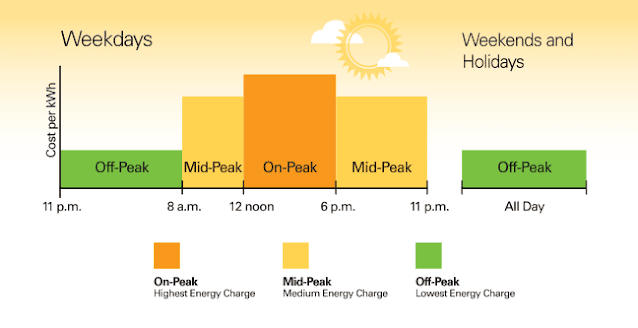
Peak Hours - Time-of-Use (ToU) 

With our electric utility, ToU is optional. If you sign up for it, then during peak you pay 5.3¢ more per kWh than the standard rate and during off-peak you pay 11¢ less per kWh. If you can use more off-peak than peak, this trade-off is a net win.

Below is a nice visual explanation of ToU. This is not from our utility but it's a good illustration of the concept. 

Our solar panels generate energy during mid-peak and on-peak times (reducing our peak load) and our EVs charge at off-peak times. This alone makes ToU worth it. Additionally, the Powerwalls allow us to load-shift by discharging during peak hours further reducing our peak load. Collectively, this should mean that we save money with ToU. How much? We shall see below. 


Solar Production and Energy use

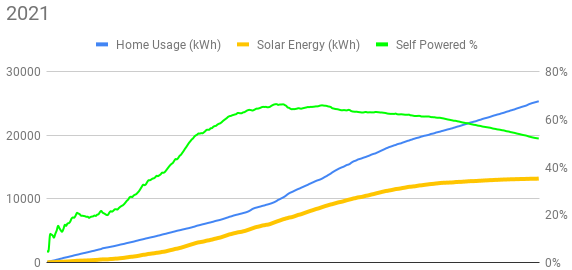
We have 12 kW of solar panels on our roof. We covered every inch that we could. Sadly, we are not at net-zero. The panels only provide about 60% of the energy that we need on an annual basis. So we are definitely still dependent on our grid connection (especially during the winter months). Here's a graph of our 2021 energy production and use: 


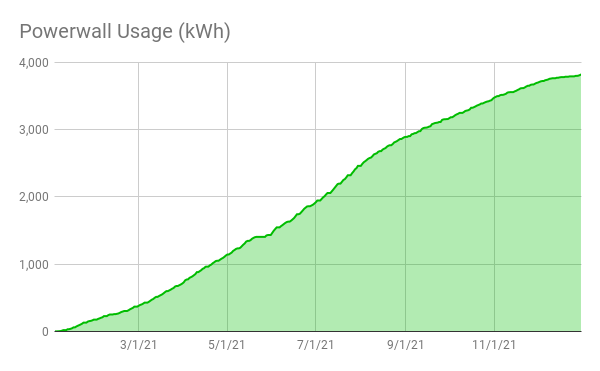
Powerwall Usage 

During the year, we ran about 3.8 MWhs through our Powerwalls. This is about 94 full cycles of the batteries. If you look closely at the chart above, you can see a flat spot in late May. This is when the Powerwalls were in "Stormwatch" mode for due to fire danger in our area. Whenever a potential disaster is in your region, the Powerwalls charge up to 100% and go into standby mode in case you need the energy to keep the lights on.

Ironically, as I write this in January of 2022, the system is again in Stormwatch mode for high winds in the area. Stormwatch mode was used off and on during December due to snow and ice storms. It was reassuring to know that if we were hit by a regional blackout, our home would be spared; our frig and furnace would continue to operate.

In 2021, we did experience one blackout and the Powerwalls came through for us. On Valentine's Day, we had a 3-hour outage in our neighborhood. Everyone's lights were out except for ours. The Powerwalls kept our light on and our internet connection even continued to work. When the event ended, we still had an 80% charge. The dryer was running when the outage started and since the cycle was nearly done, we decided to let it complete; otherwise, we'd have had even more charge remaining.

2021 Grid Energy Usage

Ok, so let's finally get to the point of this article: how much grid peak-energy usage did we have in 2021? 

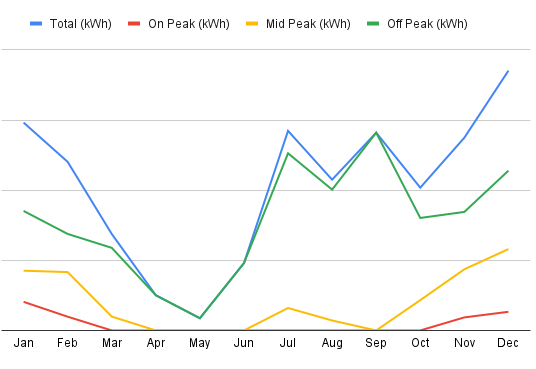
You can see in the chart above that the combination of solar, Powerwalls, and off-peak EV charging has moved the bulk of our billed usage to the preferred off-peak rate. For eight months (Mar - Oct), we had zero net usage at peak hours. I was surprised to see this since our air conditioner ran 24 hours a day for 5-days during the record-breaking heatwave

According to my calculations, if we were on the basic rate plan (paying the same amount for every kWh), we would have paid over one thousand dollars more in electricity bills last year. A couple more calculations show that with ToU, on average, we're paying less than half the typical rate per kWh.

So while we do still use the grid (and pay connection fees, taxes...), Powerwalls help us use it far more efficiently. The bulk of our grid usage (76% actually) is during off-peak times. This is when the grid has surplus capacity and when rates are cheaper. This means that we're helping to better utilize the existing infrastructure and saving money.

Thursday, January 27, 2022

Tesla in 2022 (predictions)

Following Tesla is always exciting. They don't use the standard playbook. They are not chained to history or even their own existing designs. If they've found a better way of doing things, they'll take a 90-degree turn from their current heading.

On January 26th Tesla held their Q4 financial conference call. We heard all about how 2021 fared and we got a glimpse into what might happen in 2022 and beyond.

On the conference call, Tesla's 2022 guidance was more about what they are NOT going to do, than what they will do. The chip shortage will continue to be an issue for Tesla (and the rest of the auto industry) this year. Given this and their planned growth, Tesla will not be introducing any new vehicles in 2022. This means another year of waiting for people with Cybertruck, Roadster, and Semi orders. 

However, even with this limitation, there is a lot to look forward to in 2022. Here are a few of the things that could happen in 2022. Let's start with the highly likely and then get into some fun speculation.

Giga Berlin Body Production Line

  • Opening of the Giga Austin and Giga Berlin
    Both of these Gigafactories have started pilot production and are expected to deliver their first customer vehicles in Q1 of this year. The Model Ys coming out of Austin have structural battery packs and 4680 battery cells (which are also being produced at Giga Austin). 

  • Tesla Insurance Continues to Grow
    This offering recently expanded to Ohio and Arizona, bringing the total to 5 states where your Tesla can be insured by Tesla. Tesla has a goal to make their insurance product available to 80% of current US Tesla owners by the end of the year. How many more states would that take? Well, not 80% of US states. US Tesla owners are not evenly distributed throughout the nation; they're mostly concentrated on the coasts. So you can expect to see Tesla insurance spreading up and down the left and right sides of the country this year. 

  • 1 Million Vehicle Year
    Tesla delivered 936,172 vehicles in 2021. Giga Shanghai has expansion plans and Austin and Berlin will begin their ramp. Estimates for 2022 vehicle deliveries range from 1.2 million to 1.8 million. Even at the low end of these estimates, 2022 will be a record setting milestone and the the first year ever that Tesla (or anyone else)  produced over the 1 million electric passenger vehicles in a calendar year.

  • New Gigafactories Announced
    Once Austin and Berlin are online. Tesla will not slow down. We can expect to hear about at least one new site. Where do you think it/they will be? India, Russia, Canada, South Africa, Brazil... we'll see. 

  • Supercharger Upgrades
    With larger pack vehicles like the Roadster and Cybertruck in the works, the Tesla Supercharger network will likely see another speed upgrade this year. 


  • Cybertruck Revisions
    With another year on the drawingboard, there will be tweaks to the Cybertruck. Side mirrors, interior, wheels, through cabin bed access, and more will likely all have improvements/refinements. There's been speculation that we'll see two sizes of Cybertruck. That would add significant manufacturing complexity, so it seems unlikely that Tesla would unveil or announce a second truck before the first one is in production. I'm interested to see if that single giant wiperblade will be in the final production Cybertruck.


  • Redwood Partnership 
    Tesla is looking at supplychains from mining to chips. They want to secure materials from all the sources they can. As Tesla ramps their own cell production, a partnership with Redwood is a natural fit. Redwood's founder, JB, is also one of the founders of Tesla. He left Tesla on good terms. In the partnership, Redwood would receive all of the production scrap from Tesla's battery factories and add it to their recycling flow. In return, Tesla gets another raw material supply source. 


  • Tesla Semi and Megachargers
    This is the year that we can expect to see the first Tesla Semi-trucks on the road. And the first deployments of the giant Megachargers that will be used to recharge these beasts. These will likely be test vehicles or a limited deployment (rather than volume production). This will allow Tesla to test the vehicles and refine the design further. 

  • 4680 Battery Cells
    Revealed at Battery Day. These are the next evolution in Tesla's battery technology. These cells will initially hit production in the Model Y from Giga Austin. This is an important milestone and will eventually enable the next generation of Tesla vehicles (Semi, Cybertruck, Roadster...). Don't expect to see deliveries of the Cybertruck or Roadster this year, but delivering 4680s in any vehicles will clear a major hurdle to the eventual delivery to these phase 4 vehicles.

  • FSD Beta Wide Release
    By the close of 2021, FSD Beta was in the hands of about 60,000 Tesla owners (select influencers and those US drivers with a score high enough safety score). The software continues to improve and the roll-out will continue to broaden (perhaps to safety scores as low as 90). Version 11 of FSD Beta will have even more improvements. This year, you can expect to see Canadian drivers get their first chance to try out FSD Beta. To be clear, it will still be Beta; Tesla will not be removing the steering wheel anytime soon.

  • FSD in Boring Company Tunnels 
    Speaking of FSD, today, the Boring Company tunnels have human-piloted Tesla vehicles driving in them. This is an environment that Tesla (er, the Boring Company) controls completely. This is the ideal first deployment environment for a vehicle with no steering wheel. For the initial roll-out, they could have remote pilots to help the cars out if/when the cars encounter a situation where they don't know what to do. Tesla could also add a concierge service button in the vehicle for riders that have questions or concerns. If they cannot make robotaxi work there, it has no chance in the complex above-ground world. 

  • Dojo
    Dojo is Tesla's dedicated AI training supercomputer. You can learn much more about it here. Tesla is currently using GPU clusters to train their neural network systems. Dojo promises to cut the training time significantly, allowing more rapid iteration of the FSD software. This iteration speed is vital to the march of nines for FSD performance. Each build allows them to learn, to check one path in the maze, determine if it is a dead-end or not, learn, and then feed those learnings back into the next iteration. Nothing is more important to a fully functional FSD system than this iteration time. 

  • Redesigned Roadster 
    The Tesla Roadster is officially not going to be released in 2022, but that does not mean that we won't see teases of the updates. I want to see a demo of the SpaceX package hovering car. Will cold gas thrusters really allow a battery-laden car to float on air? That would be a sight to see. 

  • Tesla Bot
    This is a major AI talent recruiting project for Tesla. There will be activities to fan the flames of this hype. You can expect to see teases like an arm moving or legs walking... It's likely too soon to see anything like a Boston Dynamics demo this year, but total silence is not an option. 

Well, that's my list. What did I miss? I do expect a TSLA stock split this year? How about an app store for games, movies, and other in-car software? Maybe a human-piloted rideshare as a slow-start to the eventual robotaxi network? Tell me what you think will happen in the comments below.

Sunday, January 2, 2022

Green Abundance: No Sacrifice, No CO2 Future

I read a lot of "eco" articles and one thing that's often mentioned is how we'll need to learn to live on less for a green future. We'll need to travel less, reduce meat intake, walk or bike instead of drive... One article had a catchy 1, 2, 3:

  • Lower your thermostat by 1 degree
  • Reduce your speed by 2 MPH
  • Change 3 lightbulbs to high-efficiency LEDs

One such article was in the LA Times, titled, "Surviving climate change means an end to burning fossil fuels. Prepare yourself for sacrifices."

This approach of asking people to sacrifice is completely wrong, IMHO. If a low / no carbon future is wrapped in a lifestyle of deprivation, only the most ardent will adopt it. To have a successful mass-adopted movement, you have to have a compelling vision of the future; one with abundance, not deprivation. 

My definition of sustainability is living the best life we can today while maintaining an environment for future generations.

If your movement depends on people sacrificing, it's doomed to a niche at best.

Every time we've transitioned to a new energy source, it has been because it could better meet our needs; not because we had a moral calling. Kerosene replaced whale oil, not out of sympathy for whales; kerosene won because it was easier to get and cheaper to buy. Very few people will reduce their personal quality of life because "it's the right thing to do."

If your movement requires people to sacrifice their quality of life, it's doomed.

Green and Good

It should not be green OR quality of life; it needs to be green AND a better quality of life. Let's look at a couple of examples that are far more effective. 

Impossible Foods

Impossible Foods wants to make plant-based burgers (and other products) that are as good or better than the meats they are displacing. If you are happy to eat quinoa and lentil patties, I would never tell you to do otherwise, but you should know that Joe-six-pack is never going to give up Sunday grillin' for a grain burger. Impossible Foods (and others like them) have a chance to woo people who would have never considered a plant-based alternative as an option.

Tesla Vehicles

The type of electric cars that Tesla makes is another example. There were plenty of electric car companies that existed before Tesla. These other companies primarily offered small vehicles with short ranges and abysmal performance. Tesla, on the other hand, offered a no-compromise sports car, followed by a large luxury sedan (seating 7 with optional rear-facing seats). These were a radical departure from the small (sometimes 3-wheeled) EV offerings of the day.

Other than being electric, Tesla was the opposite of previous generations of EVs such as the CityCar. 

A Tesla allows a driver to have the range and performance that's as good or better than their gas-powered analogs. All while being twice as energy efficient as a Prius. This is the way to get people to transition. If you prefer to walk or bike, good for you, I encourage you to keep doing it; but many people have commutes that make this a near impossibility. They are going to drive and that trip should be in a car that doesn't have a tailpipe.


Energy Abundance, Not An 'Energy Diet'

Asking people to go on an "energy diet" will fail faster than a New Year's resolution. Solar energy needs to be sold as "better than the grid," not as you'll have to keep the lights dim and wear a sweater in your house. Instead, if solar can be paired with batteries and provide energy even during a black-out all while lowering your energy costs, solar could be part of a luxury resilience package, not a Spartan one.  

Asking people to go on an 'energy diet' will fail faster than a New Year's resolution. 

We should not be striving to just 'replace' our current energy usage with renewables; we should be striving to create an abundance of renewable energy. This will open new markets and innovations: direct air carbon capture, desalination, green hydrogen generation... who knows what opportunities a renewable energy abundance would create.


"Negawatts" vs Deprivation

Amory Lovins loves to talk about energy efficiency. He says phrases like, "The cheapest unit of energy is the one that you never generate and never use." He dubs these savings due to efficiency as "negawatts." The distinction between efficiency vs reduced use (or what I'll call energy deprivation) is important. Both of these result in lower energy use, but the impacts are radically different. 

Improving efficiency means that the same benefits can be realized with less energy. That's great. If your vehicle is 10% more efficient, then you can still get to all the places that you need to go in a day, and it costs you 10% less in fuel.

On the other hand, if you had to reduce your miles traveled in a day, then you may not be able to get to all the places that you need to for the demands of your life. This reduces your quality of life and will not be sustainable.

I wanted to make it clear that I'm all for energy reduction via energy efficiency. In fact, efficiency improvements are one way that we can help to achieve an energy abundance.


Electrify All The Things

The formula for moving to a zero-carbon future goes something like this: 

  • replace fossil fuel burning machines with electrically powered ones
  • generate electricity with renewable sources 
These are not a one and then the other, progress on both fronts needs to be made every year. 

Home heating would move from methane furnaces to heat pumps. Personal transportation would move from internal combustion engines to electric vehicles. Cooking would move from gas ranges and stoves to induction cooktops with electric ranges. All the loud, polluting, 2-stroke lawn care equipment would move to electric... And remember, the goal is to displace the existing fossil burners with renewably powered products that are better at the job.


The Urgency 

As India and China are emerging from poverty, their per capita energy consumption is quickly rising. If this increased energy usage comes from the same sort of fossil sources that powered the Western world in the 19 hundreds, we're doomed; weather events and wildfires will be even more extreme... Instead, if we can use Wright's Law to reduce the cost of renewable products, these emerging economies can leapfrog to a better future.

Conclusion 

As Jevons Paradox demonstrated, after a disruption, there is MORE supply and prices are cheaper! Let's use this emergent property to accelerate renewables and electrically-powered products while living a life of abundance and providing a habitable planet for future generations.