Why a literal (and figurative) power shift is required for a future free from fossil fuels.
Sunday, February 11, 2024
You Cannot Conserve Your Way To Net-Zero
Sunday, January 28, 2024
60 Thousand Places To Plug In
![]() |
| January 1st, 2024 |
I periodically check out the alt-fuel map that the US government maintains.
You can see in the image above that there are just over 60 thousand places in the US where you can plug in and charge an EV at Level 2 or faster.
Here's the link: https://www.energy.gov/alternative-fueling-station-locator#/find/nearest?country=US&fuel=ELEC&ev_levels=all
![]() |
| March 2023 |
When I looked at the same map in March of 2023, there were nearly 50 thousand plug-in spots. So more than 10 thousand plug-in stalls were added in less than a year.
Going even further back in time, to one of the first times I looked at this site, there were only 10 thousand public charging spots in the US in 2015 (sorry I didn't grab a screenshot back then).
So EV charging infrastructure is rolling out faster now than it ever has. This is vital to EV adoption. As discussed here, this US infrastructure will change to the North American Charging Standard (NACS) in 2024 and later.
This move to NACS is important. For EVs to go mainstream, charging has to be easy. You cannot expect people to understand all the various charging options, connectors, AC or DC, and on and on. Once NACS is widely adopted, there will be one connector that "just works." That same connector at home, at work, on road trips... You just plug in and charge up. The Plug-n-Charge standard will make billing easy.
Happy electric motoring in 2024!
Sunday, January 21, 2024
Talkin 'Bout My Generation
New Roof
May 26th
Tesla Solar panels removed
June 5th
SunPath Systems panels removed
June 12-14th
New roof installed
July 5th
SunPath Systems solar panels reinstalled. Panels were off for 31 days.
August 12th
Tesla solar panels reinstalled. Panels were off for 79 days.
The Tesla RnR took almost 3 times as long compared to Sunpath. With the Tesla PV system as the larger of the two and offline for all of June, all of July, and half of August, we missed the bulk of the solar production for the year.
Virtual Power Plant
Outages
Solar Year In Review
Wrapping Up
Wednesday, January 17, 2024
Tesla 2024 Vehicle Production
![]() |
| Historic Tesla Quarterly Vehicle Production and 2024 Estimates |
EV sales are increasing each year and 2024 will undoubtedly continue this tread. As interest rates in the US are reduced throughout 2024, the pressure on vehicle sales in general (EV or not) should be relieved.
Each year on The Tesla Life, we attempt to estimate Tesla's global production for the upcoming year. Last year, my estimate for 2023 was 1.93 million. The actual production was 1,845,985, or 1.85 mil. So I was only off by 4%. Of the three hosts/panelists on the show, I was the closest. However, one former panelist, Russel, guessed 1.88 mil and edged me out by 50,000 vehicles. He was only off by 1.5% (impressive).
I want to beat him (and the other panelists again) this year. So I'm going to crunch the numbers in many ways and come out with a guess at the end of the post.
Contest Rules
We have to publicly share our guess on January 17th which we generally do live on the show. The guess cannot be a range, you only get one guess (no bull number, bear number; no plus or minus 5%...). You can be as specific as you want (e.g., 2,345,678 vehicles) or round it. Rounded values will be expanded with zeros as needed, so a guess of 2 million is considered 2,000,000. You can use any tools you want to generate the estimate, if you want to ask ChatGPT or Grok, go for it. And the most painful part of all, you don't get to update your guess, no matter what news comes out, no matter what Musk says in the earnings calls; no changes.
Estimates
You can see Tesla's quarterly production data back to Q4 2020 is charted in the graph above. One of the ways I've generated estimates is to simply use the trendline feature in Google Sheets. I plotted the trend as Linear, Exponential, and Polynomial and then added up the quarterly results. This gave me results from 2.22 to 2.39 million for 2024.
The next method I used was to look at the quarter-over-quarter (QoQ) growth. From Q4'20, this has been an average of 10%. Extending this into 2024, resulted in 2.03 mil units for 2024. Our lowest result yet.
Rather than comparing this quarter to last quarter, a quarter is often compared to the same quarter in the previous year; this is called year-over-year (YoY). Looking back further in time, it's not surprising to see a larger growth value average of 47%. Using this YoY value gave an estimate of 2.71 mil (our highest yet).
If we look at year-over-year, then we have to look at year-on-year (YOY). 2023 was 35% higher than '22. 35% growth would be 2.49 million. However, 2022 was 47% over '21. The average of these two YOY values is 41%. Using this YOY value gives a value of 2.60 mil.
Looking Forward
Estimate Summary
| 2024 Tesla Vehicle Production Estimates | |
|---|---|
| Estimation Method |
Volume Estimate |
| Linear | 2,270,000 |
| Exponential | 2,390,000 |
| Poly | 2,215,000 |
| QoQ | 2,028,427 (Lowest) |
| YoY | 2,714,490 (Highest) |
| YOY23 | 2,488,050 |
| YOYAve | 2,602,700 |
| JS Method | 2,580,544 |
| Average | 2,410,901 |
Sunday, January 14, 2024
Power Outages & VPP Events
![]() |
| Portland General Electric Power Outage Map Jan 13th 2024 |
It's been a busy couple of days for our Powerwalls.
Virtual Power Plant
On Friday, January 12th our electric utility, Portland General Electric, held a VPP event. The event was held from 5PM until nearly 8PM. During the event, we exported a total of 21.6 kWh. This is the first event where we were able to participate at the full 9kW rate available in this program. Previously we were only at the default 3kW export rate.
The we were paid $36.72 for the energy we sent to the grid. This is not a huge amount, but we buy the bulk of our electricity during off-peak times for 5.160 ¢ per kWh and when they have an event like this, we sell energy to the utility for $1.70 per kWh. That's a 3,200% gross margin.
Power Outage
As you can see in the outage map above, over 135 thousand people in my region are currently without power in their home. We've seen snow, sleet, freezing rain, high winds, and falling trees across the area. The winter storm was the result of warm moisture air from the Pacific running into an arctic blast.
Our Powerwalls went into StormWatch mode early on Saturday morning. The power outages started in the early afternoon. So far, we've been lucky and our grid connection continues to operate. The batteries are full and on standby in case that changes.
Juxtaposition
Sunday, January 7, 2024
Tesla 2024 :: What To Expect From Tesla This Year
Following Tesla is never boring. 2024 is just starting and there is already writing on the wall that ensures that this year will be no different. The refreshed Model 3 will be coming to the US. The Model Y (the best-selling car in the world) will be refreshed. More Cybertrucks will hit the streets. The semi will move beyond its beta with Pepsi and much more.
Highlander Comes to US
Model Y Update :: Project Juniper
Similar to the Model 3 update, Model Y will also be getting revamped. The question is, "What portions of this update will be just to catch up with Highlander, and which will be leapfrog concepts?"
The catch-up items: suspension upgrades (changes to the suspension geometry, suspension bushings, and rear subframe mount), minor chassis aero improvements (adding more range), stalkless, ambient lighting. These items are expected in Juniper.
To be a true Tesla project, more than just just catching up is required. Tesla does not play the innovation game lightly. They make bold moves. Model Y is their best-selling vehicle, but that won't hold them back. Innovation is Tesla's lifeblood. Will they integrate some of the Cybertruck advancements into Model Y? If so, Juniper could have a 48 Volt architecture, steer-by-wire, a power frunk, and/or "Etherloop." The latter seems the most likely.
Model.Next
Call it the $25,000 Tesla, Model 2, Robotaxi platform, or (my preference) Model Next; we will be hearing about this vehicle in 2024. In a late 2023 interview with Sandy Munro, Elon Musk said the design was nearly complete.
This vehicle will be a game changer for Tesla and the entire auto industry. If we're lucky, Tesla will hold an unveiling event in September of 2024, with deliveries starting in Q1 of 2025. Given that Tesla is currently working on increasing Cybertruck production rate, this is an aggressive prediction but a possibility. Either way, we'll see leaks about this vehicle throughout 2024.
Here are some of the features we may hear about: entire chassis single casting, steer-by-wire, brake-by-wire, brake-by-motor.
NACS - J3400
Tesla has won the charging wars in North America. CHAdeMO and CCS will fade into history as the Betamax and laserdisc of EV charging. This year we'll see Tesla roll out support for various legacy automakers to start using their Magic Dock Supercharger stations and we'll see adapters coming from these same legacy automakers that allow their CCS vehicles to use the native NACS stations as well as Tesla destination stations.
The other exciting NACS news to expect in 2024 is the official adoption of NACS (aka SAE J3400) as the official charging standard of the US. The US government still needs to update the National Electric Vehicle Infrastructure (NEVI) recommendations to acknowledge NACS. When they do, this will mean for a new EV charging station installation to qualify for Federal infrastructure incentives, most of the handles must be NACS.
Roadster
50s Diner - Rock-n-Charge
Full Self-Driving (FSD) v12
Version 12 of FSD went out to employees in late 2023 and should be released to other Tesla owners in early 2024. V12 is special, it is the first version to have end-to-end neural nets. V12 has no human-written code included. The inference engine will conduct object recognition, path planning, and vehicle control.
With any new architecture change like this, there is an initial step backward in performance. This is the stacked sigmoid method that Jim Keller is known for articulating. The new system has the potential for better results, but you cannot start there. Instead, the new architecture starts at the low end of its performance and iterates from there until it has reached the saturation point (asymptotic or point of diminishing returns), and only then do the limitations of the architecture become apparent. Only then (once the limitations are known) can you design the next system to overcome these limitations. Said another way, you must climb the current hill before you can have a view of your next challenge.
In retrospect, end-to-end neural networks is the obvious answer. If human-written code could have solved the autonomy problem, the DARPA Autonomous Vehicle Challenge would have been claimed soon after it started in 2004. Over the 7 years that Tesla has been working on autonomy, the neural nets have been absorbing more and more of the work, now with v12 things have come to the ultimate conclusion; the neural nets now own all of problem-space from photons into the cameras to driving controls out.
Human-written software can't foresee and explicitly code for every situation or edge case that can happen in the real world. The fuzzy logic of AI systems allows for these unforeseen cases to be covered if the training data has enough similar situations for a general guideline to emerge.
Three years ago, we predicted that Tesla would not have true eyes-off-the-road autonomy until at least 2027. I'll be happy to see it arrive sooner, but I would not bet on it. Although, end-to-end neural nets with an occupancy network seems like the right solution. So once v12 enters the linear phase of its evolution (see image above) this year, we will see a rapid improvement in FSD performance.
FSD in tunnels
So, what can we expect to see for FSD in 2024? One of the things I'd like to see is autonomy in the vehicles in the Boring Company Loop Tunnels. This is a controlled environment—no cross traffic, no drunk or distracted drivers—and it's the perfect place for the initial version of Tesla driverless vehicles.
Price Volatility
In response to interest rates and other factors, Tesla's vehicle prices were volatile in 2023. You can expect more of the same in 2024. Hopefully, this time due to falling interest rates rather than increasing rates.
In the US, the federal EV incentive has several changes in 2024. The good part of the changes is that the incentive is applied at the point of purchase. This makes the financing much easier. The bad part of the changes is that fewer EVs will qualify for the complete $7500 incentive.
If you're EV shopping in the US in 2024, you should check the tax incentive rules and vehicles that qualify here.
Production Volumes
2024 will be the year that Tesla produces more than 2 million EVs in a single year. Tesla is yet to release 2024 production guidance. However, given that they produced about 1.8 million vehicles in 2023 and their growth rate, they should produce at least 2.2 million vehicles in 2024. A more detailed estimate will be published soon after Tesla releases their final data.
![]() |
| Cybertruck ramp estimate by Hyperchange YouTube channel |
Cybertruck Production Ramp
The above is a bullish estimate from Gallilo Russel. With 2 million reservations, this fast ramp-up is vital to fulfill these and the new reservations that are coming in everyday. As each Cybertruck rolls out onto the streets, it is a rolling billboard for the distinctive profiled vehicle.
Given the many challenges that Tesla faces in producing a vehicle with so many never-been-done-before features, the first year of production is likely to be slow-going, starting with just hundreds per week and ending the year with a run rate of thousands per week. Galli and I agree that production will get to a half million per year, just not how fast it will get there.
For my 2024, Cybertruck production, I estimate 25,000 to 35,000. However, on NYE 2024, I'll be happy if Galli's estimate is more accurate than mine.
Austin Nature Park Opens to Public
The Giga Texas production site is enormous (8.5 km^2 or 2,100 acres). One of the things that is planned to be added to this space is a is a nature park that's open to the public. Plans have been submitted to the county and this area could open in 2024.Knowing Elon's love of all things Monty Python, I expect to see a section of path dedicated to The Ministry of Silly Walks☺
Powerwall 4 - Ironman
Powerwall 2 Plus and Powerwall 3 came out in 2023. These were nice advancements, but they used the same battery as the Powerwall 2. In 2024, I expect to see a LFP based Powerwall from Tesla. LFP batteries are more tolerant to temperature extremes. The drawback is that they're not as energy dense. So we may see the new LFP Powerwalls coming in at 10kWh instead of the 13.5kWh of the current NMC Powerwalls.
Optimus Hackus
In 2023, we saw Optimus sorting blocks, handling eggs, and doing yoga. In 2024, you can expect to see big advancements. Tesla will deploy an Optimus or two in Giga Texas to conduct a simple task and gather real world data.
Tesla Lithium Refinery
Tesla broke ground on their lithium refinery in Corpus Christi, TX in May of 2023. This year we should see the first results of its operation. The goal of the 1200+ acre site is to reinvent lithium refining and increase the supply of battery-grade lithium hydroxide.
Tesla aims to deploy the first industrial-scale, acid-free lithium refinery. Their process eliminates the use of hazardous reagents and byproducts in favor of inert options. The byproduct of this facility is a mixture of sand and limestone that's useful in the production of construction materials, thereby making beneficial use of traditional waste streams.
This site is also intended to eventually be a battery recycling plant.
Wrapping It Up
Saturday, December 30, 2023
Tesla's 2023 Year in Review
![]() |
| Tesla Vehicle Line-up 2023 |
2023 was the year that Tesla turned 20; it was also the Year of the Tesla Truck (both Cyber and Semi). The first Cybertruck deliveries were kicked off in November and the Semi (officially launched in December of 2022) was put through its paces in 2023 as Pepsi-Fritos loaded them up and put the pedal to the metal.
Cybertruck Launch
Cybertruck was the biggest Tesla event of 2023 and we'll dive right into this one first. On November 30th, Tesla held the Cybertruck Launch event. The first owners took delivery of their vehicles on stage in Austin with crowds of onlookers in-person and online.
Throughout 2023, the Cybertruck made news over and over. A glimpse of the frunk, the interior, exterior updates, the new user interface... Videos of four-wheel steering and crab walking, news.
The "No Flipping" clause in the Cybertruck purchase contract threatened to penalize violators $50,000 or more and never sell them another Tesla for the rest of their lives. This clause had the internet in a tizzy and customer backlash caused Tesla to remove it. However, it came back once again for the Foundation series Cybertrucks.
Wraps
Inspired by the paintless Cybertruck, Tesla started offering wraps and paint protection films. Black, white, or clear wraps are available for Cybertruck and six colors for the rest of the vehicle lineup.
Tesla has some fun with Cybertruck wraps in 2023. They dressed one up as a Ford F-150 and another as a Toyota Tundra.
Cybertruck variants at launch
At the delivery event, final pricing, availability, and product details were announced. Three models were announced: single-motor RWD, dual-motor AWD, and a tri-motor AWD called the "Cyberbeast." Soon after the event a fourth variant was announced, the Foundation Series. This is a limited edition Cyberbeast that comes at a $20,000 premium and adds FSD and the special laser etchings seen above.
Compared to the 2019 unveiling of the Cybertruck many reservation holders were disappointed by the price increase compared to the more affordable $39,000.
Range extender
The range extender is an optional battery pack that increases the Cybertruck's range by 120–130 miles, taking the dual motor AWD range up to an estimated 470 miles. The range extender looks like a toolbox taking up about a third of the bed space. If you plan on towing any significant distance, this is something that you should consider. The exciting part of this is the possibility of range extenders being integrated into future accessories (trailers, campers...).
![]() |
| via @JoeTegtmeyer on 𝕏 |
The ramp starts
As I write this, Cybertrucks are being delivered in California and Texas. There are about 2 million people that put down a $100 reservation. Many of them are eagerly awaiting there chance to configure and order. Currently, Tesla is making fewer than 100 trucks per week. Next year this production rate will grow and grow as manufacturing processes are improved and sped up.
48 Volts and Ethernet "Etherloop"
Before we leave this topic, we have to cover these two industry-changing Cybertruck innovations.
Cars and trucks have been using 12 Volt batteries since the mid-1950s. The switch to 12 Volts (from 6V) was due to the evolution of car designs and features that required more power.
Today, we have more electrical demands on our vehicles than ever before. Automakers have occasionally released 48V prototypes, but they have never been able to bring the 48V architecture to market. Bringing a new architecture to market is not easy.
For 48V to work properly, all the accessories have to be designed for it. Every wiper motor, seat motor, light, computer, ABS, air bag controller... There are hundreds of components, made by hundreds of suppliers that have to be redesigned, tested, certified...
Tesla was willing to do the hard work needed to bring 48V to market. They worked with their suppliers. When a part needed to be redesigned, Tesla would send engineers to work with the suppliers. It's a win-win. The supplier gets Tesla engineering to help update their product and Tesla gets a design that they know will meet their needs.
If Tesla cannot find a supplier for a part that they need, they will bring the task in-house. They are not afraid of vertical integration.
Now with all of the parts that they need working with 48V, how do you get that power to each of the components. In the Cybertruck there are 386 parts that need to be connected to aux power. The answer was to redesign the communications network in the vehicle and use those same connections for both communications and power delivery. Enter Ethernet.
Today, vehicles typically use Controller Area Network (CAN) bus. The maximum data rate of CAN bus is typically 1 Megabit per second (Mbps). Tesla chose to replace the CAN bus with a 1 Gigabit Ethernet network. That's 1000 times faster than the CAN bus. And this same Ethernet network can deliver the needed 48V with a feature called Power-Over-Ethernet (POE). This reduces the number of wires that have to go to each of the 386 electronic components in Cybertruck. It also means the telemetry for all of the components can be delivered faster.
Tesla refers to this as an Etherloop because they wire the Ethernet switches together in a loop with redundant bidirectional connections for fault tolerance. These higher voltage and faster data rates will be the new industry standard. Automakers have wanted both of these features for over a decade, but they had no leadership that could make it happen. Now that Tesla has cracked the code, others will be fast followers.
Wrapping up Cybertruck
This only scratches the surface of the Cybertruck (not an easy task). I'm sure there will be plenty more to discuss about the Cybertruck in 2024.
Semi-truck
In September, the North American Council for Freight Efficiency (NACFE) conducted a study as part of their "Run on Less" program. This program tests electric semi trucks in real-world conditions with all results released in real time. A Tesla Semi truck traveled over 1,000 miles in a single day during these tests. This is something that many experts called impossible.
Jay Leno took the Semi out for a spin with Tesla's Senior Manager of Semi-Truck Engineering, Dan Priestley. Priestley explained how Tesla has iterated the semi over the last year. How they've collected data, talked to drivers, and used all of this feedback to make improvements to both the hardware and software in the semi.
In October of 2023, Tesla began hiring to increase Semi production.
Model 3 Highland
Highland offers significant chassis and suspension upgrades. The long range highland boasts an impressive range of up to 353 miles. The minimalist interior design, characterized by clean lines and the absence of traditional buttons and knobs persists and colorful LED ambient lighting is added.
Highland is shipping in China and Europe and is expected to launch in the North American market in early 2024.
Model Y - Best Selling Car In The World
In 2023, the Model Y became the first all-electric vehicle to wear the crown of the world's best-selling car. As of July 2023, the Model Y edged out the Toyota Corolla for the top spot in new car sales worldwide.
5 Million EVs Produced
Speaking of production and sales, in September of 2023, Tesla announced that they had produced their 5 millionth EV. That's 5 million vehicles without tailpipes. 5 million cars that won't pollute as they wait in line at the after school pick up. 5 million cars that won't support the fossil fuel, drill and burn ecosystem.
50 Thousand NACS of Power- J3400
Tesla installed their 50 thousandth Supercharger in September of 2023. This network allows drivers to take their EVs on road trips. The Tesla network is by far the most complete and reliable charging network out there.
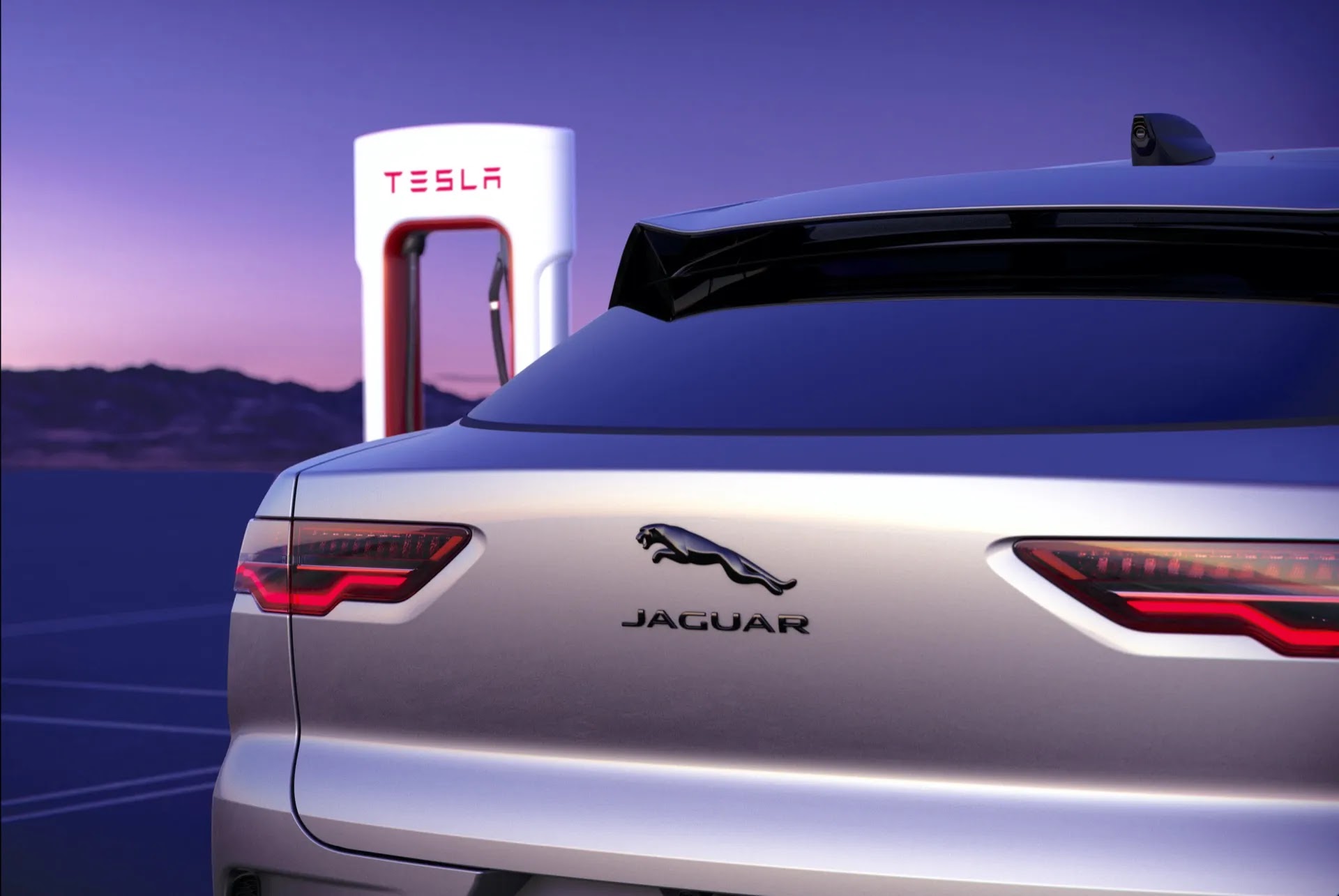
Ford, GM, and others figured out that they could not compete with the Tesla network and their best course of action was to abandon the failing CCS standard and join the Tesla network. As you can see in the image above Honda, Kia, Jaguar, BMW, and others quickly followed. Stellantis and Mazda are among the few hold outs, but by 2025, if you want to sell an EV in North America, it better have a NACS connector, or it will be be considered by most EV shoppers.
The automotive standards body known as SAE ratified NACS as J3400. This will make NACS stations eligible for National Electric Vehicle Infrastructure (NEVI) incentives.
Tribal Partnerships
Tribal lands are part of sovereign nations which exist within the borders of the U.S. Currently, 39 states include at least one tribal nation. As sovereign nations, tribal lands are not subject to state and local jurisdiction or restrictions.
Tesla has been partnering with tribal nations since 2021 to build showrooms, stores, or service centers on tribal lands. Some states have protectionist laws that require vehicles to be sold via a middleman (dealership) system. Tesla does not use dealerships. Instead, they sell direct to customers. Building on tribal lands allows Tesla sidestep these arcane laws.
In 2023, Tesla opened two more locations on tribal lands. Tesla's tribal partnerships now include:
- First Nation of Nambé Pueblo in New Mexico at the Buffalo Thunder Resort & Casino
- Santa Ana Pueblo: A partnership that builds on tribal land
- Mohegan Tribe in Connecticut at the Mohegan Sun Casino and Entertainment Complex
Master Plan 3.0
In April of 2023 Tesla released their Master Plan 3.0, subtitled "Sustainable Energy for All of Earth."
This is an outline for moving to a world of abundant, pollution-free, energy.
Optimus
In September of 2022, the world got to see the first wobbly steps of Tesla's robot named Optimus. In 2023, Tesla made great strides (literally and figuratively) in the Optimus program. The perception system was demonstrated with the bot sorting blocks and picking up eggs. The walking speed is much faster and looks much more natural.
JB's Return
JB Straubel is one of the founders of Tesla. He was the CTO until he left Tesla in 2019 to found and run a battery recycling company called Redwood Materials. In 2023, JB took a seat on Tesla's board of directors.
Stock
Powerwall 3
In September of 2023, Tesla launched Powerwall 3. The battery portion of Powerwall 3 is very similar to Powerwall 2; however, Powerwall 3 adds a fully integrated solar inverter. Whereas Powerwall 2 could only be AC connected, Powerwall 3 can be AC or DC connected; allowing Powerwall 3 to be more efficient in some configurations. If you are retrofitting batteries to an existing solar PV system, you'll want to use Powerwall 2s, but if you are installing a new solar and battery system, Powerwall 3 is the way to go since you won't have to buy a separate PV inverter.Wrapping It Up
Above, we covered that Tesla is now offering wraps, but it's time to wrap this up. As every year has been for Tesla, 2023 was an exciting one to follow. They have accomplished things that legacy car companies would have never attempted. They are the vanguard of the future of the auto industry. While other car companies are announcing that they are slowing their EV programs, Tesla relentlessly pushes forward. I have no doubt that 2024 will be equally as exciting.
Disclosure:
I am long Tesla
Saturday, December 23, 2023
Tesla Model Y Snow Tire Range
![]() |
| 2023 Tesla Model Y with Winter Tires |
Winter is here and we've put snow tires on our new Model Y. I was curious how this would impact our range, so I collected the data, crunched some numbers, and we'll look at the results.
We recently installed a roof rack on our Model Y and we did a similar exercise. You can see the roof rack results here.
Our vehicle: 2023 Tesla Model Y Dual Motor AWD
Options: 5-seater, 19" wheels
| 2023 Model Y Dual Motor AWD LR 5 Seater with 19" Wheels | ||
|---|---|---|
| Stock Tires & Wheels | Winter Tires & Wheels | |
| Tires | Continental ProContact RX 255/24 R19 | Michelin X-Ice Snow 255 /45 R19 104H XL BSW |
| Wheels | 19’’ Gemini | Vision VIS Cross II 73.10 |
| Efficiency (miles/kWh) | 4.2 | 3.4 (19% lower) |
| Efficiency (Wh/km) | 147.6 | 183.3 (19% worse) |
If you stop reading here, you might assume all of the efficiency decrease is due to the new tires. However, the pre-snow tire drives were in Sept. and early Oct. with temperatures in the mid-70s F (around 24C). The snow tire drives, on the other hand, were in late Oct. and Nov. with temperatures in the 30-50F (0-10C) range.
The colder temps reduce EV range in several small ways:
- The air is thicker and it takes more energy to move it aside
- With the cold weather we turned on the cabin heater, seat heaters, and defroster
- Much like humans, battery packs have a temperatures range where they run best. So, in cold weather, battery conditioning turns on and uses energy.
Range Impacts
Our vehicle was EPA rated with 330 miles of range. The colder weather and winter tires reduce this ideal range by 19% bringing it down to 266 miles.
This is one of the reasons that we purchased a long range EV. The EPA rated ranges are in ideal conditions, real life is often far from ideal. I want to make sure we still have range enough to make traveling easy even if we're traveling over mountains, in winter, with luggage on the roof rack...
Disclosure:
Use my referral code for any perks Tesla may be offering https://ts.la/patrick7819
I am long Tesla
Sunday, December 10, 2023
2024 is kNACkered For EVs Not Named Tesla
![]() |
| Jaguar (among others) will be using the Tesla charging network in 2025 |
2024 is on course to be a lame-duck year for EV sales in North America for any automaker not named Tesla. Nearly every automaker (see list below) has pledged to support the Tesla-initiated charging standard now known as NACS or the North American Charging Standard for their EVs. The announcements from the automakers were largely made in late 2023; however, the charging port changeover doesn't happen until 2025 model-year vehicles. So in 2024, these automakers will offer-for-sale EVs with a charging port in its last year before being phased out.
That charging port that is not long for this world is the CCS port. CSS has a patchwork of charging stations in various states of disrepair. JD Power has consistently ranked the CCS charging stations poorly.
Legacy automakers didn't have to build or support gas stations for their gas cars. They assumed the same would be true with EVs. However, the poor maintenance at CCS stations has hurt the EV ownership experience for their customers. EVs need a dependable charging network. This is a significant factor in owner satisfaction. If you have a car, you want to be able to drive it places. Occasionally, that means you might have to charge up someplace other than at home. This requires a robust "refueling" network. CCS was not that network.
This drove automakers to leave CCS for greener pastures. More on this below in the 'Why CCS Failed' section. Reluctantly, automakers are embracing the solution from the upstart Tesla to gain access to the vast reliable charging network that Tesla has created.
Who is Joining NACS
Companies Joining NACS:• 2023.05.26 : Ford (Lincoln)
• 2023.06.09 : GM (Chevy, Cadillac, GMC)
• 2023.06.20 : Rivian
• 2023.06.22 : FLO (Charging Network)
• 2023.06.28 : Blink (Charging Network)
• 2023.06.29 : Electrify America (Charging Network)
• 2023.07.07 : Daimler (Smart, Mercedes-Benz)
• 2023.08.18 : Honda (Acura)
• 2023.09.22 : JLR (Jaguar, Land Rover, a division of Tata Motors)
• 2023.10.05 : Hyundai (Genesis, Kia)
• 2023.10.17 : BMW, Mini, Rolls-Royce
• 2023.10.20 : Toyota (Lexus)
Why'd CCS Fail?
The largest CCS network in North America is the combination of Electrify America and Electrify Canada. These networks were created as part of the $2B+ Diesel-gate scandal settlement.
For a charging network, reliability is vital! When you pull up to a charging location, you expect to be able to, well, charge up. Sadly, far too often, at Electrify America stations this was not possible. Stations would be down for repair or blocked. This often meant that the few spots that were not blocked and operational had a long line of cars waiting to drink in the lepton juice.
JD Power has repeatedly ranked Electrify America as poor for reliability. It's almost like forcing a business into existence via mandates and fines is not the best way to create a company filled with people passionate about their mission. A headline from The Verge says it well for the state of charging in the US in 2023, "EV charging in the US is still a no good, very bad time — and somehow it’s getting worse." If that was not enough, here's another, "Car Companies Are Beyond Fed Up With Electrify America: Report."
Surprisingly, customers occasionally want to drive their EV more than half a charge away from their home charging station. Drivers of CCS-equipped vehicles are fed up with the unreliable infrastructure and they are letting the automakers hear this loud and clear.
Both Ford CEO Jim Farley and US Secretary of Energy Jennifer Granholm both attempted road trips in 2023 using CCS vehicles and found the infrastructure deficient.
![]() |
| Vehicle makers that have joined the NACS coalition |
There will be adapters that allow CCS-equipped vehicles to charge up at NACS stations, so the CCS vehicles will not totally be left in the lurch. And there are the MagicDock Supercharger stations. MagicDock Superchargers have a built-in CCS adapter. If you just walk up and grab the handle, it will be the native NACS connector. However, if you login to the Tesla app (or an app that supports the Tesla app APIs), then you can request a CCS connector on a specific stall and the CCS adapter will lock onto the connector. Then when you pull the connector out, it will have CCS for your 2024 or prior year non-Tesla vehicle.
While CCS cars will be able to charge, charging with an adapter or MagicDock is not as convenient as a native NACS experience. With NACS, you just grab the handle and plug it in. When the charge is complete, unplug and drive off. No app, no adapter, to membership card to deal with. Billing is handled automatically via Plug-n-charge.
With CCS, you'll need an adapter. If you are using an adapter, the charging handle may not properly lock to the vehicle or the charging rate may be reduced. If you are using the MagicDock, then you'll have to use an app to tell the station that you want to charge with the CCS adapter. Then after the station is informed, only then will you be able to remove the charging cable with the CCS adapter locked on. Neither of these is as simple as the NACS experience. If you plan on keeping your car for years, that's years of dealing with apps and adapters for every on-the-road charging experience.
Coopetition
When companies compete, there's reason to innovate. A company that can make or do something better, faster, cheaper... has an advantage. There are times, however, when cooperation between companies is better for the customer and the companies. There are times when standardization increases the available market and allows companies to show their strengths in other ways.
One Port To Rule Them All
There are no separate gas stations for Fords or Toyotas. If you drive a gas-powered car, you just go to the gas station (nearly any gas station) and fill up. The only consideration of concern is Diesel or gasoline. This is not that hard and with rare exceptions, people can successfully fill up every day.
Charging an EV is not that simple yet. With an EV, there are different networks. Some are AC, some are DC, some take credit cards, some require membership and have apps or membership cards; some have QR codes to scan. And there's another layer of complexity, the charging ports. You have to know if your car has just AC charging or if it also has DC fast charging and if so, which kind of port(s). In the US, there's J1772, CHAdeMO, CCS, and Tesla (now called NACS). You're out of luck if you pull up to the wrong type when you need to charge. Well, unless you have an adapter that allows you to convert the charging station connector to the type that your car needs. And when you use these adapters, you are often greatly restricted in the top charging rate.
For EV to go mainstream, this needs to be simple. Multiple network memberships, multiple connector types, adapters... this is all far too complicated. Most of the time an EV is just charging in its own garage, and this doesn't matter. However, when you go on a road trip, on-the-road EV charging is anything but simple (unless you have a Tesla, more on that later).
We need one continent-wide, universal connector, with payment simplicity and plug-in simplicity (without adapters). One plug, any place, AC or DC, that just works. For EVs to become ubiquitous, charging has to be easy. You should not have to know multiple standards, voltages, amperages... It has to be simple, plug in, charge up, drive off. When there are multiple competing standards like we have today, there's a layer of complexity that creates an obstacle to mass EV adoption.
There are times when proprietary solutions are the right way to go. This can allow innovation and differentiation. There are other times when standardization benefits the manufacturers with commodity parts with higher volumes and lower prices. Standards make it more convenient for owners too. If there's one charging standard, then you won't have to know if you have a CHAdeMO, CCS, J1772, or NACS port on your car or which connectors are at the charging location that you plan on stopping at on your road trip.
This move by all automakers to adopt NACS removes a layer of complexity. Now, automakers will compete on other features like range, performance, price...
While I think this is the right direction, I wonder if automakers have Osborned themselves by announcing that they will have something cool in 2025, but then expecting people to buy their 2024 vehicles.
2024 Has Other Headwinds Too
Other Headwinds: Interest Rates
Most people buy cars with financing. They take out a car loan and make monthly payments. Other things being equal, the higher the interest rate, the higher the monthly payment. Car loan rates are about 8% for new cars and even higher for used vehicles. They have not been this high since the Great Recession in 2009.
Most people would rather spend their money buying a car that they like rather than paying interest. So some buyers are likely to sit on the sidelines, keep driving the car they currently have, and wait to see if 2025 has better rates.
Let's compare buying a $50,000 vehicle with a $10,000 down-payment (or trade-in) with $2,400 in title registration and other fees rolled into the loan at today's rates versus last year's.
2022:
1.2% Loan Interest Rate
Down-payment: $10,000
Loan Amount: $42,400
60 Month Loan
Monthly Payment: $728
Total Cost: $53,706Today:
8.1% Loan Interest Rate
Down-payment: $10,000
Loan Amount: $42,400
72 Month Loan
Monthly Payment: $745
Total Cost: $63,675
There are a few things to unpack here. The first thing to note is that, if you're taking out a loan, overall you'll pay about $10,000 more in today's environment.
The second thing to note is that the second loan is 72 months rather than 60 months. That's because most people are concerned with the monthly payment more than anything else. To make the payments similar for these two loans, the term of the second one had to be extended.
Other Headwinds: Falling EV Prices
Falling EV prices seems like it would be a sales accelerator. In the long term, it will be; however, if the prices are dropping and they look like they might keep dropping, there's a temptation to wait and see how low they may go.
Multiple battery factories are being built. Batteries are by far the single highest cost of EVs today. As these factories come online in 2024, battery prices will drop and EV prices will follow.
Falling prices of critical minerals will lead to a 40% drop in the cost of batteries for electric vehicles by 2025, with big implications for the pace of global EV adoption, says Goldman Sachs Research. So if you can wait, you'll likely get a better deal in 2025.
Wrapping Up
The current CCS charging network in North America is not good. The only network that is robust and reliable is the Tesla Supercharger (NACS) network. Automakers are giving up on CCS and moving to NACS as fast as possible, which is 2025 model-year vehicles.
This means that 2024 will be the final year of CCS cars. CCS is now officially the Betamax of charging standards and 2024 will be its final year of sales. CCS is a dead-end technology.
Will EV shoppers buy the final model year of a standard that's fading away? Or will they save their pennies for another year and see what 2025 brings? With high interest rates and falling prices in 2024, it is tempting for buyers to sit on the sidelines and hold out for 2025 where they may get a better vehicle at a lower price with better financing and a native NACS port.
You can call 2024 a transition year, a lame duck year, or an Osborne year. If buyers sit on the sidelines, non-Tesla EV sales in North America 2024 is kNACkered.
Counterpoints
There are plenty of EV drivers that disagree with this assessment. They argue that the NACS changeover is not that big of a deal. Comparing CCS to Betamax is hyperbole since there will be adapters (unlike Betamax video tapes) and there's MagicDock meaning that more and more Tesla locations will be able to charge CCS vehicles after just a tap or two in an app. Plus the existing CCS network (as bad as it may be) is not going away and it will be better supported as more EVs hit the road and start using the network in 2024.
Similarly, the point about interest rate impacts is overplayed. Interest rates will hurt all auto sales, not just EVs. So the growth of EVs as a percentage of new auto sales will increase in 2024, even if the volume of sales is down or flat compared to 2023.
disclosure: I'm long TSLA and several other EV stocks
Saturday, November 25, 2023
EVs for EVeryone :: Making EVs Affordable
Electric vehicles are cheaper to maintain and cheaper to "fuel" than internal combustion vehicles. From an economic perspective, the initial vehicle price is the only thing holding many consumers back from purchasing an EV. The good news is that EV prices are decreasing; albeit slower than we'd like.
Charging At Home Is Convenient (and affordable)
EV ownership is much easier if you own a home and have a garage. You install a residential EV charging station in your garage and you charge overnight (when rates are often at their lowest). Then you start out each morning with a full charge.
Depending on where you live, the cost per mile driven can be about the same as gasoline priced at $1 per gallon.
Charging away from home is often more expensive; workplace and hotel guest charging, however, is often free.
Borrow Instead of Buy
If you are lucky enough to live in an area that has an EV car-share program like "CRuSE" (Clean Rural Shared EV), you can borrow an EV for just $2 per hour.
Incentives
When you are buying, tax incentives certainly help ease that upfront cost. And now that this modern era of EVs is entering its teen years, there's a healthy and growing used EV market.
Prices Are Dropping
However, the incentives will not be required for much longer. Battery technology keeps advancing, bringing longer ranges, faster recharge times, and (most importantly) lower prices. Later this decade, EVs will have a lower starting price than their gasoline-powered counterparts. Then with the additional lower running costs, it will be a no-brainer.
Multiple battery factories are being built today. Batteries are by far the single highest cost of EVs today. As these factories come online in 2024, battery prices will drop and EV prices will follow.
Falling prices of critical minerals will lead to a 40% drop in the cost of batteries for electric vehicles by 2025, with big implications for the pace of global EV adoption, says Goldman Sachs Research.
Consider A Used EV
If you're looking for an affordable EV today, a used one is your best bet. We recently purchased a 2016 Chevy Spark EV. It only has about 60 miles of range, but it is our runabout vehicle. The range is perfect for errands. It starts out every morning fully charged, ready for the day.
Once You Get Here, It's Fun!
EVs are fun to drive, smooth, quiet, and peppy. When the performance, range, and size fit your needs, it's magical.
Ω